The Quicksand Children.

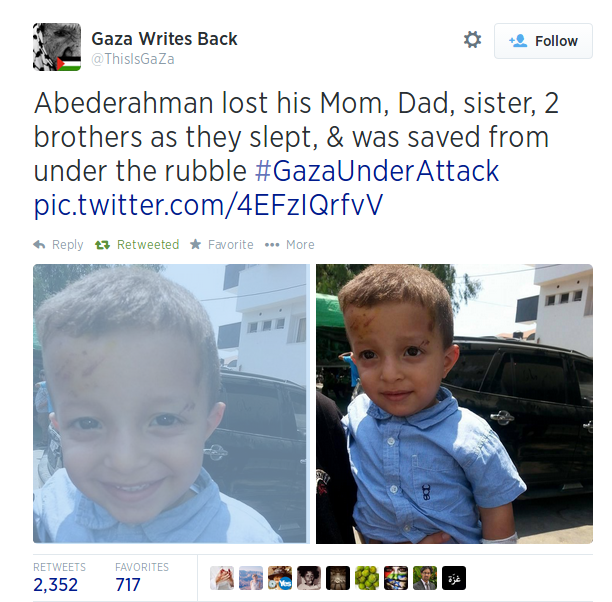
The children are unwitting quicksand. Shells and shrapnel and glass sink into them as soon as it lands. They are tender-bodied, pure-eyed, bereft and confused. Every day, we are losing more of them. I am forcing myself to look. Many are around your age, just toddlers. They are across the world. I cannot claim any particular knowledge of their countries’ histories and politics. The Israeli-Palestinian conflict is not one that a few explainers or longform essays can clear up. I read them anyway. I know wrong when I see it. While I languish in a kind of suspended ignorance, over 1,300 children lie writhing and wounded in Gazan hospitals. Over 150 are dead. I am not sure what, if anything, there is for me to do. But I will try all that I can.

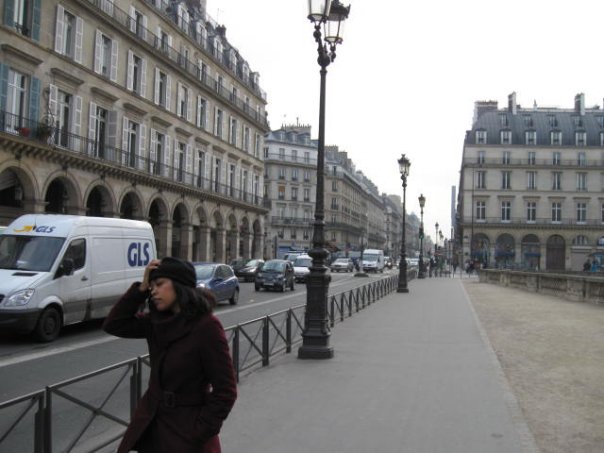
I have never been anywhere, really. A year before you were born, your father and I flew to Paris, using our tax refunds and some adjunct teaching money I should’ve been saving to move out of my relatives’ house and rent my own apartment. We could only afford a four-day stay, the first and last consisting mostly of travel. Neither of us had passports before that trip. That trip supplied what are still our only stamps.
1923170_55454428526_4736134_n
At Charles de Gaulle, we couldn’t find each other for five hours. Neither of us spoke French. Our cell phones didn’t work and I was too afraid to walk up to any of the elegant elocutionists around me and speak English.

There is something mortifying about being without adequate language in another man’s country, something venomous about refusing to tread lightly within cultures that are not your own. I didn’t want to risk either insult or injury. After asking a few desk attendants who didn’t seem able to help me, I cried for a while and sat still, waiting to be found. Thousands of bodies whooshed by me, smelling of colognes and unfamiliar countries.

Your father was in another terminal, buildings away. He was speaking loud, clear English all over the place, his six-foot-five-frame, intense eyes and polite-but-focused smile commanding attention.

In the end, it was he who found me. And here is the lesson in this for you; here is the greatest comfort you can take, as a child whose language delays make so much of your tiny life like that of a French-less foreigner in Paris: one of us will always know how to find the other. All of us will observe and question and interpret each other’s odd communiques until we feel safe enough to keep moving.

In the hours before your father and I were reunited, no one in the world knew where I was. He had flown from California to Germany to Paris and I from Michigan to Kentucky to Paris. But our respective flights weren’t up on the arrivals board. Were we even there at all?

Are any of us here? And if so, given the horrors that so often befall us, why are we so stubbornly intent on staying? All those innocent hospitalized children, fighting so valiantly for what’s left of their ravaged lives, and Israel is bombing their energy plants, burning the homes and the parents to whom they might’ve returned after discharge. Israel is striking their hospitals.

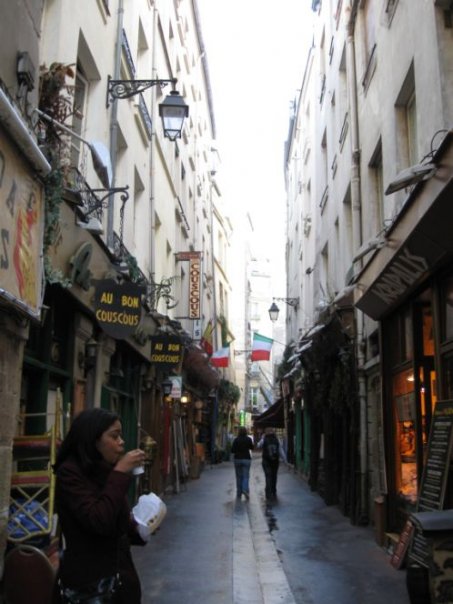
In Paris, children on the subway smiled at us when they made eye contact. It was a smile that seemed to acknowledge that we were foreign, but welcome. We had braced ourselves for rudeness, and none ever came. Very few Parisians were unkind, but the children were especially unassuming. They were as grinning and guileless as most children are, whether faced with unspeakable horror or just an unfamiliar couple on the Metro.
1923170_55443643526_7914043_n

It is best to clear your mind of expectation when you enter another country. Be awed or horrified by each place and its people on their own merits, on your experience of them. I would have you experience as many places and people as you can. Take what you know of their history with you but do not let it taint your time there. Their history is not quite your own. Go and do not allow any rhetoric, even your own country’s, to steer you away from the truth of things. Travel — more than media, more than reporting, more than the third-hand accounts of a friend — will help you know: there is no end of evil, no limit of good.
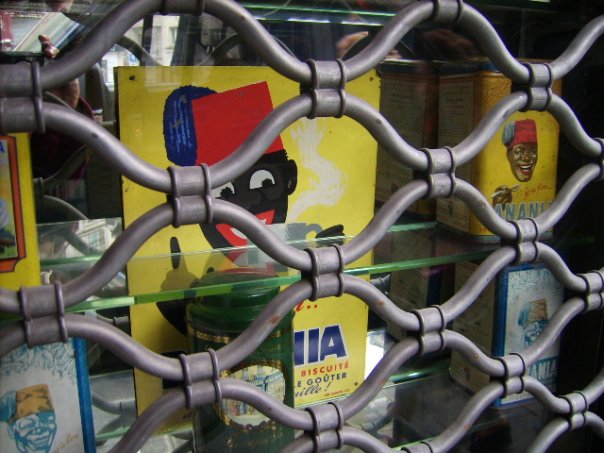
1934656_57180728526_5423553_n
Sambos sat in Paris shop windows, subtle reminders that blackness and brownness can become an homage or affront wherever we are in the world. And there is no explaining to everyone (or anyone, really) that you do not represent what they think you do, that you do not deserve to be mocked or driven off your land or killed. There is no explaining to bullets or missiles or soldiers that your child is worthy of an undisrupted life.

Already, too many toxins are sinking into all of you.  All of you quicksand children — so impressionable, so vulnerable, so free — absorb everything. You may never now how gut-wrenching it is to realize that today, as parents, from Gaza to Sudan, Nigeria to North Carolina, we are feeling ever more powerless to stop it.

There is no corner of the world where I could run with you in my arms and, upon setting foot on its soil, sigh relief. Maybe this has never been the case. Maybe no generation has ever believed in an earthly safe haven. Perhaps this why some of us choose to believe in heaven. But I know that you are here because you’re with me. I know, because you’re here, that language and listening are the only real reasons to stay. We have to find ways to communicate to one another what weapons never will. It may be a futile fight, but it is the only one worth waging. Because you deserve what all the children of the world should have — upbringings entirely unmarred by carnage — I will stay. I will try harder to understand. For as long as I can, I will make my every word a tarp for your quicksand.

What Black Latchkey Families Stand to Lose.

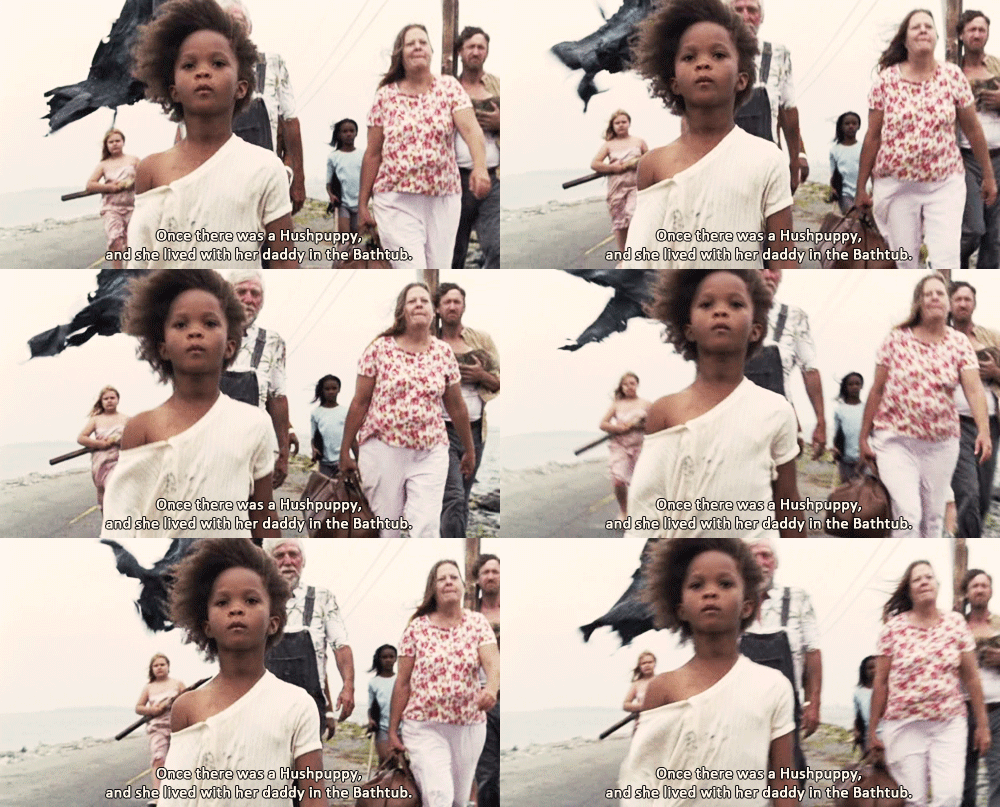
As controversial a portrayal of black parenting as 'Beasts of the Southern Wild' presents, Hushpuppy's  limited supervision and sense of community were ultimately essential to her survival.
As controversial a portrayal of black parenting as ‘Beasts of the Southern Wild’ presents, Hushpuppy’s limited supervision and sense of community were ultimately essential to her survival.

The little boy who used to live on the second floor, the one with the cornrows grazing the back of his neck and the owlish glasses, never stayed indoors. He was always running, chasing the family cat or asking around, home to home, if a new child in the neighborhood could come out to play. He was nine or so, polite and precocious, always noticing things. You dropped this. You’re forgetting that. He held the lobby door open for my grandmother, my mother, and I whenever he saw us coming.

A boy like that catches the eye, out of doors as he so often is. It was easy, then, to notice that his mother hadn’t entrusted him with a key to his family’s apartment. We knew it because sometimes, he’d linger too long outside the locked, intercom-activated lobby door. We knew it because, while walking up to our own third floor residence, we too often noted that his family’s door was kept slightly ajar. He was either rushing in and slamming it or waiting downstairs for someone to open it when he’d locked himself out.

It was risky, his mom opting to leave their whole apartment vulnerable rather than giving him a key. It was risky, too, to reserve comment and to let them sort through that decision and its consequences alone.

But I remember being nine myself and in need of a key after school. I remember losing it too, on many occasions, and begging the rental office managers to let me borrow their spare. I asked so often they would finally have to inform my furious, frustrated mom.

The memory was what kept me quiet on the days when the neighbor boy sprinted confidently up to his cracked door and slipped inside — and it was also what made me ask if he needed to use our phone or wanted someone to wait with him when he was in the lobby alone.

Latchkey life is a series of covert missions, held precariously in place by a cardinal rule: don’t get caught.

Debra Harrell was charged with "unlawful conduct toward a child," after allowing her daughter to play in a local park during her work shifts.
Debra Harrell was charged with “unlawful conduct toward a child,” after allowing her daughter to play in a local park during her work shifts.

I thought about this code when I heard about Debra Harrell, the 46-year-old South Carolina mom who let her nine-year-old daughter play in a park for three days while she worked her shifts at McDonald’s.

If I’d driven by and spotted Debra’s daughter braiding tall grass at 1pm, then passed by again to find her eating fruit under a shady tree at 4, I would’ve thought little of it. Even if, as in this case, she was there for three days in a row. I may’ve asked, as the concerned observer did in this instance, where the girl’s mother had gone. But if she’d shown me the cell phone her mother had given her in case of emergency and if she seemed safe and unbothered, I would’ve moved along.

Just as all who wander are not lost, all who play outside alone — even all day — are not abandoned.

When I moved into my grandmother’s third floor apartment, my daughter was two and noisy. She was not sleep trained and sometimes she’d let out a squeal or leap across the carpet well after 8pm.

“If you don’t get that girl to be quieter, the neighbors downstairs might call the police,” my grandmother admonished one night.

I thought I’d misheard her but she went on, “They’ll say they heard her screaming or that you never have her in the bed at night. Child Protective Services will come up here and they’ll take her away from you. CPS loves to take black children.”

The warning winded me. My eyes stung. My chest heaved. I wanted to tell her how hurtful she was being and I did. “You’re saying that if CPS came and assessed my parenting, they’d still find cause to take my child. You’re implying I’m unfit.”

“I know you love your child,” she said in a voice that didn’t soften. “But I’m telling you the truth.”

It was a court stenographer’s truth, the truth of a woman who had spent over 20 years transcribing heinous crimes, tragic accidents and separations of children from parents, based on everything from hearsay to hard evidence. It was also the truth of an elder for whom the memory of being policed for playing while black — in the wrong park, on the wrong street, at the wrong hour — was still fresh.

I thought of the boy downstairs, his unlocked door, the infants in the basement apartments who wailed at all hours of night. My daughter wasn’t the only child in the building. Her noise didn’t exist in some disruptive vacuum and it didn’t seem constant enough to warrant complaint.

But I was never able to shake my grandmother’s warning. She was telling me that, as a black mother, loving my child wouldn’t necessarily stop a caseworker from recommending her removal from my custody. It would take months, but eventually, I understood that her conferral of worry was, in its way, her own expression of love.

Cases like Debra Harrell’s frighten me. They reify the idea that the rules are different for my black family. For us, noisy nighttime play or unsupervised daytime play don’t just draw annoyance or concern. They draw authorities. They draw teams of people with the power to determine whether or not our children can come home.

There are parts of parenting that are predicated on privacy, on intimate negotiations of what will and will not be able to work under our own roofs on a given day. Bedtime, dinner, and discipline choices differ from household to household. We have all had moments where we’ve considered ourselves fortunate no one witnessed us bribing our child with candy or snapping at him when a gentler word would’ve been best.

But there are other parts of parenting where privacy is as perilous as it is necessary, like determining when your child is “mature enough” to be left alone for hours at a time. It can be difficult for families with latchkey children — and the strangers who observe their decisions — to know the difference.

At what point does incurious observation become concern? At what point should concern involve intervention? And once authorities have intervened, which infractions should warrant the removal of children from their homes?

Once-there-was-a-Hushpuppy-and-she-lived-with-her-daddy-in-the-Bathtub.

Sadly, parents without access to safe, affordable child care often depend on the silence of strangers. For them, that silence is kindness. But true kindness would actually be the opposite. True kindness would be conversation. It would be finding out the full story before it becomes a somber national headline, waiting with the child until her mother arrives, offering to keep an eye on the child at play or helping the family find better local resources.

And it would be educating oneself about the stakes for black low-income and single-parent families. They are higher. More than half of all children entering foster care in the U.S. are children of color. Twenty-six percent of those children are black, which is double to the total population of black children in this country. There is a real precedent for worry that taking a latchkey or unsupervised play situation directly to the authorities will result, not in help for a mother and child, but in a mother losing her child.

The idea that erring on the side of caution can make things worse may seem counter-intuitive until you hear enough stories like Debra Harrell’s, until you have a few latchkey kids as neighbors, until you’ve heard your own family warn you to keep your toddler from being so noisy, lest someone try to take her away.

When the little boy downstairs moved away, it seemed sudden. We hadn’t seen boxes. They’d done the heavy lifting after dark. By the time he said goodbye his family’s apartment was already empty. We both stood there a little longer than we needed to. I was hoping his new neighbors would view his family’s situation as I did: as a negotiation of need, as a case where a simple, “Are you okay?” was often enough to tide the child over until his mother came home.  I hoped his new neighbors would be watchful and supportive, the kind of people who considered alerting authorities to the presence of a latchkey kid playing unsupervised outside, as a last resort.

Under the Awnings of Powerful White Men: Thoughts on Amma Asante’s ‘Belle.’

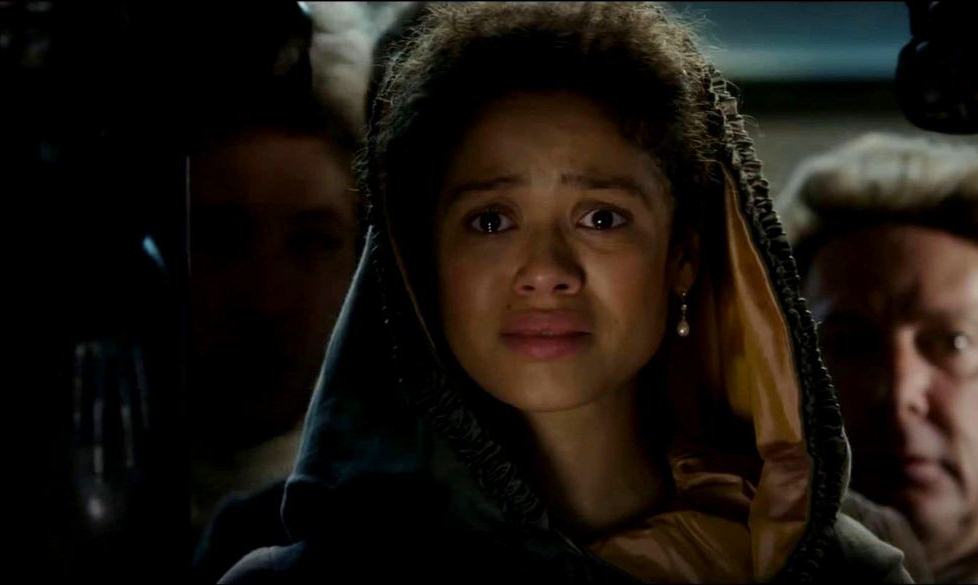
Gugu Mbatha-Raw stars as Dido Elizabeth Belle Lindsay in 'Belle.'
Gugu Mbatha-Raw stars as Dido Elizabeth Belle Lindsay in ‘Belle.’

“I show up on TV because I have the cover of a powerful white man.” – Melissa Harris-Perry, The New School, Black Female Voices series, November 9, 2013

True favor isn’t often courted. It is bestowed by condition or order of birth; it stems from long observation, from arbitrary affinity. It is built from the bestower’s personal ordination or, just as likely, from sheer auspice.

If you have to curry it, the favor will be fleeting. If you must work hard to retain it, you will find yourself in a position most precarious: the circle within which you mingle has an imperceptible crack, and you will be all too aware that you are one quip from slipping through it.

In Amma Asante’s gorgeous film, Belle, Dido Elizabeth Belle Lindsay is a favored niece of William Murray, Earl of Mansfield and Lord Chief Justice of England and Wales. Dido was also biracial, her father a navy admiral who left her in Murray’s care, following her enslaved mother’s death in the 1760s.

The film explores this central conceit — that it is favor which saves Dido from a life of enslavement, favor that elevates her above conditions of servitude within the Murray manse. Belle makes a point of asserting that the only reason Dido is left with the Murrays is because of her father’s blood. Much is made of her legal right to residence in the household. But we know what tenuous claims (if any) white blood afforded blacks during the 18th century. If biracial children were to be free at all, it was solely at their white parent’s behest.

Favor, then, was as much a requisite for freedom as moral, legal or genetic imperative.

When Belle arrives at the house as a girl, her first exchange with Murray establishes that he finds her “clever.” They are looking at paintings of their family in the halls of his vast estate (paintings which will be a recurring theme, as the film is based on a real rendering of Dido and her white cousin, Elizabeth, with whom she was raised). In fact, Dido’s cleverness is noted by all the white men she meets.

Tom Wilkinson plays Dido's great-uncle, William Murray, Lord Chief Justice of England and Wales.
Tom Wilkinson plays Dido’s great-uncle, William Murray, Lord Chief Justice of England and Wales.

In the Austen tradition after which Belle seems patterned,  a woman’s cleverness is a commodity. It aids within a larger social system meant to undermine and underestimate women. In tales like these, men are always a bit surprised when women are clever. We can tell the good fathers and brothers and suitors from the despicable ones when they do not scoff at or feel threatened by a woman’s quick wit, talent or intellect.

Dido has three such good men near her. First her father, who’s only seen briefly, plucking her from the slums and insisting she is loved. He is so effusive in favoring her, it’s tempting for viewers to doubt him. Instead, his adoring tone sets up what will come for Dido: a charmed life in which her uncle and an eventual abolitionist suitor, John Davinier, both protect and praise her with the same fervor.

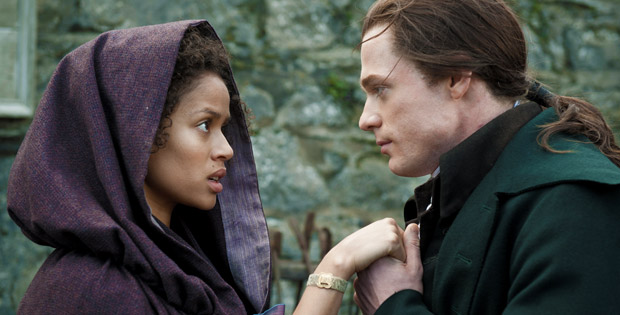
Sam Reid plays one of Belle's suitors, John Davinier.
Sam Reid plays one of Belle’s suitors, John Davinier.

I loved Belle. I loved its delicate treatment of race. We aren’t often offered portraits of 18th century life for blacks who aren’t enslaved. We aren’t often offered an onscreen reprieve from the brutality marking the era.

But this gentility is also troublesome. Dido is sheltered enough that she is unaware of the slave ship insurance case her uncle in the process of deciding until Mr. Davinier tells her. She has to plead with him to do so.

Unlike her uncle, Mr. Davinier expects Dido to be more “in touch with her blackness,” more vocal about it and less concerned with the frivolities of upper class life. (That expectation is compounded by his initial resentment that Dido’s station of birth is higher than his own.)

Meeting Mr. Davinier does, in fact, lead to a racial awakening. We know that Dido has never felt fully integrated into the Murray household; she’s required to dine alone and only invited to certain functions. She is fully aware that it’s because she’s biracial, but she also expects a change in station. She is surprised when she is not permitted to court as openly as her white cousin does. She is surprised whenever inequity presents itself at home.

One gets the sense that, if Mr. Davinier had not arrived to provide Dido with broader racial context, she simply would not have had it. (Here, it’s worth noting that — at least for part of the film — there is one other black woman present: a free black maid named Mabel, whose only lines in the film are offering to help Dido comb her hair and protecting Dido from being caught sneaking out. If the two women had been permitted more screen time or a single private conversation, we likely would have had the film’s only Bechdel Test-passing scenes, and Dido’s context for race would not have been confined to such narrow white gazes.)

Bethan Mary-James is Mabel.

Aside from Victorian fantasy, Belle is also part cautionary tale. It warns us against a race-blind approach to transracial adoption. There is no sheltering black children from the atrocities they may face beyond the gates of an all-white household. And it’s foolhardy for both parent and child not to anticipate how large race will loom in a black child’s life — even when that child is favored.

Late in the film, William Murray asks Dido just exactly what it is she wants. He is resigned and weary, convinced he’s given her everything he possibly could. He’s right. He has. But providing her a personal insulation from racism hasn’t been enough.

Earlier this year, Melissa Harris-Perry found herself in trouble with transracial adoptive parents for hosting a segment that featured a photograph of Mitt Romney’s adopted black grandchild. A panelist quipped, “One of these things is not like the others” and Harris-Perry chuckled knowingly at the truth of it. Kieran Romney will be raised in an all-white household in conditions of great wealth, but he will not experience life like the rest of his family.

Perhaps it is easier to make that point in a 90-minute film than in a 5-minute TV segment. But here it is: the favor of powerful white men does not shield black children from the blight of racism, neither does “white blood” when it courses under black skin.

It’s a lesson every child of color living under the awnings of powerful white families must learn. Even within their crystalline castles, life for us won’t be no crystal stair.

How We Lost 200 Black Girls in 12 Days.

BmftRxzIIAAXEXB
Editor’s Note (4/17/15): This post has been edited to omit the name, missing person’s photo/press release, and city of the missing person referenced in the first paragraph, at the request of someone identifying themselves via email as the formerly missing person.

In Virginia, an apple-cheeked girl with a Minnie Mouse bow in her hair has been missing since April 23. She is 14, bespectacled, and was last seen in an outfit fashioned of head-to-toe heather gray. Her name [has been redacted] and she is black, and because she is black, the national public was only informed of her disappearance via Twitter — a full five days after it occurred.

We are feverishly retweeting for her. But by now, we have to wonder what our retweets are worth.

The first hours after a child goes missing are the most critical. Every passing minute takes with it small sips of our optimism — and we are the only ones who even bother with optimism, we who can look into the faces of black and brown girls we don’t know and see something of ourselves.

We are all we have. Daily, we make each other’s empathy enough. We spread it thin and wear it raw. We tear it and pass the scraps down the aisle. But we always seem to learn of what lurks too late. We protest and our wails ring tinny ’round the choir stand. By the time our dissent projects, evil has already gained colossal ground.

I do not believe many disappearances are sudden. They are fastidiously planned, painstakingly executed — and even when the grown, hulking captors are not quite as clever as the welterweight girls they take, they wield the advantage of forethought. Often, they have watched and waited, perhaps walked with or ridden with, texted, even fed, the children they intend to steal. The children — the innocents — even those with the sharpest of wits and the bravest of faces — are simply no match.

Of course we do not expect them to be, though one would never know it by how slowly the public acts when the children who’ve been taken are black and brown.

By the time they take our girls, the captors have also studied the rest of us, long enough to know how we — their parents, their communities, their government, and their media — will respond to losing them. They know whether that response will pose a threat; in turn, they act only as brazenly or covertly as necessary.

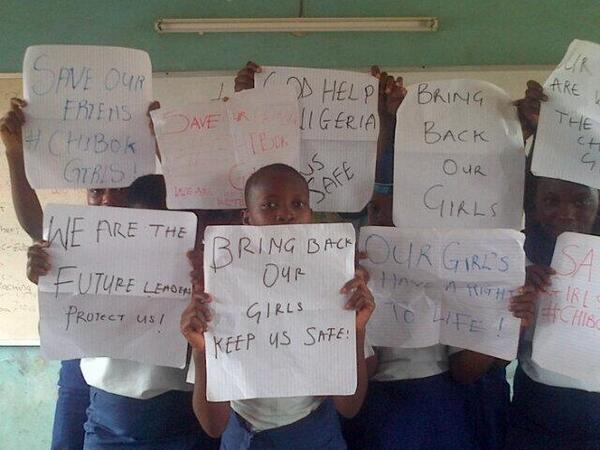
In the northern Nigerian state of Borno, close to 200 schoolgirls are missing. They were taken at night, but their captors, all members of the extremist group Boko Haram, could just as easily have attacked by day. It would seem they have been building to this. Boko Haram slaughtered 59 schoolboys in February. They have razed entire villages. And now, they are stealing and selling and ravaging teen girls by the hundreds.

Because the girls are black and halfway around the world, I (and likely much of America) first learned of them via social media, after they had been in the capture of rapists and murderers for a 12 full days. And it is only the constant, viral pressure of people who can compel themselves to care that their increasingly harrowing journey is now being covered by international media.

But few are sure what is accurate to report — and that is by design. Alexis Okeowo writes at The New Yorker that Nigerian military nakedly lied about having recovered “most of the girls” in the hours following their disappearance:

A day later, the military retracted its claim; it had not actually rescued any of the girls. And the number that the government said was missing, just over a hundred, was less than half the number that parents and school officials counted: according to their tally, two hundred and thirty-four girls were taken.

In truth, the only escapees were young women who took matters into their own hands and, aided only by adrenaline and auspice, ran.

If it is the number of girls who are gone that staggers us Americans — if we cannot fathom armed gunmen driving 234 girls deep into the forest and keeping them for weeks without even the mildest risk of retribution — it is only because we have not been paying close enough attention.

Bad men (and bad women) do not become this brazen overnight. Centuries of history, both personal and public, embolden them. History whispers: Violence subdues opposition. Apathy is an ally to evil. Governments that do not move swiftly to apprehend those who steal and torture their citizens will move too slowly to catch us. Big guns and ample ammunition intimidate even the most loving of parents — and if they are not turned away by the rumor or sight of our weapons, we need only use them. Every silent day deepens a disappearance. 

It is possible to lose hundreds of black girls at a school in a single night for much the same reason that, every day, here in America, 400 black children are reported missing: historically, too little has been done about it. And when we move it is with the torpor of slowly waking giants.

Our children deserve better than they’ve gotten — and perhaps insurgents and kidnappers understand this better than we do. If they are leaning against a towering legacy of inaction, we can only fight back by toppling the tower. We can only win by being quicker than they are. We must cycle through online awareness and outrage faster and transmute that momentum.

The girls in Chibok were taken nine days after the fourteen-year-old went missing in Virginia. Thousands of black children have disappeared here and abroad in that short time — and the critical, most early hours of searching have since been lost. The names of many will remain forever unknown to us; the faces of others will only reach the eyes of those with Twitter and Tumblr and Facebook accounts. To the extent that any large scale action is being taken on their behalf, we are advancing it, with our shares and retweets and reblogs. We are digitizing the door-to-door flier and amplifying untelevised Amber Alerts.

But there is more to be done, far more than hand-wringing and haranguing one another about how little society cares for the black and brown. We care for each other — and we have managed it while jointly enduring our own horrors. Care has gotten us through chattel slavery. Care sustained us through an underground syndicate of unreported lynchings. Care has led to reconciliation decades after genocidal slaughter.

We care for each other. It is imperative that we continue to. There is as much power in sustaining that care as there is in any insurrectionist’s plot to eradicate us. Often, it is all we have. But it burns. It has been known to light fires under dictators, known to turn enslavement camps to ash. Care is an oil that never fails to ignite.

Let’s Talk More About Intercontinental Blackness.

Note: If this post seems dated, it is. I wrote it a couple weeks ago, but not for this space. I pitched it to another publication that ultimately opted to pass on it. It also isn’t written in a voice entirely consistent with my other work here, but that, too, is because I intended to publish it elsewhere. If it helps, some of the content in Smith and Adichie’s discussion has become quite relevant in the past two days, with the news of first-generation American of Ghanaian descent Kwasi Enin who was accepted to all eight Ivy League colleges. USA Today’s report on Enin’s accomplishment goes out of its way to include this quote from a college admissions expert: “He’s not a typical African American kid.” At any rate, I hope you’ll read and engage it. 

tumblr_n30xcfVcuP1qaboh9o1_250tumblr_n30xcfVcuP1qaboh9o2_250

Begin with the common ground. It will, at first, seem hard to find, hidden as it is by a thick underbrush of assumption — African immigrants in the U.S. are haughty; African Americans don’t respect themselves — and tangled as it is in the foliage of frustration — Africans come to America and distance themselves; black Americans distance themselves by not bothering to distinguish between African countries’ histories. Yes, the common ground will seem miniscule at first; we are all so invested in our distinct cultural identities, all so protective when discussion about them is broached. But if we are ever going to have candid conversations about our intercontinental experiences of blackness, we’ll need to begin at the borders we share.

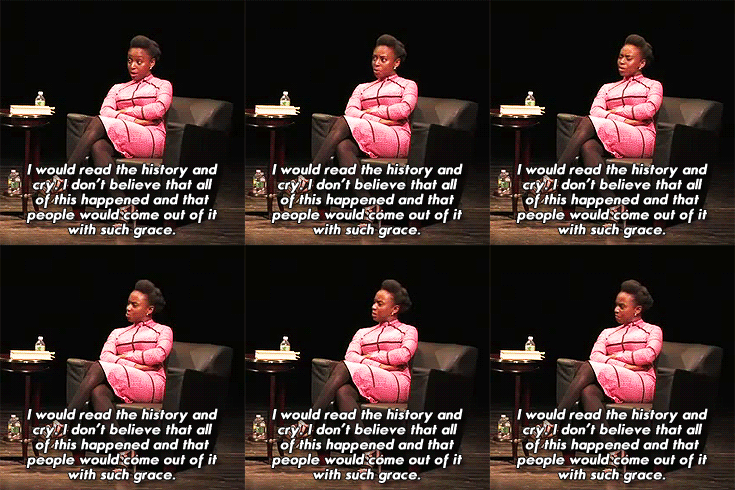
Authors Zadie Smith and Chimamanda Ngozi Adichie had this in mind on March 19 when they shared a stage at Harlem’s Schomburg Center for Research in Black Culture. Their conversation primarily centered on Adichie’s latest novel, Americanah, which grapples with the differences in the ways American-born blacks and African immigrants perceive (and internalize) race and racism in America. Since its release last year, Americanah has gradually made more public the long-simmering tensions between many black Americans and people of color born and raised abroad.

This public discourse is long overdue. Never before have black intercultural experiences been so multifarious in America. Between 2000 and 2010, the African foreign-born population doubled in size, growing from 881,300 to 1.6 million. And the recent raised profile of black British actors in America has deepened our need for nuance. This was readily apparent at this year’s NAACP Image Awards when host Anthony Anderson spent much of his opening monologue making superficial differences between black American and black British actors a running joke. He couldn’t seem to let go of accents and “difficult-to-pronounce” names such as Idris Elba (who is of Sierra Leonean and Ghanaian descent), Chiwetel Ejiofor and David Oyelowo (both of Nigerian descent) and Lupita Nyong’o (of Kenyan descent).

The show could have used its opening to build a transcontinental admiration society, encouraging us to look into some of the actors’ pre-Hollywood work or to note how many languages and accents they’ve had to learn to work in the U.S. film industry. But Anderson went for the shallowest observations, at a time when our need for nuance and depth couldn’t be more imperative. A few viewers balked at Anderson’s divisive jokes on Twitter, stating, “I really wish Anthony Anderson would quit the African vs. African American nonsense. It’s ignorant and unnecessary,” and “Black Twitter needs to handle whoever wrote Anthony Anderson’s opening monologue.” But Anderson’s lazy either/or quips are representative of larger incurious ideas about what black looks and sounds like in America and abroad — ideas that should be publicly challenged at every turn.

Challenging cultural assumptions seemed the order of the day, as Zadie Smith interviewed Adichie at the Schomburg — especially as Smith, herself of Jamaican and British descent, shared her perceptions of Nigerians and, at times, asked Adichie to confirm or debunk them. “Every Nigerian in London says they’re a prince, and we have no evidence otherwise,” Smith quipped. “There are maybe two princes in the whole damn country,” Adichie replied. They shared how the American use of “brother” and “sister” as racialized terms of endearment is foreign to them. “No black person in England would call me sister in a million years,” Smith noted, while Adichie said Nigerians do use “sister,” but it isn’t racialized.

zadiequote

This kind of “We do this. Do you?” tone permeated the discussion — and some topics elicited responses that seemed aware of how close every word might draw them toward a conversational landmine. Both writers’ faces seemed to brighten when they unearthed a shared experience or custom. And where their ideas and perceptions diverged, they listened intently, set on reaching an understanding. To be sure, they both had very specific ideas about African Americans and about America’s approach to engaging racial discourse. “In America, there is a willful denial of history,” Adichie observed. Both agreed that whites in the U.S. find it difficult to understand the role of race, and Adichie further mused, “I keep thinking: how can white people not get it, if they know the history of America?”

It was a bit disorienting, as an African American woman, watching these black women born and raised abroad discuss the function and dysfunction of race in U.S. It always is. Race plays such a central (and fraught and psychological and emotional role) in my experience as an American that it’s fairly surreal listening to women of color discuss it with the distance of cultural anthropologists. That insularity can be a barrier to African Americans’ candor with black immigrants.

But there was no denying Zadie Smith’s and Chimamanda Ngozi Adichie’s deep reverence for the black experience in this country. Smith, having seen a documentary with graphic depictions of public lynching, long before visiting the U.S., admitted to Adichie, “The first time I came to America, I couldn’t believe the streets weren’t burning.” Adichie also acknowledged, “The ethnic group I most admire in America is African Americans.” It was as important for me to hear their affirmation of my racial history and experience here as it was for me to listen to their own experiences of blackness in the U.K. and Nigeria.

In truth, there is more at stake in African immigrants’ and African Americans’ conversations with one another than in our interactions with whites in the U.S. Often, whites in America view the experience of blackness as a flat plain, regardless of complexion or nationality; here, stereotypes are primarily assigned by skin color, not country of birth or rearing. In the context of white supremacy, blackness is associated with primativism, regardless of where the black experience is lived. Even when this isn’t overtly expressed and even when, as in Smith’s and Adichie’s cases, black immigrants are considered “good black” because they aren’t African American, they still are not insulated from racism here.

This is where we find our largest plot of common ground. In America, racism visits us all. The currents our ancestors have crossed, even when traveling toward destinations that couldn’t be more far-flung from one another suggest that we stand a strong chance of forging crosscultural bonds. But doing so will mean tossing away the chaff of a loaded question’s intimations before answering it. , Adichie did this at the Schomberg when an audience member asked her to speak directly to her impressions of African-African American relations in the U.S. She ventured gingerly, “We’re trying to forge the bonds between Africans and African Americans, not crack them,” and stuck with a short answer. Keeping our tenuous bonds from cracking will also mean treading lightly along those borders we do share; the most innocuous misstep can derail our bridge-building efforts. It will mean holding some hearsay in reserve; not every rumor about another culture bears repeating. And we must refrain, no matter how tempting, from taking new acquaintances to task for past slights we’ve borne at the hands of their countrymen.

When we begin to pull up the overgrowth of our cultural misconceptions, we find that there is nothing flat about this plain. It is mountainous and nourishing and fertile. We come bearing our different kernels of truth, and it is only when we openly share them that our common ground can widen and our intercultural understanding can grow.