Stacia the Radio Producer (or the Cumulative, Collaborative Nature of Success).

CS0uX9WWoAEX-CV (1)

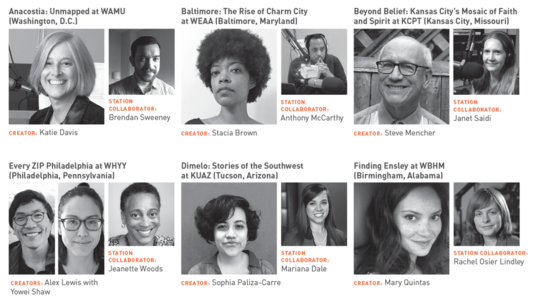
I’ve been waiting awhile to be able to announce this, but today I get to let you all know that for the next nine months (and hopefully beyond!), I’m going to be producing a radio show/podcast with Morgan State University’s radio station, WEAA FM 88.9, as part of AIR/Localore’s Finding America project.

Here’s how that happened, long version:

This month marks one year since I left my last full-time contract job and began to work as a freelance writer. A year was my self-imposed deadline. I knew freelance writing life, and I didn’t want that work to be my primary source of income any longer than was necessary. So I spent the entire year applying to full-time work, fellowships, residencies — anything I felt capable of doing well, anything that might lead to job security (such as that still exists). I went on a lot of interviews — mostly for editing and writing positions — and I enjoyed a great deal of learning opportunity this year. But nothing had resulted in full-time work. As I frequently disclose in my writing, as a parent, having full-time income is paramount — but so is being present for my daughter. I was pressuring myself to get an office job, because I thought that was the only way to feel financially secure and less panicked about the future, but I was also wary about the prospect, as I knew I’d be away from home far more than I wanted to be. I’ve been writing a lot for some incredible publications. But over the course of this gap year, no full-time employment had materialized.

As an artist, as someone who excels at just one art form/medium, making a living can be complex. It’s a lifelong riddle, really. I’m an English major with an MFA in creative writing who has been an online newsletter editor, a freelance writer, a weekly columnist, an adjunct instructor at four colleges, a community engagement fellow, an online community founder, a writing coach, a test curriculum writer, and a few other odds-and-ends position-fillers I can’t quite recall at the moment. I’ve always thought that I was my best self as a writer — and I still think that’s true. For every job I’ve ever done, I’ve drawn on my ability, experience, and intuition as a writer. It’s the only thing that all my positions have in common. I remind myself of this when I feel like a bit of a flake, transitioning from career to career and never finding solid enough footing. The desire either to create narratives or help others create them permeates everything I pursue — and, as through-lines go, I believe that’s a good one.
Screen-Shot-2015-11-02-at-11.42.44-AM

In June, I applied for AIR’s Localore/Finding America project with that in mind. I had just returned from Thread at Yale, where I’d learned a lot about how to approach precisely this kind of storytelling. One of our lecturers there was Glynn Washington of Snap Judgment. Another was Catherine Burns, Artistic Director of The Moth. And my roommate during the conference, by fate, serendipity, and/or unearthly grace, was Nicole Taylor, creator of her own long-running podcast, Hot Grease. At the time, I was awestruck by all the audio storytellers’ origin stories (this kind of work lends itself well to mid-career transition), and Nicole had encouraged me to consider getting into podcasting. But it felt sort of beyond me, even as my interest in it spiked.

About three weeks after Thread, when I got an email encouraging me to apply for Localore/Finding America, it felt fairly auspicious. 2015 has been a year of big leaps for me, so taking one more seemed like a no-brainer.

When I apply for lofty, dreamlike opportunities, I do so without expectation. I tell myself, “I probably won’t get this,” and if/when I do, I worry about how to make it happen afterward. It’s the only way I can bring myself to go after gargantuan things, things that make my heart rate quicken and my knees buckle.

This is one of those things.

I found out I was a finalist in August. I found out I was part of one of the 13 teams selected in September. And now I get to tell you all about it.

Our project is called “Baltimore: The Rise of Charm City,” and it’ll be a biweekly half-hour radio show/podcast, airing on WEAA and available for online download. It’s an intergenerational project: one elder and one young person, or one family with generations steeped in a single Baltimore City neighborhood. We’ll ask them about places they’ve been and things they’ve experienced in this city, in order to draw connections between life in Baltimore decades ago and life here now. Baltimore is a city with a history of rising from ashes. With this show, we want to explore what that looks like on a personal level. And it’s also a place with innumerable charms, often secreted away or lost amid media coverage of its harrowing challenges. The nickname “Charm City” was coined in 1975 by ad execs and creative directors, under the hire of then-mayor William Donald Schaefer, who wanted to rehab Baltimore’s public image. There have been other nicknames and campaigns, The City That Reads and Baltimore: Believe among them. But Charm City is due for a real revival — and the biggest charms Baltimore has to offer are in the stories and personal histories of and relationships between its people.

We hope to capture both concepts: the resilience and the charm.

Our first episode will air in January 2016, so I’ll be promoting it more here and via social media and an as-yet-launched website/blog before the end of the year. Localore/Finding America ends in July, and we should produce 12 episodes between January and then. But “Baltimore: The Rise of Charm City” isn’t just about producing a radio show. It’s also about building stronger relationships between the people of Baltimore and the institutions that exist because of them. WEAA’s slogan is, “The Voice of the Community,” and we want this project to reinforce that in as many creative way as possible. So we’ll be visiting community meeting spaces to tell people all about this program and to and to encourage them to interact with us by answering fun storytelling prompts, Vine/Instagram videoing themselves for our website and following us on social media. We’ll also have a few larger-scale live events during the project’s duration.

So that’s the project.

I’m very excited about it, for myriad personal reasons. Chief among them: I’m developing an entirely new skill set. By the end of this, I’ll be able to do something that requires much more of me than a lot of my previous work has, especially in terms of performing introversion and being present for others. But I’ve been building toward it. Brick by brick, but unbeknown, I’ve been becoming someone capable of this.

This project allows me to marry my desire to serve, my ability to write, and my passion for compelling people to give something of themselves to the world through their own stories. In order for it to thrive, I have to expand the borders I’ve set for myself — only so much of me goes out, and only for a set time, and only under specific conditions — and become something… more. I’ll need to believe I’m capable of doing that (and I cannot begin to explain how difficult that will be for me). And I’ll need to accept that this life — one where work isn’t always stable, but art is — is my life. It doesn’t look like other thirtysomethings’ lives. It’s a little (or very, depending on which one of my loved ones is assessing it) unconventional, but I’m so fortunate to be living it, just this way, with so much support from so many people.

There’s nothing that can replace people believing in you and your ability to excel at things you’ve never tried — things that genuinely terrify you. And when we announced this project at noon today, I received so, so many messages of excitement, affirmation and expectation that I feel both pressure to succeed and confidence that I can. I am a person who draws on a great cloud of witnesses for that kind of motivation. If you’ve tweeted, emailed, texted, or messaged me at any point during my professional life, you can claim part of this and my previous successes. You really can, and I cannot thank you all enough.

With great humility and gratitude, we proceed.

Toward a Life Worthy of its Art Direction.

On Monday, Medium’s Working Parents series published my essay on juggling the demands of parenting and freelance writing. It’s risky to write with candor about things like this when your employment prospects are constantly in flux. I’m never sure, when I’m at my most publicly honest, how it’ll affect any future hiring — and I’m not naive enough to believe that it won’t. But I also don’t know how to bottle anything up without it seeping its way into writing (ask my family or my exes). Whenever I feel especially alienated in a relationship or isolated in a situation, every word at my disposal grows a tentacle. I gather them and push them out toward anyone onto whom they might latch. And when I hear back from someone who says, “Yes, this has also been my experience,” or, “Now I understand your experience of our interaction,” every tensed nerve relaxes. The tentacles retract and words, at least in those moments of peace, simply become words again.

I also just think it benefits people to know what they’re getting when they get you. Sometimes I write to announce myself to strangers. In daily interaction, we don’t reveal even a fraction of what we’re thinking, feeling, fearing, or hoping. And we probably shouldn’t. But I’ve always felt that, when or if anyone ever wishes to know, there should be a manual for them, some shorter way to troubleshoot than the interminable, unaided process of trial and error.

I’ve heard back from several mothers this week about that piece and I’ve appreciated every exchange. We could all stand to have less pressure to hide essential parts of who we are. I’ve also gotten some very thoughtful leads from readers for flex work, remote work, and part-time work, and that’s been very touching. Every lead like that feels like encouragement to keeping finding ways to spend time with my little girl and, in a culture where I’ve seen unmarried black mothers harshly lambasted — and criminalized — for making these kinds of choices at the expense of their highest earning potential, I’m exceedingly grateful for that form of support.

Regardless of what happens, whether I take a full-time office job or continue working from home, I won’t forget those of you who validated my decision to freelance in my daughter’s first five years.

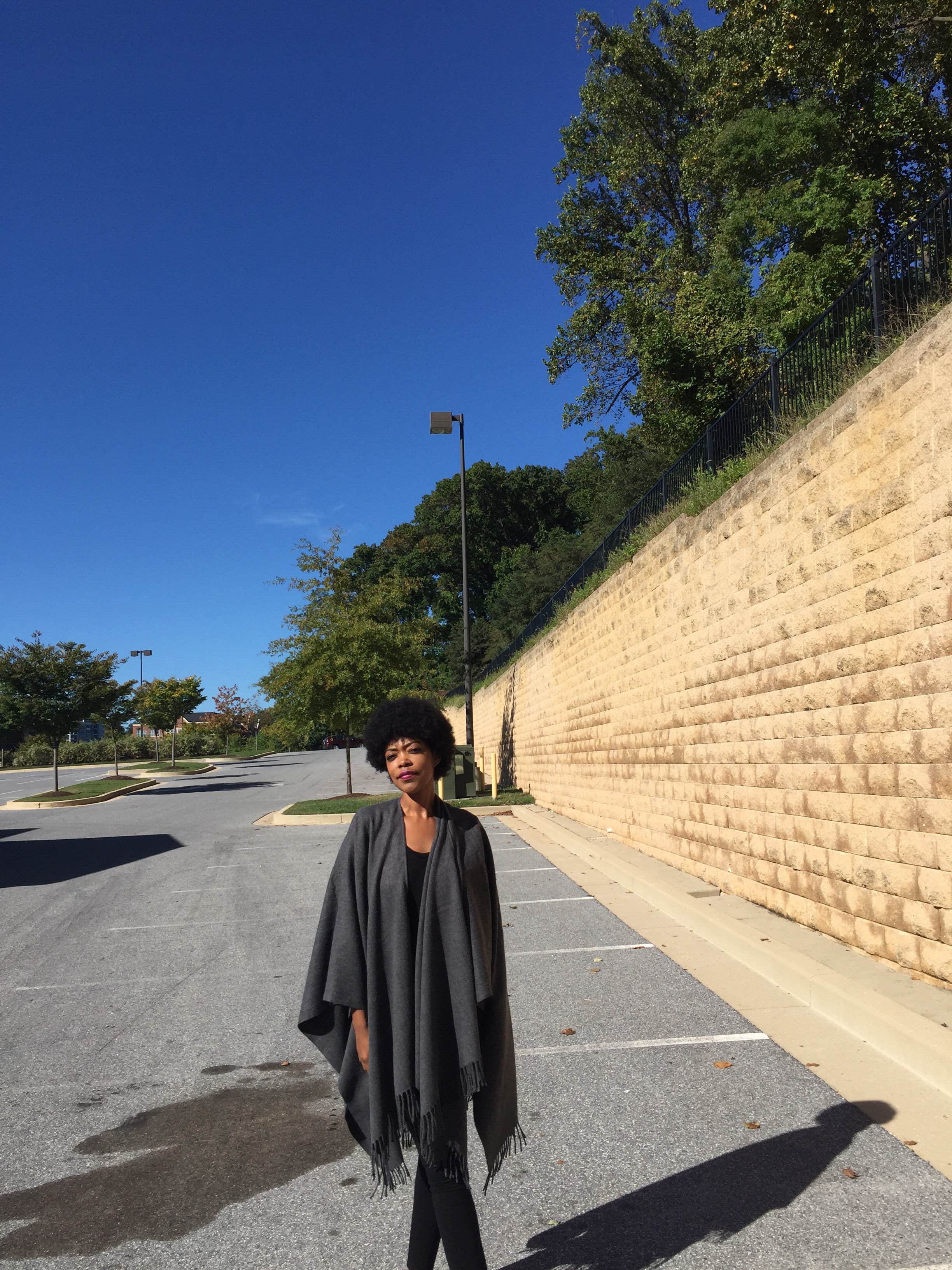
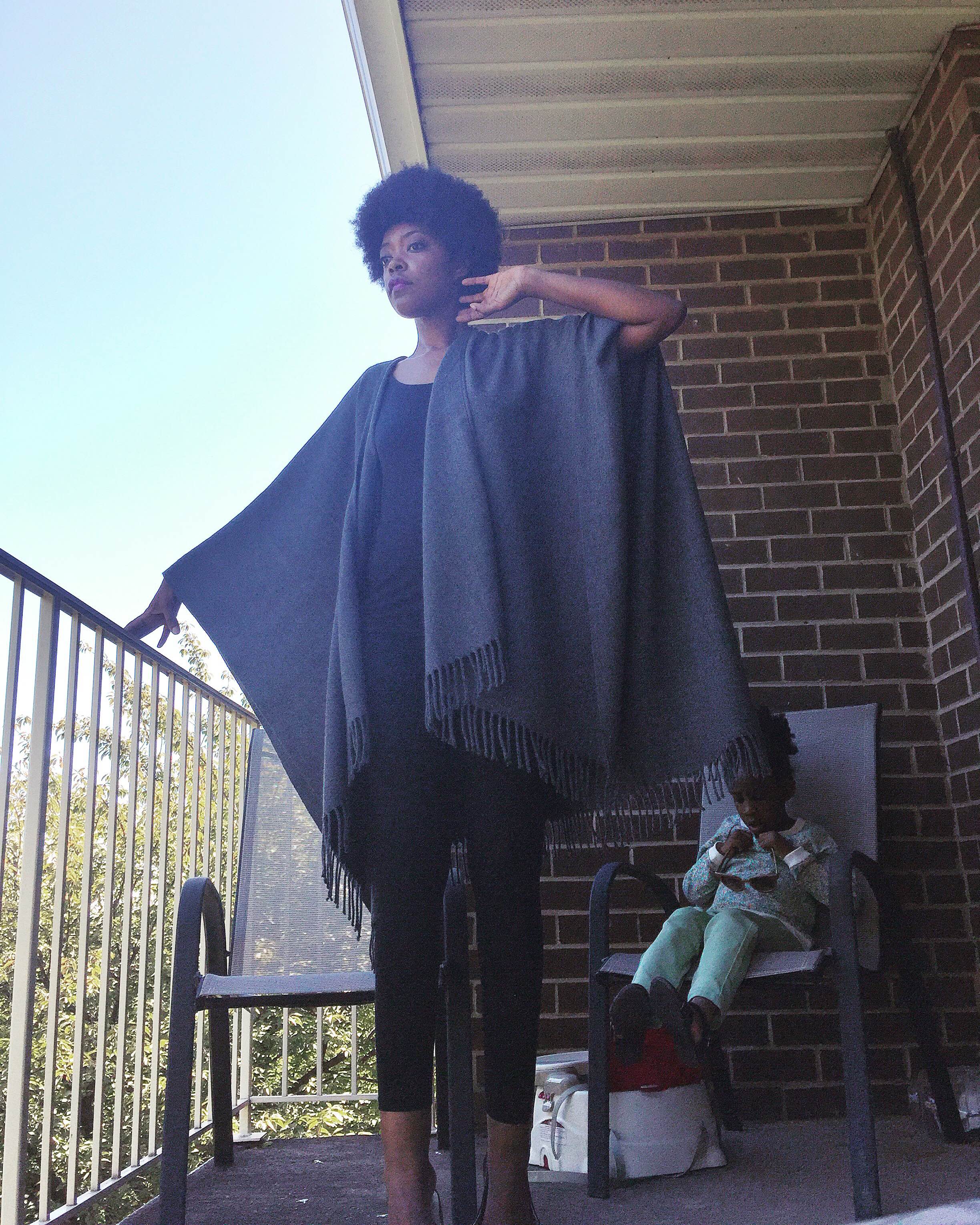
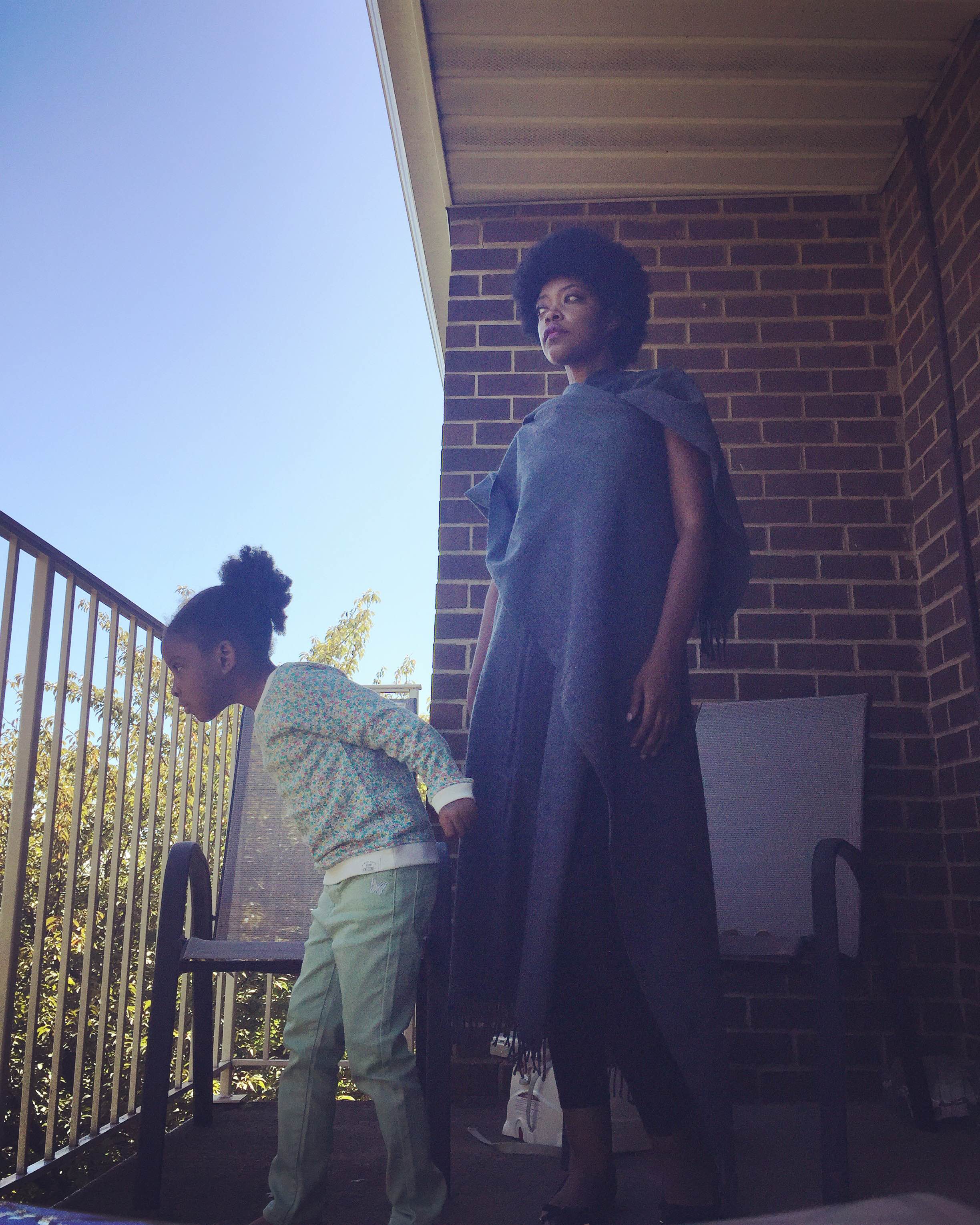
Every week has its own anatomy for the work-from-home single parent. Monday was chill and Tueday started out the same way, until I got an email offering me a labor-intensive project with a quick turnaround that I’m slated to begin this weekend. Wednesday and Thursday also brought new work responsibilities. I’m glad, then, that while my daughter was at school Tuesday morning, I decided to take these photos. I’m glad that when she got home from school, she joined me.

In the Working Parents essay, I focused on how difficult it is to juggle work and mothering. I centered the demands. But I didn’t talk about the lulls, the gaps between assignments, the ways in which the unexpectedly long waits for overdue checks can confine you to home (because you’re afraid to spend the money you have left and every time leaving home, it seems, involves an expenditure), and the ways you have to get inventive to avoid being listless or afraid or frustrated.

We take photos together and separately for countless reasons: to kill time, to bond, to giggle, to record this rare era — one that will draw to a close, for better or worse, before other of us is ready to let it go. Our self-portraits are also another way to shift our narrative. We create our story, add glamour in the places bleakness is poised to fester, add cheer when we’re feeling sort of down, add purpose to a day that is light on duty.

Most parents and their children do this. We fill our cell phones with moments. My family’s are intentionally artsy because we have time to make them that way. If these moments are merely our highlight reels, as so many have observed about what makes its way to social media or blogs, then what we choose to share says everything about who we think we are, who we aspire to be, and how we hope others perceive us.

I hope I’m perceived as thoughtful. Creative. Dramatic. Daring. Whimsical. Optimistic. Protective of my daughter’s wonder. Protective of my own. I hope I appear to be aiming toward an elsewhere, while relishing life right where I stand. 

IMG_0214

IMG_0221

IMG_0244

IMG_0259

IMG_0257

IMG_0238

IMG_0251 (1)

Snapseed (2)

IMG_0253

IMG_0258

Snapseed

Emmys and Cosmo.

I feel like I’m still very new to winning. I would imagine there are many people who’d disagree with me, but that’s because they’re observing from the other side of the glass. “Winning” is relative; everything is. And, of course, only we can determine the units by which we measure it.

I rarely feel like I’m winning when I’m expecting to reap a material benefit as a result. The rate of pay is never high enough, the terms of a contract never secure enough. And it rarely feels like a legitimate win just to accomplish a new feat. Sure, I was published somewhere. But how prestigious is the publication? Is it digital or print? How difficult is it to be published there? Am I proud of the work that made to print? Did I take pains with the wording or rush it through? Would the publication have taken an essay from anyone who could turn one around, just because they needed quick copy? It’s still not a book. It’s still not The New Yorker. It’s still not a full-time job.

It’s not whatever smoke or mirror I’ve convinced myself I should be chasing.

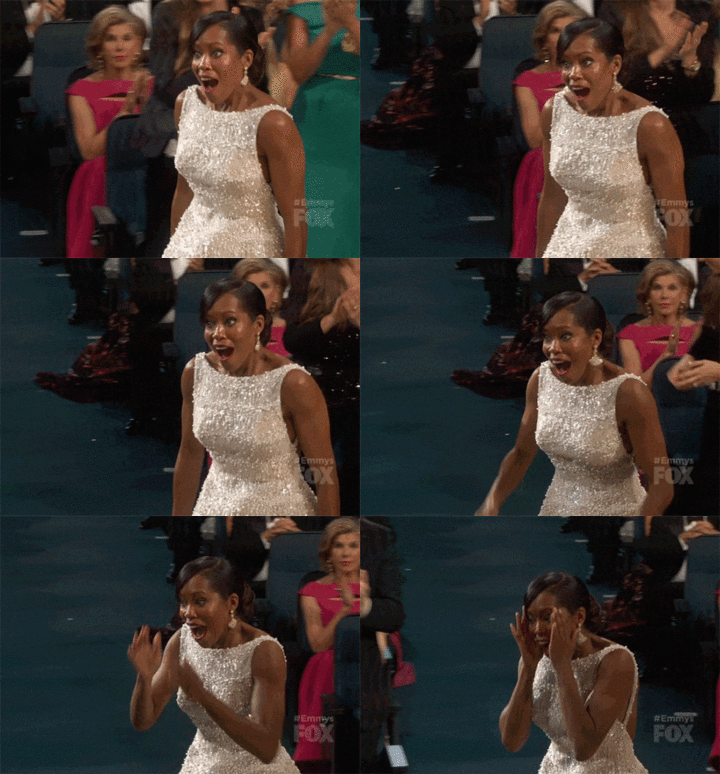
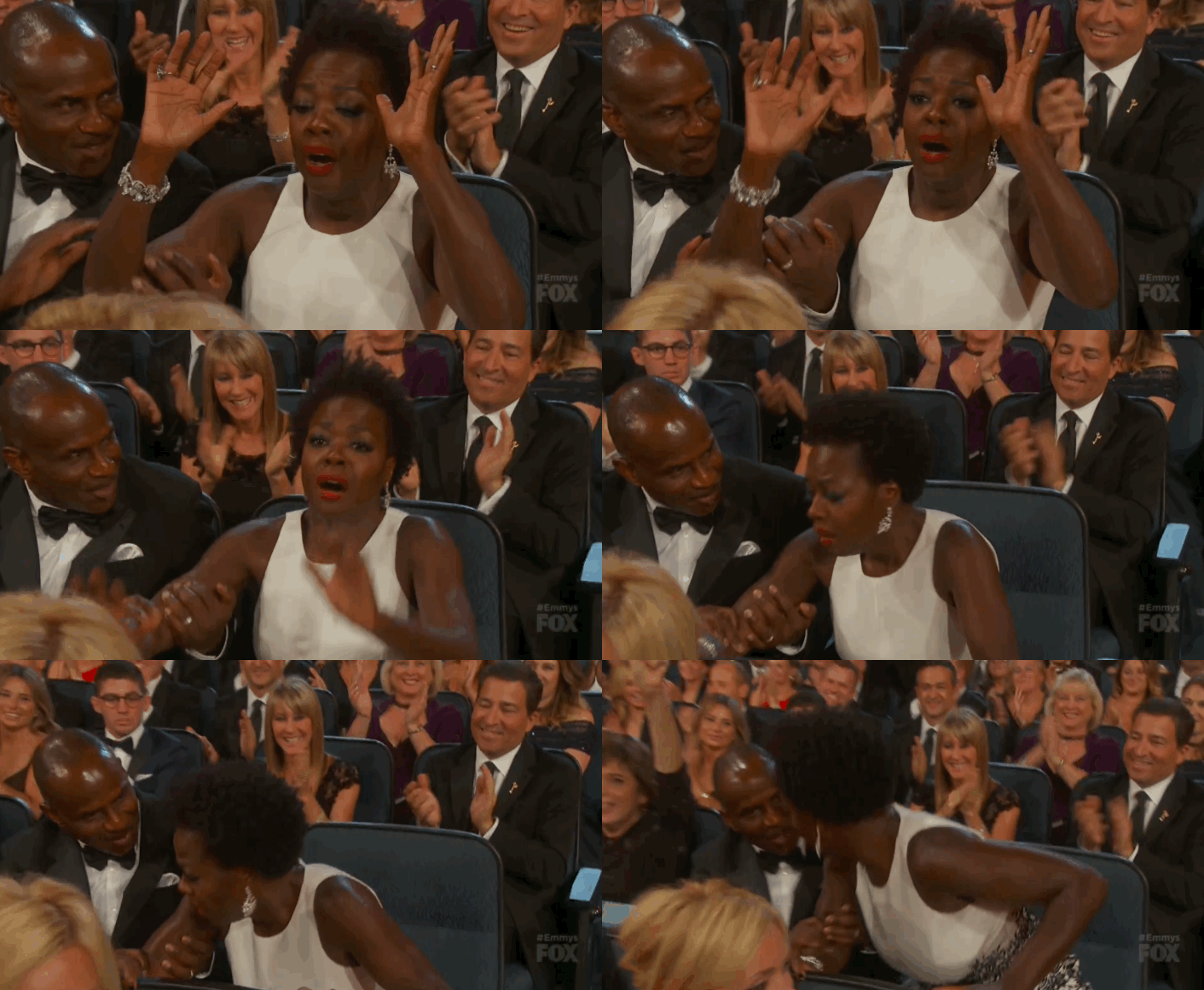
It’s hard for me to maintain a healthy perspective, is what I’m saying. While I was watching the Emmys Sunday night, I saw a few shining examples of health, examples of women — black women — clearly embracing their wins. And I had no idea how desperately I needed to see that until I was bearing witness to it.

giphy (7)

I’ve been watching Regina King on screens since 1985, when I was six and she first appeared on 227. Exactly 30 years later, she’s nominated for and winning her very first Emmy, despite having put in masterful performance after masterful performance for decades. It was never about an Emmy for Regina King. She just worked. From age 14 until now, in her mid-forties, she’s just worked. She’s acted, directed, raised a son post-divorce, kept a pristine reputation among her peers. She’s been winning. So when she accepted the Emmy, it was with pleasant surprise, deep gratitude, and admirable groundedness. She leaned right into that mic and told us all that it was particularly special because her homegirl and colleague, Taraji, presented it to her. She told us it meant more because her son, who escorted her to the awards, was present to witness it. And it was easy to believe her, easy to understand that the Emmy itself was mere icing. She’d long held all the ingredients she’d needed for personal fulfillment.

giphy (6)

And then I saw Uzo Aduba hear her name called as a winner. It wasn’t her first time, but she was as shocked and thrilled as if it were. She did not rush to the podium; she didn’t need to. She understood what it meant for her to win. For her, it meant leaning over to her sister, talking to her for a moment, ignoring the audience and the camera and the expectation that she hurry. That bond, that moment of privacy in the one of the most public possible venues in all of Hollywood: that was winning. “I love you mostly because you let me be me,” she said to her professional team during her speech. Maintaining your core identity in a profession where everyone’s job is to change you — role to role, set to set, carpet to carpet — is the truest success of all.

Viola-Davis-467

Of course there was Viola, whose relationship with winning has always been public and candid and complex. Viola, who wears her insecurities on her sleeve, who gives voice to every ancient feeling of inadequacy she’s managed to silence, who trusts us all enough somehow to confide that there are still uncertainties she has yet to vanquish. Viola is always winning, because, with every Hollywood validation, she deepens her advocacy for the women who’ve been cast aside, passed over, and ignored. Viola is always winning because a lifetime of feeling loss has taught her to consume accomplishment without an aftertaste of bitterness.

Taraji-P-Henson-467

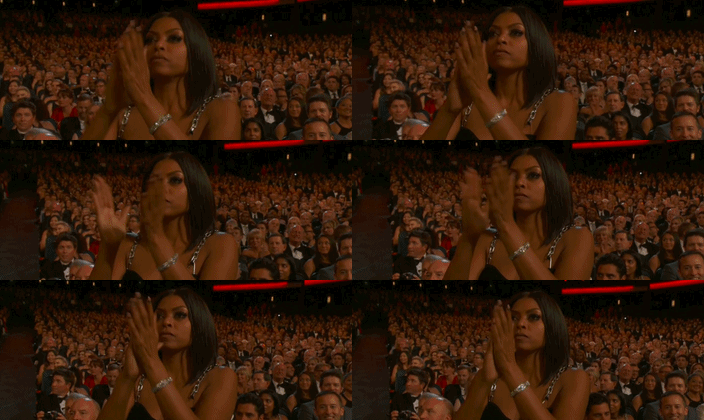
But it was Taraji who exemplified winning best of all last night, Taraji who took home nothing but her joy (and a lead role of one of the hottest series on television these days). It’s one thing to know how to remain fully present in the midst of a win, to understand its magnitude before the moment passes, rather than growing to appreciate it in retrospect. It’s quite another not to win, in the conventional sense, and to fully commit to celebrate everyone else who does, anyway. I’ve been there. And each time, I like to believe I’ve been genuine in my celebration of others. But I don’t think I’ve ever managed to fete someone quite as unabashedly for receiving something I really wanted as Taraji managed to do last night.

This moment was everything: crowd applause died down long before Regina made it to the microphone. Taraji yelled out a "Yay!" and hyped them back up, literally from the shadows of the a spotlight.
This moment was everything: crowd applause died down long before Regina made it to the microphone. Taraji yelled out a “Yay!” and hyped them back up, literally from the shadows of a spotlight.

There was no shortage of inspiration during these awards, and days later, I’m still thinking of how long it can take to experience a moment, how many years of dues-paying could be necessary before you get your due. I’m still thinking of everyone’s tenderness, of how intrinsic that is to the experience of winning. Kindness, uncomplicated delight for someone else, groundedness,  pride in oneself, gratitude, an ability to feel happiness unsurpassed for someone other than yourself: those are the surest gauges of success and contentment.

To win is to understand when to silence your questions and simply  accept every good thing that you attract. If we are only in competition with ourselves and not with our peers, if our goal is only to top our last highest peak, we still need to know when to rest and to bask and to cherish. Every good thing must be good enough, even as we look ahead and work toward something more. It could all end here and we would find ourselves the opposite of empty-handed: heavy-laden with moments, relationships, accomplishments, and triumphs over our more despondent, disappointed natures. Each in our own way, we are constantly winning.

I got my first byline at Cosmopolitan.com yesterday. My mission is simply to be pleased with that today.

Three in a Day (and Other Feats).

I managed to catch this before the story rotated out of the feature spot. I think the sight of my story being the lead on the homepage will always thrill me, even when it only lasts a half-hour. That never gets old.
I managed to catch this before it rotated out of the feature spot. I think the sight of my story being the lead on a homepage will always thrill me, even when it only lasts a half-hour. That never gets old.

I’ve had a busy week, juggling multiple deadlines, and as fortune would have it, everything I wrote was published today: the latest of my weekly columns at New Republic and Washington Post Act Four, as well as a quick piece for Rolling Stone.

Here are links to those:

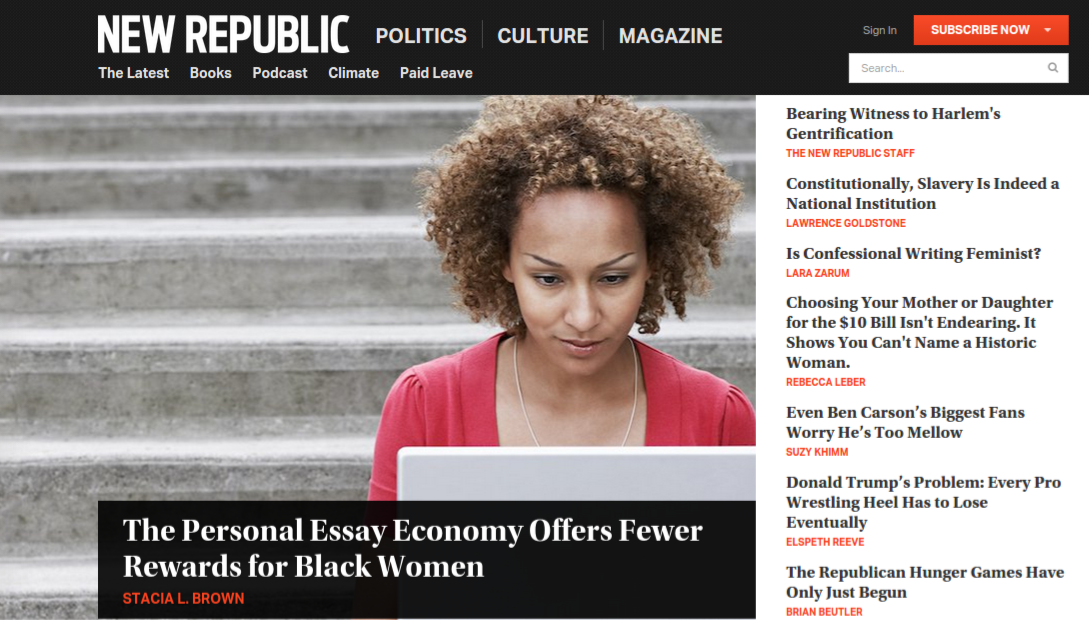
The Personal Essay Economy Offers Fewer Rewards for Black Women” – New Republic

The Perfect Guy and the Drawbacks of Colorblind Filmmaking” – Act Four

10 Things We Learned from Cosby: The Women Speak Special” – Rolling Stone

I honestly don’t know I managed to put out these three pieces this week. Some weeks are just “How I Got Over” weeks; from the other side, you see the chasm between fixed points and marvel that you made it. In addition to those three pieces of writing, I had a few other deadlines, meetings, obligations, trips. And the requisite duties of full-time caregiving for a daughter who’s becoming increasingly expectant of my time and attention, because we’re together roughly 21 hours a day every weekday (and 24 hours a day most weekends). She used to care less whether I was nearby when she was younger; now any distance we have from one another seems to overwhelm her. That makes conducting phone interviews, trying to write coherent sentences in momentary emptiness of the next room, fielding work calls hard, or just finding an uninterrupted stretch of minutes to compose a single, complete, and purely adult thought very challenging.

I don’t know if I’m a good enough writer to convey just how challenging it can be, so I won’t belabor it. Just know that this week, in particular, it all got the best of me. It’s important to admit that — and if there’s anyone around to help when you reach that breaking point, that critical mass of responsibility, tell them immediately and be very specific about what they can do to assist you.

A few days ago, I was looking at Twitter like I do compulsively every day and decided quite extemporaneously to stop tweeting. I took about five days off before I tweeted out my articles today and thanked some folks for sharing them (Thank you, if I didn’t tweet you directly; I saw it and I appreciate it). It was a good decision.

I’m not a cold turkey person; I don’t handle sudden and total abstinence well. It’s just hard for me to make drastic changes and stick to them. So I’ve still been reading my feed, but I’ve been refraining from active participation. My life has gotten really noisy, and I’ve been looking for ways to quiet it. This has proven to be an effective way to do that, at least in the short-term.

That said, there are a few things I just can’t resist sharing:

  1. This local news clip I cannot stop watching, because it’s amazing from start to finish:

  2. This really endearing story about a boy deciding to forgo the use of his prosthetic eye, because of Fetty Wap — and Fetty Wap’s nuanced, self-aware response, which thanks the boy’s mom for being “a fan of him as a person” (if not a fan of his music, because… yeah) and thanks the boy for being a fan of Fetty Wap, the artist: 

  3. I definitely would’ve tweeted yesterday about how I spent a few hours traveling by car to an all-Bilal soundtrack. I would’ve shared these two versions of “When Will You Call,” the raw, “She just left me, and I’ve forgotten the purpose of soap and water” original version and the “I’ve had some distance and I can be a bit more mature from a reasonable remove” Terrence Blanchard version. I would’ve noted that this song chronicles a textbook case of ghosting, which didn’t have a name back in 2001 when the track was released. I would’ve mentioned that I used to feel as anguished as he sounded when I listened to this as a 21-year-old. But when I listened yesterday, I wondered what he did that made her decide not just to leave but not to let him know why she was doing it. Age and experience can drastically alter the way we listen to songs. Early Bilal reminds me of when I was a senior in college (His first album dropped that year, and I’d never heard anything like it). In retrospect, he just sounds so impossibly young and petty and angsty — like we all were at that age and still are on occasion, if we’re being honest. I’ve connected with a lot of his later music (and I listened to a ton of it yesterday), but there’s something so nostalgic about First Born Second. Certain albums and artists make you feel like you can reclaim time; as long as you can revisit their past works, your own past — however naive or fraught– is never entirely lost.
  4. This was so good, I just went ahead and tweeted it, break-be-damned: 

    Please read that. It’s so important.

  5. Lastly, I *might* have shared this clip from early yesterday evening. It was around dusk and at that time, I was fielding second-round essay edits, stressing over a proposal, considering quitting professional writing, starving myself. So I thought it would be a great time to dance. My daughter, who was dealing with some toddler-level stress of her own, did not agree:

Running Toward 36 (With My Woes). 

cf6

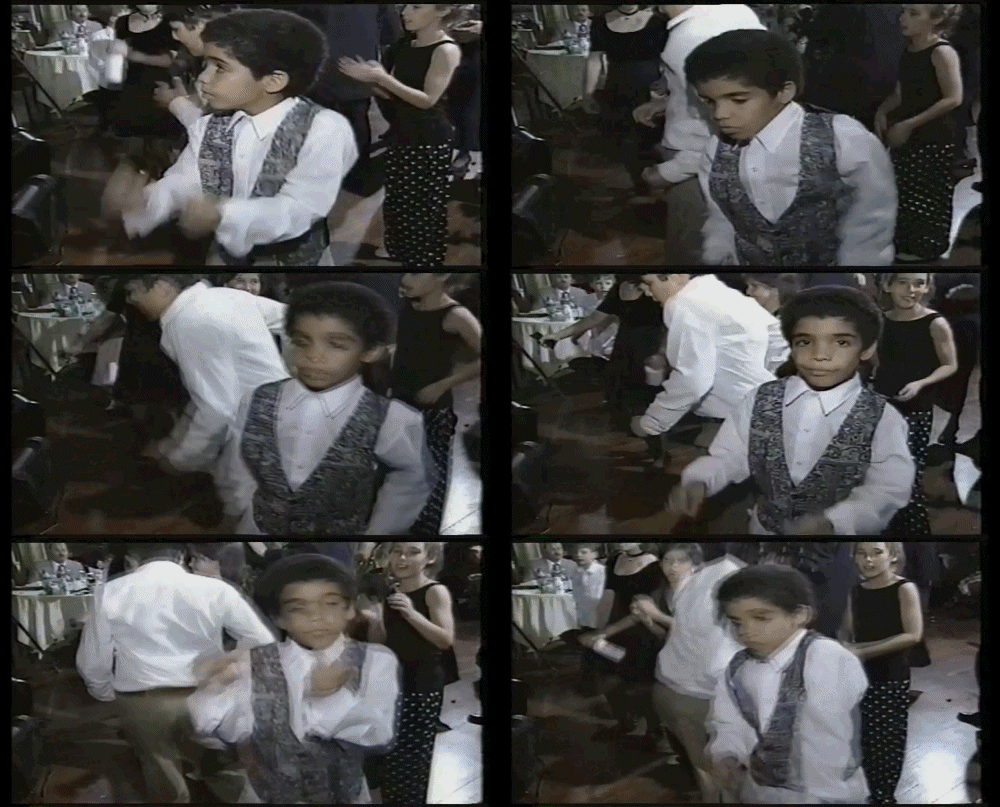
I’m turnin’ into a nigga that thinks about money and women, like, 24/7. That’s where my life took me; that’s just how shit happened to go. — Drake, “Know Yourself”

When I turn 36 in two months, I will cross over the benchmark of this decade where I’m closer to 40 than I am to 30, far closer to middle-age than post-adolescence. Subconsciously, during 2015, that must’ve been significant to me. This has been the year that I started chasing. Finally, I stopped waiting for my dreams to find me working, and refocused my work so that it gathered like an arrowhead and flung itself forward.

I still don’t know what else I want to be when I grow up. But I know far better, thanks to 35, who I am right now.

A few days ago, I tweeted that the 30s are a revelatory set of years — and not everything you become during them is inspiring or pleasant; not everything you realize about yourself makes you proud. The truth is: the first five years of my 30s taught me just how many of my good traits are decision-based. They’re the result of waking up every day and choosing to be kind or generous or thoughtful or compassionate. None of that is innate. I’m not always tender with my child instinctively, for instance. Sometimes I take a deep breath first and set my intention on a soft word or a gentle touch or a question — “Was that nice?” or Was that the right choice?” — rather than yelling, “What’s gotten into you?!”

And, I mean: I fail.

I can be shallower than I thought I had become, either compelled or unnerved by physical appearance in ways I thought I’d conquered as a child. I still notice how people look before I notice who they are; how they look still impacts how I process who they are. It’s something I intend to continue rejecting, now that I’m aware just how much work I still need to do.

Even when I think I’m operating out of pure human kindness, I can discover, at the end of a day, that I was in fact motivated by the response I’d hoped to receive. The disappointment I feel when I don’t get it is what makes that apparent.  Take this, as an example: when I was 33, I fell in love with someone, dated him for four months, and pined for him over the next two years. For him, I would run a gauntlet of errands, under the guise of just-friendship, attempting all the while to convince both him and myself that I was simply good-hearted, willing to accept what would never be — us, a couple, reconciled — yet still present myself to him, whenever he was in a bind. Love, after all, whether or not it’s met with equal or greater force, is kind. It doesn’t seek its own. It meets whatever need it sees, without expectation of repayment. This is what I wanted us both to believe. It’s who I thought I was: purely kind, unconditionally loving.

But I was stealing all kinds of repayment: the sight of him, his touch, the scent of him steeped in the cloth seats of my car, long after he’d left it, his conversation. I used it all as a kind of fossil fuel; I let it burn off my loneliness.

Worse, in my 30s, I’ve been on the receiving end of this very kind of attention, offered as under a label of friendship and undeterred by known disinterest in it. I’ve chosen not to reiterate my disinterest, because these days, having someone familiar near can be far more appealing than resolutely sending him away.

I am embarrassed to admit that. I spent my 20s eschewing all behavior that could be called clingy or needy or desperate or validation-seeking. I prided myself on being able to take a hint. I always left first, even if I didn’t want to. I knew all the adages: Never make time for someone who doesn’t make time for you. Listen the first time. Follow your first mind. If he’s truly interested, you’ll always know it. That I could know those things as true and decide to test them anyway isn’t something I enjoy disclosing about myself. The woman who does that isn’t the woman I believed I was.

My 30s have made me different. My 30s, with a small child I have yet to raise, whose future frightens me, for all its potential and for the possible ways that this potential will  carry her far away from me and lead me, in my very old age, back to the silent, less vibrant life I led before her, are the decade where my worst qualities and greatest fears are revealing themselves and it’s too exhausting to keep pretending to the world that I don’t have them.

I am often afraid, especially in my friendships and with lovers. I do not want to let anyone go. I can say this now because I am almost 36 and I think, when a woman is still single at this age, this sort of admission is expected.

I do enjoy the life I’m carving out. I am a writer, which is really all I ever wanted to be in the world, and I am a mother, which I was never certain I wanted to be, but have risen to — with all my heart — just the same. Ten years ago, I would not have dared ask for more. I do not always dare it now.

But increasingly, I am challenging myself to own whatever I am and then to interrogate it. I am, at turns, angry and jealous and petty, short-tempered and selfish, and even, as this most recent failed relationship taught me, unwittingly duplicitous. I have done more than my fair share of compromising what I truly want. Now, I am becoming exacting about it.

I simply want to be good — to myself, to my child, to others, good at my work and at a love as yet unseen. I no longer want to pretend to anyone that I am sweeter or more self-sacrificing than I am. And in the absence of that performance, in the midst of my daily choosing and failing, I want someone beside me making his own, similar decisions. Among them: accepting me just as I am and choosing, each day, not to flinch.

Happiness Happens. 

img_9595

“People who like sweet things are people who want to be happy.” — Kim Mi Young, Fated to Love You, Ep. 2

1.

I like extravagant gifts: costly travel, pricey meals, good wine, undivided attention, genuine laughter at a joke I’ve made, forgiveness. I don’t often get those things and when I do, typically, I give them to myself. This is, in part, because grown-ups told me, when I was small, that it’s impolite to ask for gifts, immodest to carry myself as though I expect or deserve them, imprudent to confess aloud that I desire them.

I come from a line of women unaccustomed to getting what we want, unaccustomed to granting ourselves permission to voice our desires. We have never known what could be asked for without the answer of a scold or denial, without the answer of silence or a promise unfulfilled. My grandmother, a middle child among ten siblings; my mother, the only child of a single teenage mother; me, born to my single mom when she was 19: We weren’t offered much in the way of lavishness.

That history matters.

img_9605

2.

Some families are run spare and hectic, in households where extravagance, if it ever stopped by, would have nowhere to sit, no uncluttered surface on which to settle.

By the time I was seven, my grandmother was doing fairly well, working as a court stenographer, a career from which she would retire after nearly 30 years of service. I grew up watching her take cruises to Caribbean and South American isles. She came back with textiles and key chains and magnets for me, t-shirts I never wore painted with the colors of toucan plumes.

She went to jazz concerts and stretched out on lawns to hear woodwind trios manically convey whatever they could without words. Sometimes she took me with her.

And other times, she took me to plays and performances. We saw Jelly’s Last Jam with Savion Glover and Maurice Hines. We saw Spunk, a play that adapted three of Zora Neale Hurston’s best short stories. Twice, we saw the Boys Choir of Harlem.

In those halls where choral sound rose to the rafters, where the patter of a dancing legend’s tap shoes echoed offstage during a scene that portrayed his death, where a south Floridian negro dialect was performed just as Hurston wrote it, I came to understand what money could buy– not just a night at the theatre but exposure, not just access to a performance, but the sense that you are sharing emotion and wonder in tandem with whoever sits beside you. Only you, in that great hall on that one night, will ever have seen the show precisely as it was performed in those hours. Tomorrow, someone will recite the line with another inflection or remember, that time, to say a word they often forgot, or, someone with a certain rogue sparkle in eye, will improvise. But tonight, you all bore witness to this incarnation. It will not come again.

Nana, in her extravagance, taught me that happiness does not reside in the moment for me, but in the recollection of it. In the process of recalling what marvels I’ve had, those marvels magnify.

For holidays, she bought me gifts I never requested. I didn’t ask for many things by name, so she had to guess. She bought me a Sega Genesis Game Gear one year, a toy I did not realize she knew existed. I politely played, watching the blue, spiky-haired hedgehog move through a gauntlet of chores toward some goal I was meant to help him reach. When the batteries ran out, I never requested new ones. I did not ask for any other game cartridges.

I was often mistaken for ungrateful or stoic or sullen over those kinds of gifts, played through once and set aside. But I remember receiving them. I remember wanting to share them. I remember that they were given to me because someone wanted to see my eyes widen with surprise and with glee.

In the end, all true gifts are experiences, the material encasing them meant to harbor something far more meaningful. Whether or toy or a theatre ticket, the happiness is in whatever action follows your grateful receipt of it.

img_9604

3.

How painful it becomes to live lowlier than you ought, to cloak yourself in denial of need or of pleasure, to constantly settle for less than you’d like. Over time, it means forgetting what you like. It results in an uncertainty of what would truly make you happy and, for a time, it seems it seems that you are in a state of perpetual discontent. Nothing is ever quite as pleasant as you’d want it to be.

There are ways to end this. Each one begins with opening your mouth, with saying: I want. and allowing it to be both public and true. Let it breathe I want. and animate I want. and demand undivided attention.

Photo credit: my five-year-old daughter

4.

When I got the email, I was afraid to say yes. I waited nearly two weeks to respond. What if there were strings attached to the offer? What if I said yes, admitting just how much I wanted the gift, and it never came? The email, as soon as I acknowledged it, could become a broken promise, a wish unfulfilled. It was possible.

But what if there were no strings and the gift did come on the promised day? What if, like the heroines of myth and of fable I’d long been admonished not to emulate, my wish — once confessed — came true?

In all confession, there resides an element of risk. Courting rejection in exchange for a chance at delight: this is the writer’s only real ambition. This risk is nearly a friend, a long-familiar.

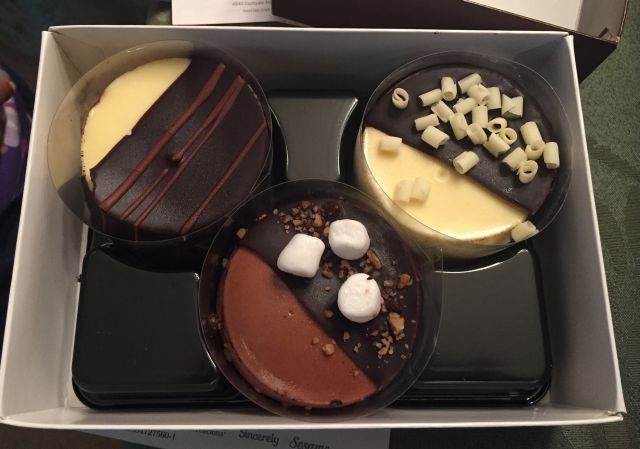
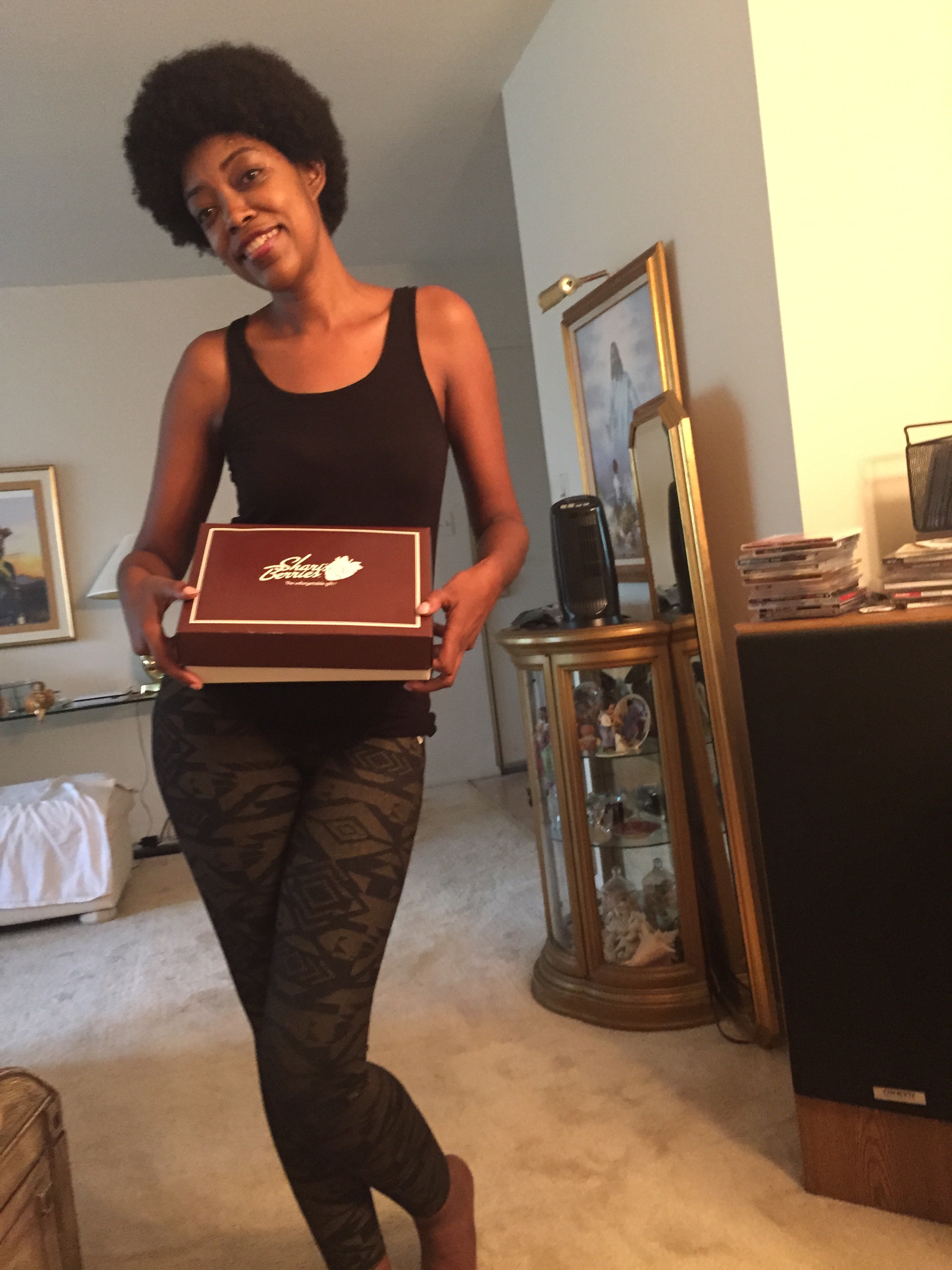
So I said an eventual yes, and the company let me choose any gift it offered. I said yes, though I apologized for what may be viewed as greed: I wanted both the strawberries and the cheesecake trio. I said yes, with a slight blush and a bitten lip, as I always associate gifts like these with the lovers I wish I had asked for them.

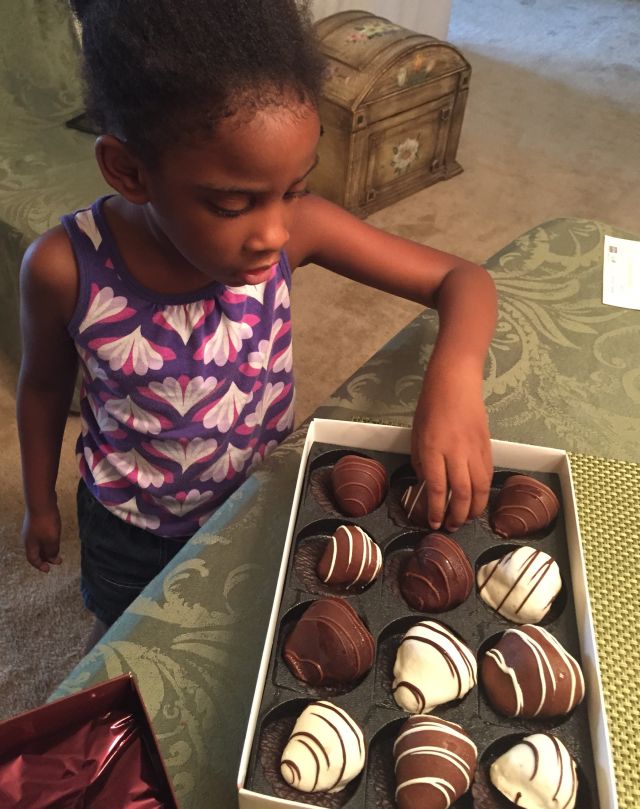
In turn, the company waved its magic wand. Three days later, the package arrived: one dozen chocolate covered strawberries and a lovely assortment of miniature cheesecakes. They sent the gift, with simple hope that it would make me happy. I shared it with my daughter and my grandmother, splitting the cheesecakes between us and offering up all the white-chocolate-coated fruit to Story. They were her favorite. I’m smiling even now, remembering how delighted she was biting into them.

img_9606

Happiness happens at the intersection of courage and confession, risk and recollection. I am never prouder of myself than when I choose to stand at those crossroads.

Dispatch from Freelancia.

tumblr_m4nff6oZdk1r73zp4o1_500

I wasn’t supposed to be in town this week. I was supposed to be in New Mexico, about 30 minutes from Albuquerque, at a writing retreat. I’d been looking forward to it since April: the desert, the solitude, the productivity. Though I’ve been incredibly fortunate this summer, having traveled to Yale (three days) and to DC (two days, commuting) for training in digital storytelling and media appearances, respectively, neither of those opportunities — as useful as they’ve been — afforded me quiet, unmarked time to write. The writing retreat would’ve given me seven whole days, the longest stretch of time I would’ve spent away from home and away from my daughter not just this summer, but in the five years I’ve been a mother.

I was really ready for it.

I’d envisioned myself writing at least one (but ideal two) nonfiction book proposal(s) and finishing the rough draft of a YA novel, returning home with reams of handwritten notes for new projects, my brain swept clear of its dusty preoccupations. (In all my fantasies about free time, my reach exceeds my grasp.)

The trip didn’t pan out. I thought I’d have childcare for the entire week. I didn’t, and I couldn’t get an alternative solution together in time to attend.

The irony is that this was still the most productive writing week I’ve had in quite some time — distractions, kid in tow, and all.

I wrote two essays on Sunday, one that would run on Monday, the other on Tuesday. I spent the middle of Sunday night, between 1 am and 5 am, turning around edits on the Monday piece, and spent Monday afternoon turning around edits on the Tuesday piece. Then I turned my focus onto a piece that was due on Wednesday, one that required interviewing (and transcribing an interview) and watching a documentary. On Tuesday night, a reporter for the Baltimore Sun’s Insider blog called at 9 pm to interview me for a column called “The 410 in 140,” which focuses on Baltimoreans who use Twitter in noteworthy ways. I managed to file the essay with interviews late Wednesday (after staying up until 4 am Tuesday night/Wednesday morning to work on it); the piece ran Thursday. Thursday, I also pitched what I’ll be writing for Monday’s column with The New Republic and Thursday’s contribution to the Washington Post Act Four blog.

Today, I’ll be attempting to schedule and conduct interviews for the Monday column, as well as doing research for it.

You can find all this week’s essays and the Baltimore Sun Insider interview, in order of publication, here:

That level of productivity, when coupled with all the other demands on my time and resources, comes at a cost. And the anxiety I feel about generating ideas, meeting deadlines, and writing well — every time — is compounded by the freelance net 30 (or 40 or 60) payment terms. When I’m writing anywhere new, I’m never quite certain when I’ll be paid (and the onus is, of course, on me to invoice for payment in a timely manner, which I don’t always remember to do, because: other deadlines, responsibilities, invoices, obligations).

I love being this busy with the work of writing. I don’t love what the business of freelance writing does to my heart rate and stress levels. I hope it will always be okay for me to express that here, at my personal blog, without seeming ungrateful for the opportunities I’m being afforded. I wish I’d had access to this level of candor about the business of writing when I was, say, 18 and picking English as a college major, or even 26, when I borrowed thousands in loans for my creative writing MFA. I don’t believe in discouraging anyone who aspires to a career in new media writers, but I do believe they deserve to know what awaits them. I think more of us are being open about the rigors and challenges attendant to this life — and that can only benefit future generations of workers.

============================================================

I’ve been giving some thought to how much of my life is spent online. One of the questions I fielded for the “410 in 140” piece was about whether or not I feel a pressure to use Twitter constantly. The answer is tricky. The relationship between the freelance writer and social media is an essential one. In much the same way that syllabi and lecture prep, grading, and holding “office*” hours are necessary, unpaid labor for adjunct instructors at colleges, social media use is necessary and unpaid labor for new media writers. It’s a basis for research, a space to solicit interview subjects, a platform for carrying out the kind of intellectual debate I imagine goes on between colleagues in the brick-and-mortar newsrooms to which I don’t have access (only, on social media, that debate is more inclusive, occurring as it does across class lines, regardless of city, state, or country of residence, with far more diversity along race, gender and disability lines).

I can say for certain that, to whatever extent I’m on anyone’s radar as a writer about culture, race, motherhood, or anything else, it’s owed to my online presence. Everyone goes about growing a readership differently. My way has been slow, with an emphasis on quality over quantity (even now, though it’s thrilling to occasionally discover raw numbers of clicks or unique visitors, I try not to linger too long on the size of an essay’s reading audience. I care more about how memorable and affecting a piece is, what — if anything lasting — it contributes to the larger discourse on an issue, and what — if anything — it compels a reader to do). Interacting with people online, thanking them for reading and sharing my work, trying to emphasize to them that we’re in ongoing dialogue and that I’m trying not to write at them, so much as to them, and that I’m not interested in having the last word on any topic, simply because I’ve been fortunate enough to have my word published — these are the cornerstones of approach to writing for new media and for growing an audience in a grossly oversaturated market.

But I do crave a greater sense of balance. I envy my friends who nobly take “social media breaks,” a week here, 30 days there. I covet how refreshed they always seem when they return. I’ve never been good at cutting off any activity or person completely cold turkey. I don’t know if that’s due to a lack of discipline or simply that I’m better at making long-term changes when I do so gradually and moderately. But I probably won’t ever have a long lapse of online silence. A day here or there, where I’m on deadline or actually (gasp) out gallivanting through the tangible, analog world around me, perhaps. But I imagine even then, I’ll tweet once or twice.

This is especially true now that I’m up to two weekly columns — one at The New Republic and one at The Washington Post Act Four. I can assure you that there isn’t enough pre-existing knowledge or opinion or insight in my head for me not to be reading news stories or engaging with other thinkers about the news of the day. The most efficient way for me to engage in that work is via my Twitter feed.

In the last few month of the year, however, I do want to make more of an effort to step away. Quality over quantity is a principle that needs to operating in my personal life, too. I’m quite proud of how much work I put out this week, over a number of publications. But this week was also supposed to be about retreating, getting some physical and emotional distance, and recharging. I’m hoping to make my weekend about that (… while also working on my Monday column).

*Adjuncts don’t typically have brick and mortar offices — and certainly not ones that they don’t share with anywhere from one to 40 other people.

Life with a Five-Year-Old Coworker.

tumblr_m2ljew4A9d1qgcra2o1_400

In the past ten days, I’ve started three different potential blog posts, but I’ve been overcome with ennui somewhere between the opening paragraph and the halfway point of each. If I’m bored with the work, I know that you’ll be twice as bored. So I’m not going to publish any of that.

Since my last entry here, I’ve been published at RollingStone.com twice, once about Bill Cosby and more recently about Black Twitter (I spoke about the latter — among other things — on L.A.’s KCRW Press Play on Friday).

I’ve also written more weekly contributions for The Washington Post’s Act Four, about my friend Daniel’s fantastic young adult novel, Shadowshaper (and about the state of YA lit for black and brown kids generally), about “The Astronaut Wives Club” and its dogged insistence on Disneyesque racial commentary, despite being set in the early 1960s; and most recently on the news that the Obamas’ first date is being made into a Before Sunrise/Medicine for Melancholy-type romantic dramedy.

Last weekend, I spent two days in D.C. at Women’s Media Center, where I was part of Progressive Women’s Voices Class of 2015.

When I couldn’t find anyone to watch my daughter for 10 hours per day (eight in training and two in round-trip Baltimore-DC driving commute), the Center kindly provided two amazing caregivers for my daughter. The first day, she timidly crept up to me as I sat in U formation at a table, trying to focus on the work ahead. I scooped her into my lap and rested my chin in the downy crown of her head. I felt so empowered in that moment, so supported. It was one of few moments in my parenting life when I felt like Having It All might not be the myth we’re convinced it is, that if work and life can never be quite balanced, they might at least have sweet, small clearings like this one at some of their intersections.

I breathed in the scent of my daughter’s hair, an admixture of cremes and jojoba, proud of myself for my tentative strides toward caring for it myself, ever since my mother — who’d lived with us since I gave birth and who, aside from being my first-string childcare back-up, was also my kid’s only hope for fashionable, healthy hairstyles — had moved away a month before.

My first-ever attempt at a milkmaid braid (or twist, as it were). I was so proud that I took pictures! Next up: learning to cornrow. ... Maybe.
My first-ever attempt at a milkmaid braid (or twist, as it were). I was so proud that I took pictures! Next up: learning to cornrow. … Maybe.

I was starting to get the hang of this, I thought. Finally. A full five years in. I’d worried that, with one less person to fall back on, the plates I’d already been struggling to spin would definitely topple. But here I was, managing a rigorous training program, surrounded by wildly accomplished women — chiefs of staff, directors of government agencies, nonprofit founders, news analysts, people who’d confidently testified before Congress, all of them the kinds of change agents I hope my own child will grow up to become. And here she was in my lap, being so serene and well-behaved. Here we were — miraculously — making it.

Then she lifted her head from my chest, and for a second, her face clouded. So did mine. “Are you o—?” I started and she answered by vomiting. Oatmeal, an orange wedge, a single bite of a chocolate muffin. There it all was in my lap.

So much for uncomplicated triumphs. Motherhood is a sustained effort at maintaining professional competence while struggling to mask the faint waft of toddler vomit lingering in the fabric of your smart little rayon-blend, business-professional romper. It’s practicing how to sound like an “expert” in an interview while rushing into the lobby between takes to rub your kid’s belly, make empathetic cooing noises, and apologize in advance to the sitter for any repeat-hurling performances (Mercifully, there were none). Because my attention was so divided, I didn’t entirely understand the assignment we were supposed to complete toward the end of Saturday’s session.

I ended the day flustered and deeply unsure of what I was even doing there. Had I experienced something like that at a training session before becoming a mother, I certainly would’ve excused myself from the table to cry. I was close this time.

But the thing that forced the tears back into their ducts was that I knew how hard I’d fought even to get to the building that morning. To load my child up and drive her here, to find our way out of a poorly designed underground parking garage without freaking out, to recover my calmness after getting lost in D.C. as I so often do, to keep telling myself that my acceptance to this program wasn’t a fluke and that someone more deserving without so many self-perceived obstacles should not, in fact, be here instead of me. Those things were as difficult as managing the heartstring-tugs of a nauseous child and the eight hours of new material that needed to be synthesized and practiced immediately. But I’d done them. Here we were. I’d do this, too.

IMG_9176
Binder full of women(‘s media training material).

By Sunday, I knew that no matter how I performed in the day’s exercises, the training had already given me invaluable experience in managing my life. It helped me refocus on Beyond Baby Mamas, an undertaking I’d ironically convinced myself I was too busy simply trying to survive as a mom to devote the necessary attention to. It taught me not to be afraid to articulate my needs as a parent entering a professional space and, more importantly, to seek out spaces that are welcoming of and accommodating to me as a parent. Those spaces do exist and, when possible, I am entitled to enter them. Where they don’t yet exist, I now have a precedent for what such spaces should look and feel like. And above all, attending PWV media training boosted my confidence in my ability to juggle the unexpected with the anticipated, with my daughter in tow.

I’ve had few greater moments as a mother than the one I felt last weekend, when it became clear that my daughter understood what I was doing at Women’s Media Center as work — that even at almost-five-years-old, she is capable of comprehending that our world’s responsibilities are broader than the work we do at her school and in our apartment. As a (mostly) work-from-home mom, that felt momentous.

She was thrilled to return to the offices on Sunday. “Are we going back to work?” she asked and I knew then that she’d approached the weekend with her own sense of duty and viewed it with her own sort of seriousness.

Her voice and, often, her laughter filled the corridor outside the conference room, and some of the deeply gracious women there were calling her “Dr. Story” because she was wearing and wielding her Melissa and Doug lab coat and check-up tools. It should be said that, no fewer than ten times over the course of those two days, trainers and trainees asked after her recovery from the upset-tummy episode, and/or offered their own commiserating, encouraging anecdotes about their own kids’ projectile vomit.

I’m happy to report, our second day onsite was completely bile-free.

Children, Church, and Charleston-Writing at Vox and WaPo.

FullSizeRender (2)

Last week, I spent four evenings at a local United Methodist Church where my daughter was attending Vacation Bible School. My grandmother suggested I sign her up. She’ll be five on the first day of August and she’s reached a tipping point as it relates to social interaction.

When I moved back to Baltimore from Grand Rapids when she was one, I did it in part because my mother, my grandmother and her father’s parents were here. (The other major factor in moving had to do with the a greater breadth of career opportunity on the East Coast, as opposed to the Midwest.) But I didn’t take into account that by moving here, she wouldn’t have access to a single cousin. I’m an only child. My mom was raised as an only child. Her dad’s closest brother lives four hours away (and all three of his daughters are just about grown). She has zero extended family, beside grandparents, here.

I’d forgotten how big a deal that is. I wasn’t raised near cousins, either. And without siblings, I spent a lot of time alone as a kid. Most of my social interaction occurred at church. I still keep in touch with my church friends because of that; they kept me from complete childhood and adolescent isolation in ways they’ll never be able to imagine.

Most of the kids at VBS knew each other; they were a part of that church’s family. Many of them also had siblings and were attending with them. Only two girls were around my daughter’s age and they weren’t really playing with her because they had big sisters to shadow. Instead, my kid found herself surrounded by protective, older boys. They took her hand to lead her to the next station or small group activity. They gave her bear hugs. They looked down at her to make sure she was mouthing the right words and making the right gestures during song time.

It wasn’t lost on me that we were gathering in a church at night, that we were mostly black congregants, that predominantly black church gatherings at night have become sites where we have to worry over our safety in ways we haven’t had to in over 40 years.

I was introducing my daughter to church not just as a place for Sunday worship but a space where one’s sense of family is expanded. I’ve never seen as much joy on her face as I did on those nights.

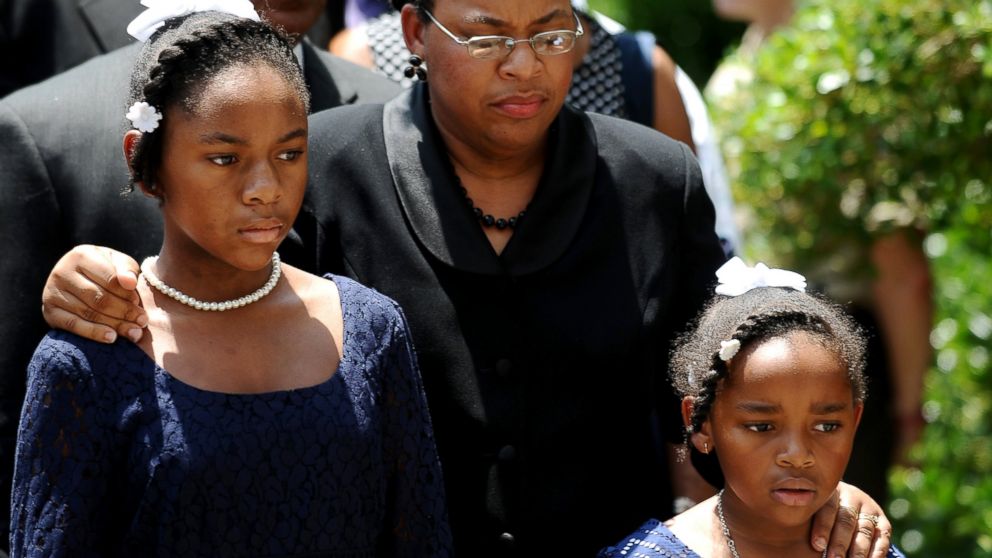
Eliana Pinckney (left) and Malana Pickney (right) with mother, Jennifer (center) walking to the South Carolina statehouse

I watched her beam and I thought of those girls, Eliana and Malana. I thought of how one of them was there that night, at bible study, waiting on her Daddy to be done for the night. I thought about the trauma etched onto their faces as they were photographed following his casket to the statehouse (under the shadow of a scornful flag). I thought about the bright white bows in their hair as they sat on either side of their mother in the front pew at his funeral.

The Pinckney girls and their mother at Rev. Clementa Pinckney's funeral
The Pinckney girls and their mother at Rev. Clementa Pinckney’s funeral

Church is family to them, too. I hope the other children there help them smile again, deeply smile, even if it may take years for them to see the edifice itself as a site of pure and guileless joy.

I wrote about the enduring importance of the black church now, in my first piece for Vox. You can read it here. (Many thanks to Dylan Matthews and Lauren Williams for the opportunity and editing, respectively!)

I also wrote about Dolen Perkins-Valdez’s new novel, Balm, at the Washington Post and how eerily resonant it is right now, set as it is on the cusp of the Civil War’s end.

It took me about a week after the massacre to submit anything to a publication about it. I blogged here first, as I often do when I’m trying to process something horrible, unsettling or difficult. I don’t have to be as coherent, precise, or formal in this space. And I feel more confident that the people who read me here are patient, nurturing, and supportive, as I try to work through tough emotions within a safe online community context. That’s important for people like me, who don’t have as many people to touch, soothe, or talk to in person as others.

Community matters. To the extent that any of us have a public voice, we owe its credibility and impact to the people who allow us to vet our first instincts and initial thoughts without condemnation.

Thanks to you all.

Black Faith in a Time of White Supremacy.

1.

When the mothers of the church got to casting out demons, they’d set their massive weathered bibles in our tiny laps and tell us, “Whatever you do, don’t let go of the Word.” And we wouldn’t. We’d clutch those King Jameses in our trembling hands and we’d wait out the after-service exorcisms.

We were children of parents who spoke in other tongues, danced themselves to ecstasy, prayed themselves apoplectic. The adults addressed the devil directly sometimes, told him he couldn’t steal their joy, demanded back the years he had stolen, the relationships he’d severed, the health he’d destroyed.

They told us we were waging a war unseen. We’d best be prayed up and gird ourselves against principalities and powers, spiritual wickedness in high places, miscellaneous, but terrifying minions from hell.

We believed them.

2.

I talked to a friend from that childhood church a few years ago, one whose parents, like mine, were on leadership staff there. That one of mutual friends had died suddenly, young and wed and parenting, still zealous about his own faith, was the reason we’d gotten in touch at all. We were trying to make sense of it.

I was thinking of how late we would stay after service as kids, waiting for our parents in the semi-darkened sanctuary, security volunteers posted, yawning, at the entrance and exit doors, all but the most fervent among them, longing to head on home.

“Do you ever think about how we were raised, how different it was?”

I was asking as if gazing back at something we’d survived. I was asking as a woman who considers herself logical and rational now, but who also still hopes for heaven and shivers at the thought of hell.

I wondered if he remembered the bibles in our laps, the prayer warriors and their wrinkled hands, all those conversations about demons conspiring to lure us away from our Lord.

He was calm when he answered. “All I know is that without being raised that way, I’d be dead or crazy now.”

My grip on the phone loosened. He didn’t say any more. But the weight of a dozen secret, sidestepped disasters walled themselves high behind his words. I couldn’t push back, even if part of me wanted to.

I believed him.

3.

We welcomed the white folks in. And over the years, they came. Some poor and some polished, they came. We broke bread with them. We prayed for them. Aware of what we guessed might be their discomfort with our traditions, our language, our liturgy, we sometimes went out of our way to assuage their unease. We laughed alongside them. Thought nothing of it.

They rarely stayed.

4.

I needed time away from church because it began to feel too much like a house of superstition than a respite reserved for communal worship. I did not want the strength of my faith to be predicated on the material blessings I stood to gain by believing. I just wanted to believe. Even when babies were killed by those closest to them. Even if those professing to share the same faith as mine committed unspeakable acts of violence. Even if I never earned more than I did at my poorest. I didn’t want to think that by tithing or praying I was somehow more insulated from harm than my neighbor, that my church attendance or my own unfocused stabs at righteousness would protect me from worst of life’s fates.

John the Baptist was beheaded. Four girls burned. As have countless crosses. Myles Munroe and his wife died unexpectedly in a plane crash, on their way to work for their ministry. Our Christian friends and relatives contract diseases from which they die as often as they are healed. We are not all spared. And what good is our belief if it can be shaken when God doesn’t step in to prevent the calamities we don’t think we deserve? What good is our faith if we base it on the dollar value of the bills we place in an offering bucket or on uttering a certain combination of words during prayer? What makes any of us think we will never have to stare down unimaginable despair, simply because we’re devout?

I needed a God who felt all the more real when the world was at its worst. And to test that He was the one I had vowed all these years to serve, I thought I had to get away from all the other Christians who sought to define Him for me. I had to interrogate what I questioned, what I doubted, what rang false, even after a series of itinerant preachers echoed it during revival.

There comes a time when faith can no longer be absorbed secondhand. Wheat — what you alone are certain you believe — and tare — what you’ve been taught but have never bothered to question — must finally part ways. And the voice that exits your body in prayer must be clearly recognizable as your own. It cannot mimic your mother’s or be tinged with the sweetness of Grandma’s clichés.

This is your life. You alone will answer for it. And the only voice you’ll be able to access then will be your own.

I wandered a while on a long stretch of road, the light on its path possibly dim at turns. It took entire years. I left markers along the dirt, not entirely sure I wouldn’t find myself returning to them.

5.

My meandering days were numbered when I had a child. It was clear to me as she ripped her way out and the nurse rested her in my arms: this girl was not the work of her father and I alone. She had not gotten here by sheer force of my bodily effort. She was not a result of mere biological function and, because of this, part of her would always be unknowable to me. I’d need help then, to reach that part of her. I’d need a mediator whose presence among us was also not the mere work of mortal hands.

The church friends I made as a child are still, by and large, still fervent about church and faith. Even the ones I wouldn’t have guessed would be. Most of them are parents. They are raising their children the way we were raised. They are doing this because it works. If they, having ventured away from our sacred, if cloistered, community, and having seen and survived the darkest days they’d known, and having found themselves right back in the house of God , alive and there to tell, then so would their children. Most of them.

This is reason enough to return. This, and days like this one, when the words to explain how this happened, where and when it happened, could not possibly come without divine intervention.

6.

7.

Before the massacre at “Mother” Emanuel in Charleston, SC, I had been inching ever closer to God. He came at church on Sunday, when the pastor told us, “You have to cope before you can conquer,” and later asked us to turn to our neighbors and declare, “I am raising my faith to the level of my fight.” He came though a long conversation with a friend that night. We prayed for one another. No. More accurately, he prayed for me and I stammered a few well-intentioned words in return. But he told me that God did not feel the same way about my faith as I did. He didn’t see it as feeble, flagging, inadequate. He didn’t consider it something I was “struggling with.” I am not a case study in what it means to falter. My faith has been sufficient, even when it’s seemed small, even when I’ve had a hard time voicing it. It’s been sufficient because I wouldn’t let it go. It’s a seed and, as such, it retains its ability to grow.

When we doubt, the friends who believe alongside us are often the light that keep us drawing nigh, lest we float away. We hold onto them when horror rushes in. We remind them, “Whatever you do, don’t let go of the Word.” In that moment, they are the Word in motion. And if we must die, for welcoming the troubled white supremacist 21-year-old whose boyish face looks as innocent as the brain behind it is wicked, if we must die for praying alongside him, if we must continue waging a war as unfathomable as it is unseen, there is no one better to be with in the end, than the people who kept us feeling closest to God when we felt farthest away.

There is no greater lesson to be gained for believers than to keep believing, right next to those with whom and for whom you would not mind dying. We are what we need most, now and ever.

8.

Yesterday, I sang a worship song. I haven’t done that, unprompted, in a while and I’ve never recorded myself singing one. I am glad to have that moment now, when freedom feels like such an improbable farce.

I echoed the words of a popular tune, one that the congregation had crooned in church on Sunday. I sang that I’d withhold nothing. I meant it and cried as I often do when I sing a prayerful song and every fetter falls and I feel — however fleetingly — free.

I sang it twice.

Hours later, nine other people who likely knew and sang that song and whose hearts promised the same, lay dead just feet from their church’s altar.

Here, Lord, is my desperation.

Here, Lord, lay my anger.

Here is the love I hope won’t not kill me.

Here, my longing for retribution.

Here, the depth of my unforgiveness.

Here, my hopes for their souls’ safe passage.

Here, my desire to see them again, in a life beyond this often terrifying one.

Here, every doubt I have about what was and what is, and what’s still to come.

I deny You nothing.