Get Real, Get Right.

Like Truman, I had walked to the end of a soundstage, expansive and domed, a manmade construct where I’d dwelled since the day I was born. I followed a once-holy script, so weighted with rewrites the original text seemed illegible, and in its appendix, a map of circuitous arrows. This was a province governed by a trumped-up paranoia, a place where God watched like a hawk with the imperative to smite at any time. He sat high and looked low and, though he was love, He was also a wielder of swords; just the threat of one’s wing or the promise of another sword’s knighthood, whole lives could be held in check. Though the God they’d confined to this land necessitated lifelong service to the poor, the men and women who believed themselves His ambassadors amassed wealth at the people’s expense and boasted often of their riches to impoverished congregations.

These leaders were not like John the Baptist, wild-eyed eccentrics momentarily stricken with doubt but ultimately willing to die for their gospel. They were not like Moses, weary and at times uncertain but obedient even after 40 years of wilderness.

They were more akin to Ananais and Sapphira, apportioning unto themselves not just money, but truth and hope, compassion and power, which belonged to an uncompromised God and, in turn, to an underserved people.

At the edge of the world, at the age of 25, I clawed free, broke through an uncharted dimension. On the journey, many people passed by, headed into the land that I’d left.

I didn’t warn them of the sanctimony that would meet them there, did not tell them that though its pew-sprinting, alter-fainting, frothed-mouthing practices may seem the height of religious freedom, they were not headed for liberty but instead a new snare.

Beyond the only world I’d known, I met many obstacles. Uncharted terrain is always treacherous. I stumbled through jungles, nearly missing the garroting vines. I fielded the unbidden questions, the doubts, the stalking of betrayals so intense I longed for amnesia. And eventually, it came.

I forgot the kind of God I used to worship, a deity diluted and delivered on tin trays through the slats of a confined life. I forgot how it felt to be shackled.

There were seven years of vertigo. Mostly silence. Neither God nor I seemed angry, but we made little effort to connect.

I emerged with a girl, tiny and worshipful in ways that reignited memory. She sways at the lilt of a hymn, lifts her eyes toward a heaven she recognizes, stretches her lithe little arms at the crooning of cantors, opens a door.

I know that, in order to effectively mother her, I must talk to the God she knows, must engage in a faith like hers, must love without suspicion.

So I take her to–of all places–a VFW hall, where men in robes make the sign of the cross over their hearts and minds. A jazz guitarist and his wife lead songs that initiate conversations with God, rather than discussions with each other about how they should converse with God–or how they should feel while doing so. The holy eucharist is shared every week, and questioning is welcome. It is an entirely unfamiliar place. I approach it as the refugee I am, with guardedness and more than a little fear. But louder than the din of my doubt is the prospect of hope.

I am learning unabashed belief from the little girl, whose eyes grow wide during worship, who ceases her busy tinkering during prayer, who smiles at the priest who crosses her before I partake of the sacrament.

These days, I follow her lead. Later, she will follow mine. And someday, she will walk to the edge of the world and feel confident she knows the God who is beyond it.

Do Something (for Trayvon Martin).

I stand with ForHarriet.com today, and blog-in for Trayvon Martin.

Like a baseball from a neighbor’s yard, the ballad of Trayvon Martin has rolled, unbidden,  into my consciousness. Like that unwanted ball, I claim it, turn it over, hear the cries for its return–with commentary attached: Don’t you want justice? Aren’t you outraged? Volley this narrative. Lend it support.

I consider keeping the ball for my collection.

I am that elusive town elder, that crotchety, aloof, possibly mad woman down the block. I’ve heard too much. I’ve darkened my windows, shuttered out light. I’ve locked my doors.

Yes. This is an outrage. I can almost feel his downy chin in the palm of my hand. I can clearly see his smile, read his mind. I remember the corner-store runs of my youth, the one-dollar bills in pockets that may as well have been fortunes. I can taste the Skittles, sandpapery sweet, and feel the swell of pride, divvying up these spoils among summer friends, among younger siblings.

I know what it is to be a giver, a gatherer.

I know the misplaced confidence we give to gates and how easy it is to forget we are caged, until we find ourselves becoming prey.

I know suspicion: the cop car that flips its lights and sirens just to f–k with us, that follows so closely behind our cars in the night that we can no longer see its headlights, that pulls us over to trump up a violation or issue a pointless citation or to do absolutely nothing at all but stare and pull off with a peal of chilling laughter. I know the unshakeable gaze of the sales clerk, the involuntary cringe as I pass through a department store’s security sensors, even though I know I’ve paid for my purchases, even though I know that I’m no thief.

But here, Trayvon Martin and I part ways, for I do not know what it is to be gunned down at 17. I do not know what it is to be a doe-eyed boy whose soft, unscowling features become wolfish in the eyes of the wrong white man.

I do not know what it is to be hunted.

And what worries me most, what keeps me from wrapping this metaphoric baseball in a venomous screed against all the George Zimmermans of the world and lobbing it through the glass halls of justice and commerce, is this:

I also do not know what it is to send my child to visit her father—to entrust her to his sunny, soundless suburb—only to have her returned to me in a body bag.

It’s enough to leave me curled against all discourse.

It’s enough to render me catatonic.

It’s enough to make breathing difficult, labored, nigh unto impossible, when I really think about it.

We have seen more than our share of Trayvon Martins. So have our ancestors. I still speak the names of Amadou and Sean and Oscar, still conjure them from their desolate places, willing them unforgotten. I pull their memory around me like a shroud. Like our parents did for Bobby Hutton and our grandparents did for Emmett Till.

We never have time to stop mourning.

We are never safe.

We are surveilled. We are followed. We are stopped. We are dead.

It seems as senseless to demand fair retribution as it is that these men and boys were murdered in the first place.

Trayvon Martin’s face, floating up to me as I cower over sudsy dishwater, as I hold my 19-month-old too tightly, as I try to coax sleep from its hiding place, cuts me down to the marrow. I am numb.

But in this silent place, I know that no one who remains here ever ends up on the right side of history. No one who has pulled her curtains to shut out the world has ever escaped its ravenous grasp.

Injustice assails us all. Whether it merely grazes or impales us, we will never wholly forgo it.

Who are we if we allow resignation to unseat our outrage? What kind of mother am I if I, upon hearing of tale after suspicious tale of black boys lost, can only sigh relief that I’m raising a girl?

We cannot believe the odds are unbeatable, cannot keep our heads low, our mouths closed, our God thanked that, yet again, our own child was passed over, that yet again, it isn’t our blouse stained with blood.

If we do, we were spared without purpose. We’re as impeachable as every trigger-puller.

Do something:

Sign the petition at Change.org to prosecute the killer of 17-year-old Trayvon Martin

Contact Bill Lee, Chief of Police, and ask why George Zimmerman hasn’t been charged in Trayvon’s shooting death. Ask what evidence their department’s withholding. Ask if Trayvon’s parents will ever hear Zimmerman’s taped 911 call  (edited to add: the 911 tapes were released last night, to heartbreaking, but revelatory results):

Sanford Police Department
815 W. 13th Street
Sanford , Florida 32771
Phone: 407.688.5070
Fax: 407.688.5071
Dispatch: 407.688.5199

Contact Norman Wolfinger, Florida’s 18th District State’s Attorney

State Attorney’s Office
Criminal Justice Center
101 Bush Boulevard
PO Box 8006
Sanford, Florida  32772-8006
(407) 665-6000

Me. You. Summer Writing.

summerwriting
Tentative start date for first teen/adult summer sessions: Monday, June 11

Here is the vision: a circle. At its center, you. You are holding a notebook. The words on its pages are yours, lovingly, imaginatively crafted, full of surprising turns and ironies, full of carefully constructed sentences. There are lines; there are strike-throughs. Imperfections, bold choices, incalculable risks.

I ask you to read from that page: Read its nonfiction, its metaphors, its fictive phrasings, its poetry. Read it and feel emptied, feel absolved. Read it and find nimble listeners.

And you do. You lay the words bare, leave them on the floor to be read, to foretell your future.

The listeners wait, let them linger and breathe in a quiet air, let their full weight and bloom be underscored by silence.

And then we commend you, rush through breathless praise and tactful criticism, give you pages lined with hand-scrawled commentary. We compare your work to the others we’ve read by diverse and lovely writers within and without the literary canon, within and without the diaspora.

You leave feeling more confident in the timbre of your voice, in your command of the ideas borne out on the page.

I’m teaching writing this summer. Six-week courses. Join me.

Send your kids between summer camps. Or enroll yourself. You won’t regret it.

A more official, specific announcement is forthcoming. In the meantime, if you’re interested in enrollment, please email me at wingstowrite@gmail.com or post a comment below stating your interest.

Psalm 37:25.

I have been young, and now am old; yet have I not seen the righteous forsaken, nor his seed begging bread.

On occasion, I imagine myself as a woman of wisdom and means. I am 56 or 64 or 73 and several ebony strands still assert themselves in my cirrocumulous hair. During my nightly constitutional, I pretend I live near the Ganges. I imagine myself standing open-palmed under Victoria Falls. I let my mind drift to places eternities away from where I’ve settled. Gauzy, hand-dyed fabrics drape my body; the wind whips through them and I feel at peace with a fast-approaching future wherein I, too, will exist as little more than wind, whipping though another woman’s sails.

In my pockets, there are many keys.

I live without regret, save for a mild but persistent pining for days long past. Youth, as is often said, is useless to the young. I do not wish to see this foregone squandering in you.

When you visit, we curl into the hammock on my screened porch, tittering like sandbox girls as we teeter. I allow you this levity, this feathery love that daughters so seldom get to feel with their worried mothers. Then, I pull you close, two thin and veiny fingers ’round your wrist, like a cuff, like the strong arm of law, meant to warn you: This is serious. I look at you, curled and soft as a mollusk—at 27 or 35 or 44—and your face has made strides toward solace, awareness and confidence that mine did not, until I was much older. But there is still the residue of self-questioning there, an uncertainty skulking along the brow, a sadness in the sanguine rim of the eye.

These are unfortunate inheritances.

I tell you first that I wish you had taken the part of me that is feral. I wish that after all these years it no longer made sense to hide the wildness inside us, that our culture had come to terms with the ferocity women must hold onto in order to survive. I wish it were freeing, rather than ignominious to lay oneself bare in the open. I wish that, for us, there were no triple consciousness, no necessary switching of codes for white, for black, for patriarchy.

But this will never be so. There are too many men who siphon power by depleting ours. It is too tempting to spend scarce and precious time convincing them that, though society often seems a soundproof room, we have voices. They echoing in corners, through caverns: We deserve… We deserve… We deserve…

But stalactites have no ears, and we winnow centuries at this war.

The hour is late. And the light of your youth has grown dim. Have you listened to the men, to your father, to me, to everyone who’s admonished you to, “Be a good girl?” Oh, how I wish you hadn’t, I lament, lifting your chin.

We always expect more for our daughters than for ourselves.

I tell you to dive and note the beauty of the bottom. I urge you to annually step into the baskets of hot air balloons and remind yourself how small it all seems when you’re soaring. I implore you to marry the man who compels you, whose interests swim in synchrony with your own, who hears you, understands you are not a caged thing. Tell him, “This lioness has no need for taming.” Tell him, “If I am to answer to you, then we are to answer to each other.”

For the sake of your God and your country, do not accept the hand of the man who prefers you porcelain and pirouetting in a music box of his making. You will find yourself pining for days long past, imagining the Ganges, the Falls.

When I am gone, I whisper, I will leave you all the keys in my pockets. I will leave you the possibilities beyond each door.

You whisper, In the meantime, just use them. Mother, you were meant for much more.

Leap.

By manipulating the shape of the body in freefall, a skydiver can generate turns, forward motion, backwards motion, and even lift.

A wounded deer leaps highest. — Emily Dickinson

On its surface, this day is no different than others. It adheres to the same 24 hours as all the rest. The sun rises and sets at hours consistent with those in the days surrounding it. It does not break from established weather patterns, does not undo the laws of gravity, does not defy velocity. It is but a day.

But I tell you of a truth: we are made for risk. We are made for the meticulous building of traditions and for the very sudden breaking from them. Listen, feel the hard gallop of blood through the veins to the heart through the veins. This is how were meant to move through this, the only life we’re given: quick, but with deliberation, forceful and regenerative.

We were meant for leaps, for freefalls–and just in case our fears make us forget, just in case the trappings of acquired finery cause a kind of amnesia, God occasionally grants us this: an extra revolution of earth ’round sun, a 366th opportunity to do what should be done daily.

Leap.

You will not perish. You will kiss lovers you would not have known, if not for the casting off of cynicism. You will break ground that, undoubtedly, would’ve been colonized later, by someone else who understood what it meant to manipulate a fall, a failure, in ways that become strengths. You will triumph where others see only defeat. You will tilt your head, close an eye, squint, make viewfinders of your fingers and gaze at the figure before you in the glass, gaze until she becomes someone to be revered, someone different than she was in years, in days, in moments before and who will be different still in the days to come. You will finish a thought, a deep, a pursuit once discarded–reconcile with a decision long past.

You will take your children–biological, imagined, mentored–and pull them close with the sound of your lowered voice. Say, you may feel fixed as stone, but you have the freedom of vapor. Say, I have heard that, in the air, we become zephyrs. But this can only be confirmed though the leap. Say, I love you. This should matter. This should be a propulsion. When you feel yourself sinking, spread your arms, let your heart unfurl like a bolt of raw silk, and trust that love’s current will carry you.

How Angry Single Black Mothers With Little Hope of Marrying–Ever!–Spend Valentine’s Day.

We spend it loving, spend it splaying schoolhouse Valentines into arcs on the carpet, prancing around them in circles wearing wings.

We spend it grinning, giggling, pressing our foreheads to our children’s, conspiratorially. No one else knows, we whisper, how rich we really are.

We spend it working, for work is love made utilitarian. There is no more steadfast expression of care than rising with the dawn and pressing into day to serve and to earn for ourselves and our babies.

We spend it placing phone calls, hearing voices. Some will remain in an echoing past, never to receive the intimate attention we once bestowed with relish. Others may prove part of a hopeful future, their laughter a boon we’ve earned with our wit and our charm.

We reach for our grandmothers, aunts, sisters, mothers, thank them for teaching us how inconsequential opinions should be–even theirs, in many cases, and how there is as much dignity in being alone as there is joy in being healthy and coupled.

We hold our men–our sons, their fathers, our own–and make clear to them just how profoundly they are loved. We teach them, either through doting or measured distance, the many ways to be caring, invested, supportive.

We treat ourselves and others: soak in candlelit tubs filled with salts and rose water, take copies of Essence and Ebony’s black love issues to girlfriends, buy our own confections, compliment the ladies at the office who’ve had gifts delivered, buy a new book, watch our favorite shows, and love and love and love.

We spend it knowing. There is nothing pitiable about self-preservation. We do what we can to withstand intense scrutiny and treat ourselves with the understanding and care often denied us. We do not require society’s affirmation. We are lovable just as we are.

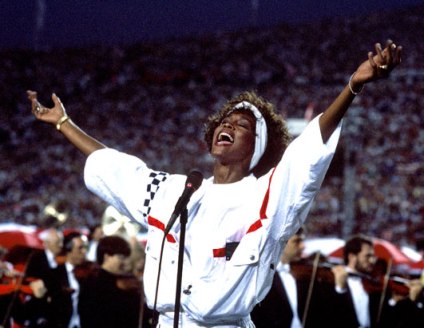
The Soul Wrestles Free.

1963-2012

The body houses all. Its organs are not capable to dividing the precious and vile. The skin cannot filter out flaws, cannot leave behind what is crystalline and expel what is already breaking. This flesh, this blood, these limbs, each space is stretched taut with the gore and the glory of our souls.

It betrays us, the body, with its strange aptitude for seeming unsullied, during the long years it often takes for signs of our ailing to reach its surface. And when the body is lithe and graceful, adorned in glittering raiment, smooth-skinned and diamond-eyed, capable of pushing otherworldly song through the chords in its throat, and constantly erupting with laughter, it is downright deceptive. It is a projector, casting aspersions on our concerns and flickering out a performance that fools us all. I am fine, it says. I have overcome all that’s ugly inside me. I am exactly what you hope that I’ll be.

The body is wrong. But we who do not live within it can’t accept that. Even when it turns on the soul, so damaged and tortured inside it, we say: I still see the woman of old. All she needs is a touch of rest, a heart-healthy diet, a better life partner. All she needs is the right producer, the right vocal coach, a 12-step refresher course. This delusion is easy, when the body is as beautiful and the voice as iconic as hers. There is a long way to wither, to fall.

The body works feverishly to convince itself–and by extension, us–that it will have as many chances as it needs to regenerate all that erodes.

It does not respect mortality like the soul does. It does not resign itself, first to the necessity of help, nor to the futility of seeking help simply because it’s expected. All the body wants is to go back, to be regarded as the gorgeous prewar house it was before the wreckage. It gathers what’s left of the gild on its throat, its slip of burnished skin (now so translucent, we cannot deny the damage below it), its unerring, courageous smile, and it prostrates itself before parties and makes valiant attempts to steal our breath with a note.

What it does not know is that the soul is bearing down and bringing her dignity out of her, pulling her love and her legacy, her impossible pain and fragility, and her marvelous, bottomless grace apart from this earthen casing that could scarcely ever contain it.

The soul has little need to hide what ails it and comprehends that when the body falls away, most of who she is will be in open view. It shies neither from adulation or assessment, unfurls itself for scrutiny, shifts its hips and shimmies, saying, Honey, if ever there were a case of the good overshadowing bad, it’s mine.

And she sails off like comet, shedding debris in all of her glory.

As Always, In Parting, RILPS, Don Cornelius.

It is entirely possible that you did not know. Conjurers are rarely still aware of the ripples their handiwork incites, years after they uncork the lightning in their bottles. The world looks different now, like a dystopia that displaces its elders, like a nether region that edges brothers like you right on out of the game.

Your mansion, cold and underinhabited, may’ve felt like an ice floe.

We will never know.

But we are sure that it would’ve taken more than reassurance of your relevance to keep you here. If all you had needed were confirmations of your impact, you could’ve slipped into the back of any black wedding reception or family reunion, could’ve glanced in the general direction of a public school dance troupe, could’ve listened to the hooks in any number of hip-hop songs, keened your ear to the affected baritone of brothers who’d give anything to sound as effortlessly smooth as you. You needn’t have even left your home; there is Centric. There are the chanteuses and crooners who are your contemporaries, still rockin’ steady, still beautifully wooing, still owing you a world they would never have known if you hadn’t created it. There are Crooklyn‘s closing credits. There is the devastated, ever-lovingly devoted ?uestlove.

There are the voices of our parents whenever they talk about how “baaaad” the Soul Train dancers were, their tones still crackling with energy of yore, as they add, “I coulda been one of them, man,” or “I thought I was one.”

You see? It didn’t end with them. What you built was no sprint; this is a relay. Our parents bore your baton. And though your passing may cause the slightest quaver,  the most momentary stumble, we hold it now.

We know the dissonance between the generations. We know your era questions whether ours knows the true meaning of “good music,” or worse, whether we are capable of creating it at all.

You needn’t worry. We understand your labor. We know it has given us opportunities we’ve both cherished and squandered. We realize we would never have had the artistic community, the mainstream exposure, and the simple, undiluted fun we now freely enjoy in musical performance and appreciation were it not for you.

Soul Train was a space for us to shuffle off the coil of code-switching. There, our legends didn’t have to perform for audiences who regarded them as little more than organ-grinders. And our young men had a space where dancing could be un-self-conscious, could have grace and power and coolness and aggression, could escape the stigma of effeminacy. Our young ladies could explore their fashion sense, draping themselves in hood couture, half-shirts and high-waisted pants and maxidresses, while angling their arms, legs, hips and torsos in ways reminiscent of Ernie Barnes’ art.

We understood you, Mr. Cornelius, with few exceptions—until now. As a culture, we still struggle to reconcile suicide. It distances us in ways other deaths tend not to, and when the act is committed by a recluse like yourself, it’s even more bewildering.

But we can love without fully understanding. And we can mourn all that we’ve lost in you, apart from longing to know the mysteries that led you to leave us.

As always, in parting, we wish you love, peace, and soul.

Gradient Grace.

The gift is stunning, arrayed in scarlet satin, adorned in gilded bows. Here, says the giver, presenting it with relish. I have chosen this especially for you. I am giving it according to your need. There is no other occasion, no other motive.

You believe him; your need hastens that decision—for as you open the decadent package, you see it is a platter piled with money. There is no promissory; this is not a loan.

You fall at the giver’s feet. I am overcome. You kiss his ring, tell him he is a pillar, a paragon. I do not know what I would do without kinsmen like you.

But it is only this last part that perks the ear of the giver. There are others? I am not your only source? I am not your sole rescuer, your singular kinsman, your only salvation?

You are not my salvation at all, is what you think, but before you utter words, you rise and stand at full height. No. Of course you are not, you state with certainty, for the people who love and care for you cannot be numbered, even if they do not have the means to help you stave off your personal hellhounds.

The giver is deeply displeased. He reaches into his satchel and brings out a cluster of cords. Here are my strings; they are many. Accept them along with the gift or you will depart with nothing.

You remember your pining for more than the crusts of bread, for a well-soled shoe, for the luxuries of a parlor’s grooming. You wince at the echoes of creditors, cringe at the memory of the computerized self-checkout voice barking a grocery total that staggers you. You calculate the balance of days that your daughter will spend wearing diapers.

I will fasten myself to your strings, but only for a time.

The giver grins. Then this is to be an indentured servitude. I will alert you when the racks of my conditions have been cleared.

Years later, you still rub your wrists. You are better off; no one is after you. You can walk with your head held aloft, owing nothing. For all intents, for every purpose, you are free; you’ve the papers to prove it. But the cosmic damage has been done.

Now, when anyone offers to help you, you are wary. You recoil from beautiful packages; you tremble at the hand that proffers an unearned check.

Every generous gesture is greeted with a bemused half-smile and a polite, but resolved, “No thank you.”

It is better to give than to receive. It is easier, too.

They mistake it for pride, the new givers. Just learn to take a compliment, a gift. No reciprocity is expected, they insist, their patience wearing thin.

But they do not know the grace it requires to accept without distrust. They do not know how desperately you have to parse your gratitude. It must be pulled from the uncompromised parts of yourself; you must find it in the unbroken places, where the last giver could never seem to shatter you by calling you a “user” or an “ingrate.”

It amazes you that you are even still capable of such grace, and anyone who knew the serfdom you’d escaped would grant you the gradation you will need to achieve it. You will learn to open your hand, without expecting the sting of a lash. You will recall the small flourish of curtsies. But you will not apologize for the years it may take to do so. And you will never again be so clouded by need that you will extend your gratitude and graces to wolfish givers.

Counterfeit Forgiveness.

Beloved, you will find that in this life, you will often be called upon to provide others with absolution. They will come to you, either truly contrite or else out of obligation or duress. They will either offer a specific apology, quite clearly aware of the hurt or the slight they’ve inflicted, or else they will say they are sorry you misunderstood their intent, implying they do not intend to assume responsibility for whatever they did that upset you. This latter is called non-apology, and non-apology is a semantic labyrinth; if you are not careful, you will find yourself at a loss as to who should be doing the absolving.

This will only exacerbate the offense.

The act of pardoning should always give you pause. To exempt someone from the fallout of their actions is a weighty, unwieldy thing. It can be like offering to clean up after the volcano whose lava has obliterated the homes of your family. It can be like deciding to keep as a pet the pit bull that bit your baby. Neither the volcano nor the dog knows the destruction it has left in its wake. Neither the volcano nor the dog can comprehend the acts of apology or absolution. To forgive, then, means nothing to the offender.

This does not mean forgiveness will always be difficult. After all, the person in a position to forgive holds the cards, holds the keys, holds the power. She has everything to gain and nothing to lose. And so, initially, you will feel quite like a royal raising her scepter: All is forgiven; your debt has been cleared. Go forth and offend no more! And you will feel quite emptied and cleansed by the act of it.

See, it is rarely that first offense that is challenging to forgive. It is rarely the second that singes us when memory reignites it. It’s that seventh insult; that fifteenth incident of neglect; the third lie or the ninth or the twenty-seventh. It is the arrogance that allows your offender to believe himself exempt from apology. Or the strangely righteous indignation that seeks to insist that you are, in fact, the offender and any anger you feel is your fault.

These are the conditions under which bitterness best takes root. These are the conditions under which forgiveness seems nearly impossible to impart.

At this point, you are likely wondering why anyone would continue to offer her company to the type of person who would offend her thirteen or thirty times. She wouldn’t, unless her ties to him were essential. She wouldn’t unless, for every offense she could number, there were five rescues, three gifts, ten acts of love.

In my life, this has been the case, exclusively, with family. Their slights hurt more than anyone else’s, their investment in and hope for my success far greater than anyone else’s. They can give so generously with one hand and then take so cavalierly with the other.

The past year, in particular, held more than its share of offense. And I have struggled more than usual to excuse it. To ensure that this new year holds none of the hurts of the last, I have been reading about forgiveness—or more specifically about counterfeit forgiveness. Apparently, counterfeit forgiveness is defined by five distinct characteristics: stoic numbness; minimization; psychoanalyzing the offender; holding one’s breath emotionally; or being an overachiever.

I am guilty of four of these things.

I spent much of your first year, either numb, minimizing, excusing someone’s psychological damage, or sucking up all that I should’ve been letting out. I said I was okay when I wasn’t. I said things were no big deal, when they meant everything. I complied with my offenders’ need to “just drop it and move on.”

Your second year has already been different. I have learned to lay the axe at the root of offense. I have stated, in no uncertain terms, that I am displeased. I have refused to be baited into unnecessary conflict.

One can never truly argue who argues alone. Daughter, we have so much ground to gain and to recover. I have no energy to expend on assuaging the bruised egos of others. I cannot afford to entertain every hurled accusation, every thinly veiled aggression, every insidious rumor. If I did, I would become like a cursed fig tree, small and shriveled, unable to grow.

These declarative statements have been a step, but they are not yet true forgiveness. That will take a bit longer this time. But I will acknowledge the lava, will hold its magma ‘twixt my fingers. I will cry out to God and ask why. I will cry out again when I have allowed myself the time to grieve, accept, and understand.