A Thought on Love.

In those bygone years, when I walked about wide-eyed, regarding all as wondrous, I wrote, more than anything else, of you. I called you splendid, found ways to compare you, torso and limb, to the mighty oak. I wrote you roots so deep I almost convinced you you couldn’t be toppled and asserted your skin, at once coarse and susceptible, was a bark onto which God carved totems, making you–every one–a work of hallowed narrative.

I promised you love and a loyalty built less of perfumed kerchiefs, slipped into the satchels of soldiers off to war, and more of our commingled blood washing into the scent-cloaking river at slave-catchers’ approach.

I existed to ease your way through a hostile world, intended to use my body as a balm for bruises left by billy clubs, to use these words, however inadequate, to build you a safe house, a makeshift palace where, like the abdicated king that you were, you could feel you had something over which to reign.

This is the way the literary foremothers taught me, the women like Mari Evans who boasted, “I saw my mate leap screaming to the sea
and I/with these hands/cupped the lifebreath/from my issue in the canebrake,” like Mama Sonia, who claimed, ”you you black man/stretching scraping/the mold from your body./here is my hand./i am not afraid/of the night,” like Mama Nikki, who would would sooner seduce you than stomach your endless rhetoric, even as you labeled her intimacy “counterrevolutionary.”

I was taught to revere you; to hold you through heroin tremors, to kiss the resignation off your lips; to wait at the curb with car idling, while you were processed and–-finally–-released. I was either to ignore the haunted jaundice filming your eyes or to heal it.

And if I encountered you at your best, swaggering ‘cross the university green, chest puffed with a pretense of invincibility, I was to wait out all the other women you pretended (poorly) not to see. I was to sit podium-side at your addresses, to swoon with a kind of ecstasy as you rhapsodized with the men’s chorale, and if need be, to pen your thesis while you chased the pigskin to homecoming glory.

This was not a sustainable model. To preserve it, I would have to ignore the erosion of youth and to count the wisdom of experience as dung. I would have to pretend that you are all worthy of such unqualified devotion, that none of you are capable of identifying it for the delusion it is and exploiting it. I would need to believe that every black man’s spirit was too depleted by systemic oppression to draw on its own stores of strength; I would have to remain willing to loan you all of mine, understanding it was not a debt that could ever be fully repaid.

When this model of love imploded, I mourned. Old archetypes fall hardest. But I have been known to rise from rubble. And this time, that vaporous love I once bestowed will be reified. It is only then that I will summon you.

Stacia Reviews: Kenny Leon’s ‘Steel Magnolias.’

As you can imagine, teaching five classes and trying to get Beyond Baby Mamas off the ground is leaving me precious little time to update my personal blog–but I do have two entries in the works: one about love, one about motherhood. So stay tuned; I’m hoping to get to both before the end of the week.

In the meantime, I haven’t abandoned writing altogether. I wrote about Lifetime’s adaptation of Steel Magnolias for Postbourgie. It went live about an hour ago:

In recreating Steel Magnolias with an all-black cast, director Kenny Leon has underestimated the one thing that made a character like Shelby work: unchecked entitlement. As sweet a girl as she may be, the original Shelby was propelled her though life with jet propulsion; she would not be denied. That kind of entitlement is difficult to recreate within a black community, especially in the deep South. Historically, unchecked entitlement was a luxury blacks couldn’t afford. Even in black families whose money, status, and property dated back for generations, the kind of privilege that allowed Shelby to imagine herself as untouchable- — even by death —just doesn’t quite translate.

Read the rest of the review here.

Beyond Baby Mamas: Take a Look.

You wait. You let yourself be carried off with the current. Slacken. Allow it to deliver you back to a shore. It will, when it wills. You open your ears to the cries of others. Seek exits; seek havens. Tell them not to twist; when they’re too weak to tread, surrender. You draw them maps and pray that the course you’ve charted is one that will not change. Be the landmark, the lighthouse, the buoy. Be whatever you can.

I’ve a litany of commands, of guidance. It comes to me in rations, like the drip of an IV. And it repeats. Be the landmark, the lighthouse, the buoy. Be whatever you can.

It’s been exactly two weeks since I launched my new online initiative for single mothers of color, Beyond Baby Mamas. It was just an idea, like the many that flash in my mind every day. But with every day that I move forward in executing it, I realize that its potential is far more vast than I imagined. Even that realization seems inadequate, as I’m fairly certain that I’m not yet aware of all the possibilities for mining that potential.

Here’s what we’ve done so far:

  • Facebook, Twitter, and Tumblr pages? Done.
  • YouTube channel? Created.
  • Official website? Formed.
  • Weekly webcasts? Two recorded, one on the way this week.
  • Promotion? Here’s where we need to catch up. So far, we’re relying on word of mouth (and web, so to speak). Our FB page has 81 likes. We have 71 Twitter followers. Six people have subscribed to our YouTube channel, thirteen to our Tumblr. It’s a process.

After this post, you won’t see much about Beyond Baby Mamas posted on this blog. I want to distinguish that online space from this one, so if you want to be kept abreast of what’s up over there, subscribe or follow to that blog. I just want to make sure that anyone and everyone who subscribes to or reads this blog on a regular basis is aware of BBM’s various online presences. Are you connected with us yet? Do you know anyone else who should be? I’d love it if you joined us or let someone else know. Direct anyone who needs to know more about who I am to my BBM bio or more about the initiative itself to our frequently asked questions.

Thanks to everyone who’s helped get the word out, participated in panels, and been generally encouraging. It’s helped so, so much.

Sundays on Auchentoroly.

On Sundays, on a strip of Baltimore City street that spans about two and a half blocks, a crowd gathers. Girls arrayed in carefully-assembled outfits and cascading foreign hair stand along the sidewalk, looking at once giddy and bored. Men on ten-speed and motocross bicycles slowly propel themselves along the other side of the street, taking surreptitious glances over their shoulders, waiting for something unusual to happen. Fathers on foot hoist their sons onto their shoulders in anticipation of spectacular sights. And other children, mostly unaccompanied, dart in and out of the slowly growing crowd for a better view.

It’s Reisterstown Road, where it meets Auchentoroly Terrace: on one side rests sprawling Druid Hill Park, with its pavilions where just a month earlier, before the fall chill settled in, festive balloons and coils of charcoal smoke abounded each weekend. Souped-up Cadillacs and Lincolns with gleaming rims inched along the loop for unauthorized classic car shows.

Deeper into the park sits a sparsely populated “disc golf course”: eighteen near empty holes with rusting chain-link baskets. Today, three men can be seen tossing Frisbees, two white and one lone brother.

It isn’t really a disc golf kind of neighborhood.

Though the chill and drizzle of the day have driven people away from the park’s inside, parked cop cars remain. They are present here whenever people are.

On the other side of the street is a church, Mt. Lebanon Baptist. I went there once, over a decade ago, with a dear high school friend whose grandmother was a member. When we walked through the double-wooden doors after the service, two brothers strolled by, their jeans slung low, their Timbs without spot or blemish.

“Beautiful,” my friend quipped appreciatively, and for a nanosecond, the young men’s stony faces crumpled into vulnerable smiles.

This Sunday, the men along the sidewalk, waiting, remind me of them: guarded, but not immovable.

An engine revs loudly in the distance and the crowd perks up at once. This is what they’ve anticipated. Excessive engine-gunning echoes in the fraught air and, like a bullet, a motorbike shoots down the strip on one wheel. The man on its back is standing. It is, quite possibly, the longest wheelie I’ve ever seen. And it’s being performed on an unblocked street, where regular motorists are carefully making their way by. Soon, an all-terrain vehicle (ATV) follows, also at rapid speed; its driver rises and places one knee on the seat, then the other.

This is the second time I’ve been returning home from a Sunday outing with my two-year-old and my mother and found myself in the thick of an illegal community bike show.

We veer off toward the park itself and ride the loop inside it. A cluster of men on ATVs and motorcycles are sitting at the foot of a hill, looking up toward the action. Their stunts are next. One smokes and looks off in the distance.

No one’s wearing a helmet.

Mom wants to return to Auchentoroly. The mood there is electric. Fathers’ faces are alight; you can practically see them wishing it were them out there at upwards of ninety miles an hour, standing on the backs of bikes and being egged on by an increasingly impressed crowd. But perhaps the prudence of parenthood holds them back–or their fear of a glancing blow from the long-arm of the law.

As Mom circles back, I tell her the cops will break things up before we get back to the street. I can see the lights of a squad car twirling red and blue through our rear window. She says we may have time. We still hear the engines. The men on their bikes are still in their holding pattern at the bottom of a Druid Hill.

Around 1723, Auchentoroly Terrace was owned by a wealthy man named George Buchanan, who wistfully named it after his hometown, Auchentorolie, in Scotland. It consists of nine rows of housing, two mansions, and two duplexes, all facing the south side of Druid Hill Park.

The rowhomes along this strip belie its former splendor. Some residents seem to have worked hard to add varnish and colorful paint to the porches and stoops, but the area at large stands in contrast: in the early 2000s, Druid Hill had one of the highest crime rates of any park in the city.

It’s a ninety percent black community known, in its current state, for little more than a minor ’90s R&B group and a long history of disturbing, often drug-related crime. The highest percentage of its residents max out at high school or less than high school education levels. The median annual salary is a little over $25,500.

It’s a high-stress area. Many neighborhoods in West Baltimore are. But none of that matters this late afternoon, as people congregate on the sidewalks, the engines luring them like the lute of a piper. Their faces show none of the worry or strain they may face back at home tonight or on Monday. The adrenaline courses from the riders into the crowd, and it’s infectious.

As we round a corner, back in plain view of Auchentoroly, we feel the contact high of the thrill-seekers, hoping to catch one more high-stakes stunt, weaving its way through the street’s traffic pattern.

But what we witness instead are six police vehicles, six squad cars and a van, windows down to call out to anyone moving too slowly, lights flashing in sober silence. They are generous enough not to initiate sirens, but it’s hard appreciate that small magnanimity.

Though the racing itself is highly dangerous and obviously illegal, it’s the crowd being herded off the streets by the glacial-paced police cars who appear, to the outside observer, to be the wronged party. The demarcation between Us and Them is never clearer than in moments like these. Even when They are right, We distrust them.

Hood heroes, the men and women who combat poverty, infuse neighborhoods with levity, and who, whenever necessary, mete out swift retribution, do not resemble the ones in our storybooks. They can rarely be found in the personal interest segments of our local news broadcasts. The code that binds them isn’t always in accordance with state law. But without them, daily life can seem infinitely bleaker.

As we rode back up Reisterstown Road, toward the County, we saw countless men walking down toward the show, blissfully unaware that it had already been broken up (or perhaps in anticipation of a second, covert wave of stunts). One father walked slowly next to his son, who sat on a motorized lime-and-white mini-bike, a matching helmet shielding his face, the straps of a backpack slung over his shoulders. He was all of six.

In that moment, “right” was relative. Is it better to contain the mercenary and to drive the demoralized people back into their homes–in the name of safety and orderly conduct–or should we adapt our approach? Can the talents of the risk-bearing riders be groomed rather than criminalized? Can we make what is hazardous less so with community grants and nonprofit savvy rather than handcuffs and wrap sheets?

Is there any middle ground between Us and Them?

I have seen the result of a man’s life whose talents go unacknowledged or devalued, whose passions are unchecked or ignored, whose hopes are contested and unexplored.

He ambles through the world with sliding feet and curved shoulders, as though, at every turn, the silent lights of an invisible cruiser are trailing.

Jump at De Sun.

You have unassailable rhythm. This is a characteristic we noticed, even before you began to develop fine motor skills. You were three months old, and you could hit a drum with a mallet. You could keen your ear to cadences. The small cymbals of a tambourine shook under the strike of your infant palm. You hummed melodies before your mouth could form the ovals and planes necessary to pronounce lyrics.

Like so many children, you possess a raw musicality, a boundless curiosity in all instrumentation. But I also see an inkling of discipline in you, a commitment to practice quite unusual in two-year-olds. It is the rare day that passes without you asking to play your great-nana’s electric piano. Once you’re lifted onto the stool, it is difficult to coax you down. The praise you receive is too rapturous; the power you feel when the pads of your fingers elicit a chord is too intoxicating. We know that, if allowed, you would stay there for more than an hour as long as we were also there to laud you.

As your mother, it is my imperative to nurture this quality in you, even as it awes and unsettles me. My charge is to propel you toward each zenith for which you’re brave enough to press, while also making myself a nonjudgmental net to catch you when you fall. I mustn’t betray too colossal an expectation, too devastating a disappointment. Your pursuits are your own. Any joy or sorrow I feel as you set forth is mine to manage.

Increasingly, I am coming to understand the act of mothering as a cultivation of temperance. It is a holding-in-check of our most outsized expectations, a delicate calibration of all that we want for our children, all that they are capable of achieving, and all the moments when we each will need to accept a reality that resembles none of those possibilities.

But darling, you make this temperance difficult. How can I filter these bright beams of expectation when you glow so incandescently with promise? How can I allow you field of grass-skipping girldom, when with each day, you invent new reasons for me to spur you toward the sun?

It isn’t easy to wait for the coming years to unfurl themselves like a story quilt and reveal how you’ll evolve. But I will not anger God (or you) by rushing time. Its glacial inching is a grace. I will sip you slowly and relish each talent expanding. My every affirmation will be liberally and patiently seeded. I will make it my aim to know who you are, at any given moment, rather than to trouble us both over all the wondrous things I imagine you’ll become.

Stacia L. Brown on HuffPost Live! Sept. 7, 12:50 pm EST!

Apologies, friends. I’ve got to make a temporary departure from thoughtful, decently crafted posts to geek out for a moment.

I’M GONNA BE ON THE NEWLY LAUNCHED HUFFPOST LIVE TOMORROW!!!

excelsior!

Excuse the all caps, but this is pretty wild.

A little over two months ago, I wrote this. And this afternoon I got an email inviting me to discuss black mental health on HuffPost Live tomorrow, Sept. 7 at 12:50pm. It’s a twenty-minute segment, hosted by Marc Lamont Hill, and I’m really honored to have been asked.

It isn’t just the show (although that’s an amazing opportunity); it’s about what it represents for me.

2012 has been a crazy year. I started it by stating that I had expectations for it. I don’t often do that, make grand declarations at the top of a year, prognosticating a favorable future and actually hoping I’m right. But I did it this year. And, if God wills, I’ll keep being right.

From May until the end of August, I was a daily contributor at Clutch magazine, which led to my work being republished at The Root and, one dizzying time, at Salon. Needless to say, my visibility as a writer increased, which has always been one of the deeper desires of my heart. It’s a heady, blissful sensation, working really hard on a piece of writing and watching it land with a large cross-section of people. But I’ve always stopped short of pursuing the “brass ring” kind of opportunities. National mag pitches. Spec TV/film script pitching. The aggressive pursuit of a book sale. Speaking engagements. Personal branding.

It’s been too easy for me to psych myself out, to tell myself the market’s oversaturated and too many people are already doing work similar to the kind I do. Or I’m not as good or as smart as I want to believe I am (good enough, smart enough). Or I’m going to be eviscerated by critics. Or the audience I court will find me patently underwhelming. I’ve always been afraid to cast my wings toward the sun, for fear of singeing them, of falling. (See my previously-written faith issues.)

Concurrent with those issues, though, my ideas about possibility and self-worth and self-acceptance have been expanding. It’s the kind of work you should ideally do in your teens and twenties, and work that some women (and men, really) count themselves blessed to accomplish at all. My work began when I had my daughter. I started believing I could inhabit a much larger space than that which I’ve allowed myself till now, because I’ve promised her as much for herself, and in order for her to trust me, she has to see me do it. But believing and bulldozing the cement walls are different endeavors.

Coming up with an approach to the latter remained a mystery.

Sometimes the approach finds you.

This is probably the first year of my decade-plus career as a writer that people have sought me out to write or to discuss things I’ve written, rather than me frantically searching for outlets willing to publish me. And more than any other time in my life, my work has been resonating with a large cross-section of readers, people from different walks of life, people with wildly divergent philosophies, people who I wouldn’t have ever imagined taking notice of the work I do. It’s also been met with far more criticism than it’s been before (in part because it’s been more widely published). And I’ve had ideas. Oh, the ideas. Grand, sprawling, lavish, daring ideas, which for the first time ever, I feel capable of implementing.

All these experiences have converged at just the right moment. It’s the moment I’m finally, mercifully prepared to handle them.

At any rate, if you can, tune in to HuffPost Live tomorrow at 12:50pm EST and watch the 20-min panel discussion on mental health in the black community. I’ll be there.

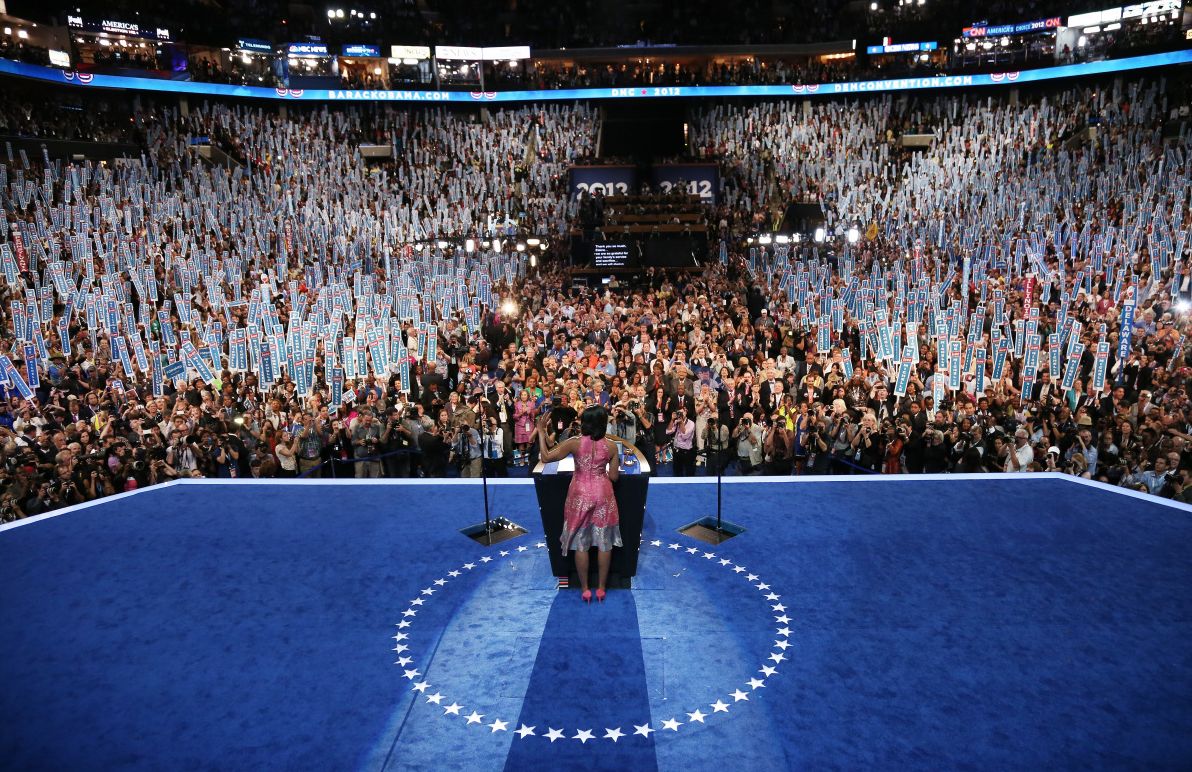
Answer the Wind: Notes on the Democratic National Convention

dnc

In this country, some woods still howl; I’ve heard them. You need only venture South, to a city where the work of Ida B. Wells still looms large in the hearts of so many haunted families. Stand in the ruddy dirt of a clearing, let the fire ants seep between the straps of your sandals and nip your skin, wait for the trees to bear witness. Someone died there.

It’s a safe assumption that, as the white man who killed him kicked free the wood slab that had staved off the noose, the vision quickly dimming in that dying man’s eyes was not of a diverse and well-heeled audience, promising him that everything he wanted for his children would come to pass. It was not of Latino twins from Texas whose mother’s work as a domestic cleared their path to plush seats in Southern politics. It was not of a brother-governor openly voicing his displeasure with his white predecessor without the threat of violent consequence. And it was certainly not of a black president, his brilliant Chicago-bred wife, and their two elegant, well-educated girls who speak of fear, not through the life-or-death lens of racial animus, but only as it relates to the demise of their healthy home life.

No, what was far more likely flickering before the eyes of the man — swinging, gagging, slackening in the clearing where you can still hear his howls –was a cluster of sneering faces: eyes absent apology, their drunken drawls rising loudly in the whorls of their oil-torch embers: “There goes one less nigger with his hand out, one less mouth we’ve got to pay to support, one less mind that dares to dream beyond its station. We are one step closer to getting our country back. We own this.”

Depending on the decade of his death, he may have left this world without much expectation that this crime against him would someday be avenged or that there’d ever be a day when this kind of existence became abnormal for men who looked like him. He would’ve hoped, but not hard enough to envision so many faces similar to his own in positions of congressional power, not high enough to hear the voice of a remarkably accomplished woman extolling a black family’s hard work and high debt as virtues and vices capable of yielding them not just their own plot of land, but the highest office in the land.

As he hung there dying, here are the ideas that would’ve been easier for him to apprehend: a digital effigy of the first black first lady’s face superimposed on a topless slave’s body; the existence and froth-mouthed intensity of the Tea Party; the willful ignorance of Birthers; a presidential candidate so entitled and unwilling to relate to the people he hopes to govern that he and his staunchest supporters consider themselves benevolent when they offer to relieve us of our hardearned rights.

If ever you find yourself in those woods that howl, answer the wind. Tell all the voices of our restless ancestries that, though our generation remains far more similar to theirs than we’d hoped, we exist in a realm far beyond any they could imagine. Race still matters so much more than it should — and, on occasion, in ways that can still get you killed. But we are freer than we were, we understand that we are not free enough, and today, we have so many more means to defend our liberty on the countless occasions when it’s challenged. Assure them that when they see us rejoicing it is not because their sacrifices have been absorbed and gradually forgotten. There will always be those among us who volunteer to tote the barge of history and remind others of the vast indignities for which we have yet to atone. We rejoice because we have the wisdom to know that the power to affect real change — however fleeting or illusory or jeopardized — is still possible for people like us to wield. Tell them, come November, when we cast our unsuppressed votes, it is their hearts we’ll be holding in our hands.

The Name: On Managing Long-Distance Fatherhood.

Over our bed hangs a picture of a Buffalo Soldier standing alone on a plain as a herd of bison clops its hooves in the distance. His face, leathered and lined, is grim but his eyes dance with premonition. He sees a country that will eventually open its arms and its institutions to his children and theirs. Nana hung the framed print in this room when it was just an extra lodging space for overnight guests. It was there long before my mother, the baby, and I moved in, long before I placed our daughter’s crib in storage and began to nightly curl myself around her, like an open parenthesis, in the twin bed beneath it.

After a few months of sleeping under the gilded plain and the buffalo herd and the stoic uniformed black man who my grandmother thinks is handsome, I forgot the picture was there. There were too many other focal points, not least of which were our gangly toddler’s limbs, as they struck at my organs in the night: her tiny heel an arrowhead prodding the skin over my spleen, her elbow a bony thorn in my side.

There were also the boxes, the books, the closets that were not wholly ours, all the nooks into which we’d slid every toy or folder or tote we’d carried in from the Midwestern life we left behind. There was the night air, as clingy and thick as the breath under surgical masks, and the sweat the bedsheets seemed to drink when we tossed and turned.

Somewhere in all these months of adjustment, as the picture was becoming invisible to me, it was morphing into something else for our child.

It was becoming you.

I can’t quite remember the first time I noticed this or under what circumstance she first looked up at the Buffalo Soldier and pointed. But indeed, she cast a gaze toward him, filled with adoration and pride. Then she turned to me and, with a voice so guileless and questioning I still tear up when I really consider it, she called your name.

“Dad-nee?”

It was a sucker punch, really, the pain only acute because it was so unexpected.

I was quick to recover that day, as we often are in the moments after something unnerves us and in the months before we’re able to fully process it. “No, sweetheart,” I tried to explain, placing a palm on her cheek, “That’s not Daddy.”

But she chose to hear only her echo. “Dadnee?”

“No, sweetie. Not Daddy.”

She shrugged and I stretched my lips into some small approximation of a grin. We had reached an understanding–or so I thought. But in the months to follow, you became more real to her, over our heads, and regardless of anyone’s protestations, her confidence that it was you in the uniform, fearless in the foreground of a stampede scene.

But this wasn’t the only place she saw you. At times, you were the front door, when she was in distress. She’d run to it, willing you to bound through and rescue her from a scolding. “Dad-nee?” she’d call, just loudly enough to be heard on the other side. You were in the couch cushions in the living room, when she burrowed into the crevices and recalled you sprawling there on your last visit. “Dad-nee?” she’d whisper into the olive grosgrain. And when she clapped her hands to her ears, and I followed suit, when she touched her fingertips to her forehead and watched me mimic her, she’d drop her hands, remembering the last time you did the same with her via Skype. “Dad-nee…” she’d murmur wistfully.

Neither you nor I could’ve expected it to happen this soon, and often, when I tell you it has, I sense that you may doubt me. But our daughter, barely conversant, with her lexicon of less than 100 words, is already articulating her need for you.

Because we have cultivated a relationship in which you are neither entirely absent nor entirely present, she is adapting by calling out to you in places where and at times when you cannot hear her. Improbable places. Unexpected times. Every instance bears out a different response in me: here, worry that she wants to escape me; there, an errant swell of inadequacy; now, a surge of anger that strikes hot and fast and quells itself just as quickly; then, an empathetic prescience borne of my own father-pining in the past.

But more than anything else, I feel studious–for in those moments, our daughter goes from girl to apotheosis of worship. I watch her call for you in the way that I should call out to God: as Father, as rescuer, as present when He cannot be seen.

This is the incarnation of God I understand the least. I have only been able to view fatherhood through the lens of my relationship with my own. It is amiable, it is deeply important, but it is also inconsistent. We talk, but not too often. We love one another intensely but don’t always find occasion to express it. We see ourselves in the other, but do not always know how to bridge the canyons of difference.

It is easier, then, for me to know God as a sovereign. It’s simpler to accept Him as a comforter, a confidante, a friend. When I talk to him, “Father,” is not the first name I think to call Him.

But our girl is teaching me what it is to feel confident that the heart of a father is always near, even when others feel uncertain, even when they’re trying to convince he is not who or where she thinks he is.

May she always remain in a space so clear, and may we never hesitate to join her.

The Antithesis of Faith.

Now faith is the substance of things hoped for, the evidence of things not seen. — Hebrews 11:1

Why art thou cast down, O my soul? and why art thou disquieted within me? Hope thou in God: for I shall yet praise him, who is the health of my countenance, and my God. — Psalm 42:11

1.

The grocery cart is an ice floe, every row of overpriced food an isle to be sailed past without much autonomy. To be underemployed is to live without oars; I turn where the tide and the wind allow. Often, I think of You as the Wind: favorable, then fierce, and at times, capricious. This is difficult to admit as my eyes glaze over at the cost of four quarters of butter, as I grip the cart’s handle in abject panic, as I calculate the total in my head. In those moments, I do not want to feel tossed or untethered or tested. I do not want You to be as impossible to grasp as a gale.

For so many other believers, You wouldn’t be. For them, when there is too little left to budget, You become the multiplier of fishes and loaves. Right there, in the long stretch of frozen meals, You fill their hearts with manna. For them, You’d become a testimony bellowed into a microphone, echoing through a revival tent: It was only at my poorest that I learned You own the cattle on a thousand hills! It was only when my own hand was empty that I could accept the provision in Yours.

I am supposed to sing a reassuring song about the physics of faith (when praises go up, blessings come down).

But this is not where I live.

It isn’t that I don’t believe. I do. Of course I do. It is a logical step for those who create to believe that things much larger than themselves have also been created. And it is necessary for those who understand guilt to believe in the work of atonement. I feel ill at ease imagining a life over which I must assume totalitarian control and sicker still at the thought that whenever and wherever we die, our stories end. No, doubt has rarely been the deterrent.

2.

Every once in a while, we went hungry. Those were the lonely years, when we lived in an oversized and underfurnished house, and the congregants of our church considered my family to be spiritual stalwarts: the husband, pious and devoted; the wife, fiery and dynamic; the daughter, creative, aloof. For them, we were emblems, were ministers. For them, we were a comfort, a mirage of peace and safety when, in their own homes, destruction felt imminent.

But they never knew how often our home felt combative, despite the absence of physical aggression, how at the sound of the husband’s ticking engine in the driveway, the daughter crept into in the darkness of her room on the third floor. They wouldn’t have understood the way she stared at the pacing shadows, two dark and darting foot-falls, scuttling like rodents and obscuring the yellow slit of light from the hall. They couldn’t have imagined what it was to feel imprisoned by someone else’s prayer or how it could throw into turmoil the daughter’s concept of who You were.

The husband would leave within a year of those last instances, when he took to praying in tongues outside the daughter’s door as though he was an asylum guard in charge of a girl possessed, and when he called her out of that room once to ask if she was “bringing evil into his house.” These were the last of many years they’d spent locked in an epic battle, each round fought when her mother wasn’t home, each accusation a dagger, a wound, a scar that would, in some small way, shape the woman she would become.

Before he left, from time to time, he would neglect to buy food for three. He ate at home less and so did the mother and daughter. The contents of cupboards would thin; the shelves of the fridge emptied. It was preparation for the months to come, when the daughter would begin to support herself and the mother with the money from her work-study checks and her summer jobs in retail and reception.

The mother would tell the daughter that You sent her home after college to help her through the divorce. And the daughter believed. For four long years, she believed–just as she’d secretly wondered, after hours of listening to her stepfather’s prayers, if she had, inadvertently, brought evil into their home.

They’d each seemed so confident.

This is, I suppose, what happens when some children come to know You through their parents. It begins as a tangential acquaintanceship; we understand that we need to know You but let our parents do most of the talking. We trust their instincts, their judgment. It never gets personal until it needs to, until we need You–but by then, we’re struck by our own uncertainty of who You really are.

Are You a God who believes our enemy when he insinuates that we should be exorcised? Are You a God who plans our purpose and only reveals it to people other than us? Or are You the other things we imagine You are: mind-reader, romantic, redeemer, refuge, lighted path?

3.

It began as an atom, a nodule of resistance nestling inside me like a pebble at the base of a well. I didn’t feel it, even after I sensed it growing, never acknowledged it as I scrawled small notes onto church bulletins or wept openly, not over Your goodness but because You were so chatty with others and impossibly silent with me.

When I tell the story of how I became a single mother, I do not start it here, with the atom. But these are the particles inside it: a profession of faith at the age of eight; a number of folks advising me of the various ways I should let You use me; modest clothes and earnest gestures, tepid prayers; a semblance of sound morality; the realization that most of my faith felt merely mimicked, followed by a waning trust in others who insist that they’re speaking on your behalf.

No. Indeed, doubt was never the deterrent. The antithesis of faith, for me, has always been hopelessness.

I felt the least hope when I believed You’d decided You would only tell others what I needed to do with my life. I waited to hear You say that I’d finished fulfilling Your promise to my mother, that I was free to go discover the other things You’d placed me here to do. But with every year that passed, this pardon seemed less plausible. Maybe it wouldn’t be me You told at all, but my mother. Maybe You’d sent the message and I missed because I didn’t know the sound of Your voice. Maybe I’d never know it. Maybe there was no voice, but only the bible, and all this time, I should’ve been decoding that for answers.

It wasn’t even not knowing. It was the fear that I’d never know, that I’d been betrayed or duped or terribly misguided, that I still am. It was when, every time I tried articulating any of this, all I got in return was, “Did you pray about it?”

There’s a desperation, a terror, in the idea that the God of my fathers (and mothers) is all that there is. Who You are to them is not who I need You to be, for me. But for the longest time, who You were to them was all I believed You could be.

And this is how I came to make a few choices of my own: a master’s degree, a teaching career, a well-intentioned courtship turned secular, and several years later, the baby, the hunger, the jobs that pay pennies, the re-turning of my face toward the Wind.

It’s still true I do not like being tossed and that, despite our long history, confidence in Your intent to rescue me isn’t my first response to hardship. I am still working hard to maintain hope, to believe in the unheard as well as the unseen. But if this is who You are, I will not resist the gusts. May they carry me closer to You, may I glimpse Your face in the dust that dances up and stings the eyes. Be the gale, and I will be Your feather. Be my reinvention, and I will teach my daughter to know You for herself.

Beyond the Carousel.

Then, at dusk, we empty into evening, a downtown restaurant at our backs, an army of dragon paddleboats bobbing on the brackish water before us, and you in your father’s arms. On the Harborplace steps, we part ways with well-wishing relatives, watching them recede in the warm, black crowd. Night catches all the day’s promise in a satchel of tawny sky, tossing sparkles of memory and hope high above us. I gaze out at them glittering on the water’s dark surface as reality takes hold: we are alone.

The sensation is rare and foreign. It is not often that we are nuclear: father and mother and child. It should mean serenity or a kind of relief that for moments–however brief–we are a convincing spectacle of togetherness. But I am on the verge of detonation.

I do not know what to do with my hands when you aren’t holding one, don’t know quite where to look, if not at the damp and dewy wisps of hair against your forehead, if not at the oversized molars that loom so large whenever you yawn or cry.

You are too far away, up there. High in your father’s embrace, you are taller than I am. Occasionally, when he holds you, your downward gaze is regal. You’re an heiress deigning to acknowledge commoners. You’re a starling in flight, bored with the bits of breathing color below.

I give you both a wide berth, walking several paces behind, and wonder if you are too young to believe that the grass on your father’s side will feel lusher between your toes, will grow softer blades and brighter buttercups.

Tonight you are two. I am thinking of the way you used to belly-crawl, dragging yourself across the floor of my old apartment like a soldier wriggling under trip-wire; the determined set of your jaw when you finally hitched yourself up on all fours; the wideness of your eyes the first time you tasted a teething biscuit; the way you wailed as those pearly rounds poked through the pink of your gums; how you burbled and hummed–how you seethed!–before you could voice your demands. There is little left of the infant in you; your every gesture now is precise, the features of your face settled and firmly defined. You’re still aren’t talking much, but you make certain that we all understand you. I see you now as you will be at twelve, as you will be at twenty.

But then, I am always so far ahead of myself.

Before long, I close the space between us, ready to reprise my role as a merry member of a modern family. I play it well. In lockstep with your dad, skirting the Harbor’s perimeter, I am thinking of the day when he’ll be gone. I am turning the words over like flash cards, studying to answer the questions you’re too young to ask: Daddy has to go back to work. But he’ll be back. Remember? He always comes back. In three days, these are the exact words I’ll say to you. You will look up at him and frown, climb from my lap to his, rest your head on his chest and listen, as though recording his heartbeat to be played back as a lullaby. I will blame myself, because I understand exactly how much I am to blame.

And I am angry already, exhausted, though no casual observer could detect it.

I am too busy grinning at your pealing laughter, too busy pretending the bond between parents is as effortless as the bond of daughters and dads.

This is your first trip to the Harbor. It pleases me to see that it dazzles you just as it did me, when I was little. Your mouth is agape, your eyes brim with awe, a silver tiara enhaloes your massive afro puff, and for a moment, I wish that the time-space continuum would still until your father and I learn to make optimal choices, until you are old enough to ascertain how much of all this is an act.

Unbeknown to you, we are searching for a carousel.

You and your father tend to ride them. It is a ritual that began with his first visit to us after we moved here from Michigan. I am always asked to join you, and I always decline. You need a tether to each other that isn’t me. Perhaps neither of you will ever know how much I enjoy watching you whirl when I’m not there.

It may be selfish to admit, but I prefer you to myself. I believe he does, too.

We walk the length of the straightaway, passing party boats, a sparsely populated Italian ice hut, a closed smoothie stand, before curving toward the place where we expect to find the carousel.

It’s no longer there–or at least we don’t see it. Up ahead, there are dense crowds of volleyballers, spiking returns under harsh, high light. The sand under their feet is littered with Newports smoked down to the nub, with hard pebbles of debris. We stop before reaching them, unsure how to proceed.

You are still a lit torch burning from the inside out, eyes still dancing as they take in the water, the people, your parents and their touching shoulders and their smiles that work overtime to hide artifice from the camera that captures us all.

But when you are twelve or you’re twenty, I will explain to you how difficult it becomes for adults to pretend. The ease of make-believe is only accessible to children. I will tell you how fully I tried to commit myself to the ruse, how even the hope felt false, how only our friendship and shared adoration of you was honest. But I’ll refrain from describing what it is to spend years lying slack at the end of a line, how every breath is painful as you wait to be reeled in and believe that the hook from which you hang is love.

When you ask about your second birthday, I will say you spent it luxuriating in your parents’ affection. And at its end, we all sat in silent wonder, each at unexpected destinations.