A Brief History of Black Folks and Sidewalks.

IMG_3411
“For you and me, the sidewalk is a history book — and a circus./Dangerous clowns balancing dreadful and wonderful perceptions they have been handed day by day, generations on down.” – Joni Mitchell, “Goodbye, Pork Pie Hat,” Mingus

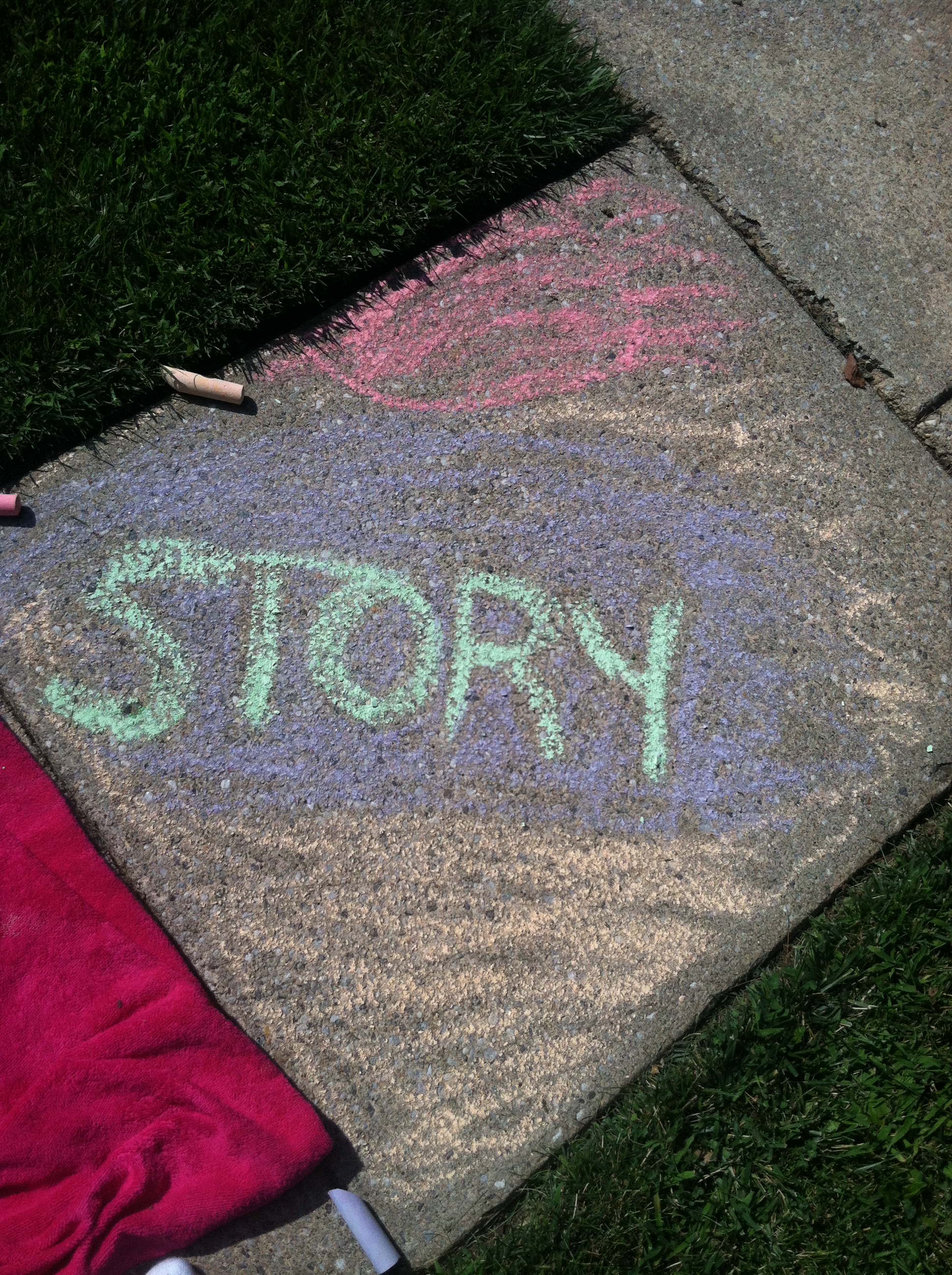
When your father last visited, he took you past the front yard at your grandparents’ house and sat beside you on a square of sidewalk. I had supplied the chalk — $0.75 on sale in the checkout line at a supermarket — but stayed at home both to relax and to give you two space and time to bond.
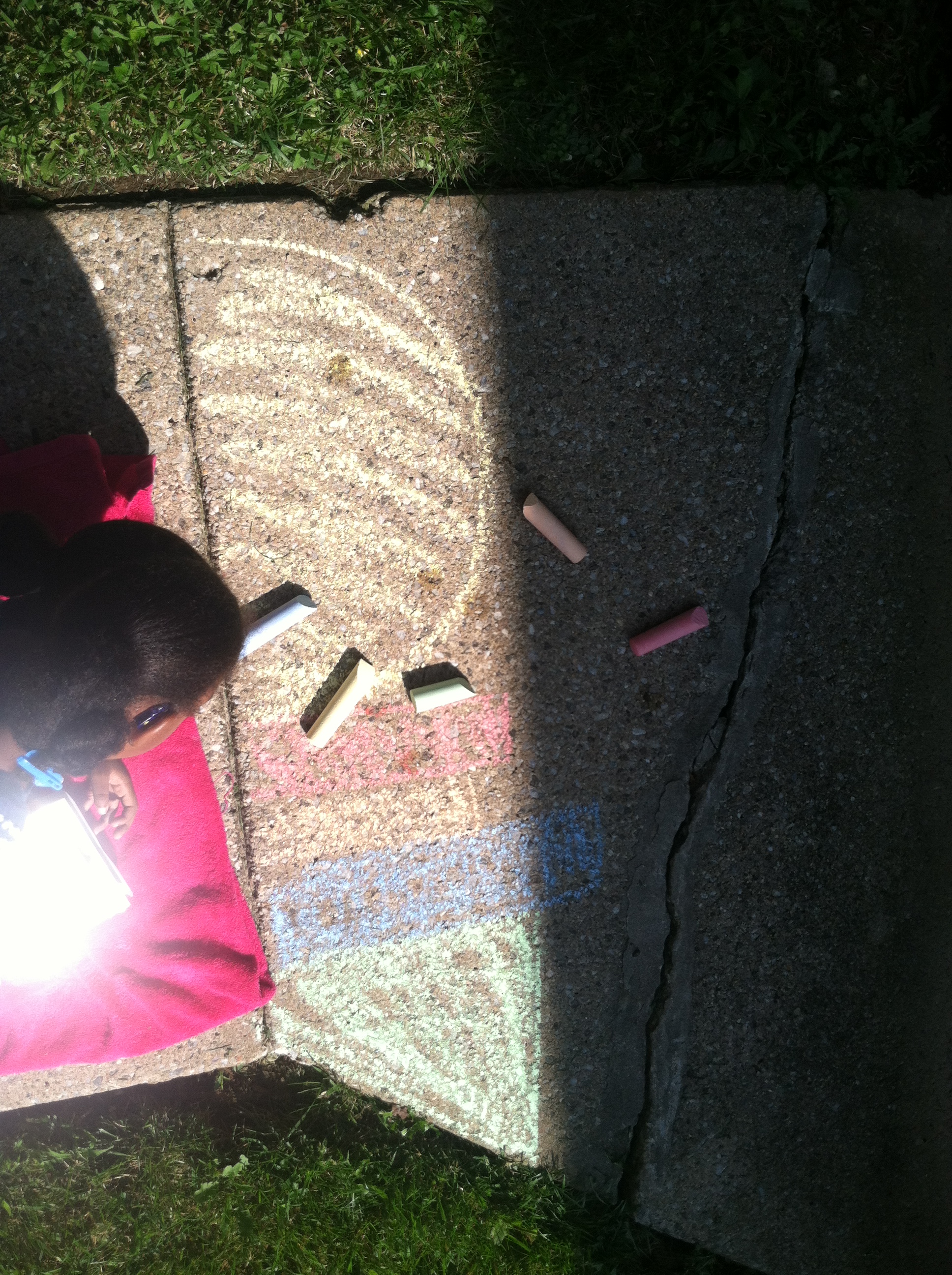
Your father is big like Mike Brown was. At 6’5″, his walk has heft, his forearms are a bit like boulders, and whenever I think of him making sidewalk drawings with you in the cool of an afternoon, I am newly amused. He sent me pictures of your handiwork, your name emblazoned in a multicolored blast. For you, the sidewalk became a concrete quilt. For you, it told the story of a family. For now, this is all it needs to tell you. For now, this is just as it should be.
IMG_3241

You won’t know this for at least a year or two — we have not started to read books like Henry’s Freedom Box or Freedom on the Menu; you have not heard of Emmett Till, have not seen what it seems that every black child must: his bloated, disfigured face in an open casket — but someday you will understand just how many of our horror stories begin and end with sidewalks.

Whether stepping off of them to let a white man pass or refusing to cross to one on the other side of a street in order to clear a white woman’s path, sidewalks have never been entirely inanimate for us. Our teeth have been broken against them. After tussling unarmed on one, Trayvon Martin was accused in court of using a sidewalk as a weapon, just before his blood was splattered across it. And even now, with no particular law in place to compel us, some confess to still ceding the sidewalk for white passersby, in spite of ourselves.

It is said that the boy in Ferguson was killed because of a sidewalk. The officer who shot him, his anonymity still being carefully guarded even six days later, is said to have told the boy and his friend to get the f–k on the sidewalk. According to Dorian Johnson, the friend who survived, he and Mike Brown were walking in the street, a practice you will someday find is quite popular in sleepy suburbs. When no cars are in view, a street may be a scooter lot, a skateboard park, a strolling path. Preferring the street to the sidewalk is not uncommon for adolescents.

Here in Baltimore it is not uncommon for grown folk — even if cars are barreling toward them. Baltimoreans play fast and loose with their lives when traveling on foot. But in the 25 years I’ve lived here, no one has ever lost his life at an officer’s gun-wielding hand for crossing against traffic. These days, the policing of black pedestrians while simply walking down empty streets or on the adjacent sidewalks, is no longer en vogue. What happened in Ferguson, Missouri on Saturday is an anomaly, one that hearkens back to a time so many of us believed we had left far behind.

But when the boy’s long untended body was whisked up from the street and taken away to be autopsied (to withheld or suppressed result), the town was left grieving on sidewalks. Eventually, the crowds took their grievances into the streets. And we were all swiftly reminded of what it must’ve been like for our elders to have been “put in their place” on the sidewalks of streets across the nation. We knew what it was to be shouted down, to be threatened with capture, detainment, canine attack, to be herded onto sidewalks as though we were cattle (or chattel).

Yes, in just a few years, you will know all about our complicated history with sidewalks in this country. And it will become quite clear how quickly something as simple as a sidewalk can get you killed. But it is not yet time and for that, I am exceedingly grateful. For now, just let the sidewalk be a site for sunshine, a concrete kaleidograph of shapes. Let it be what it hasn’t be for the children of Ferguson since Friday: a safe haven, a play yard, a shore.
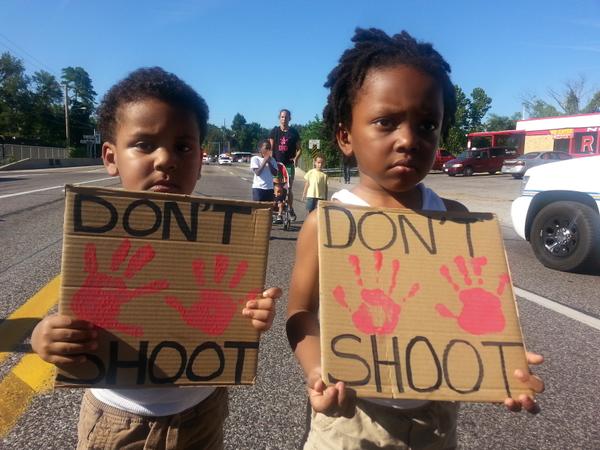
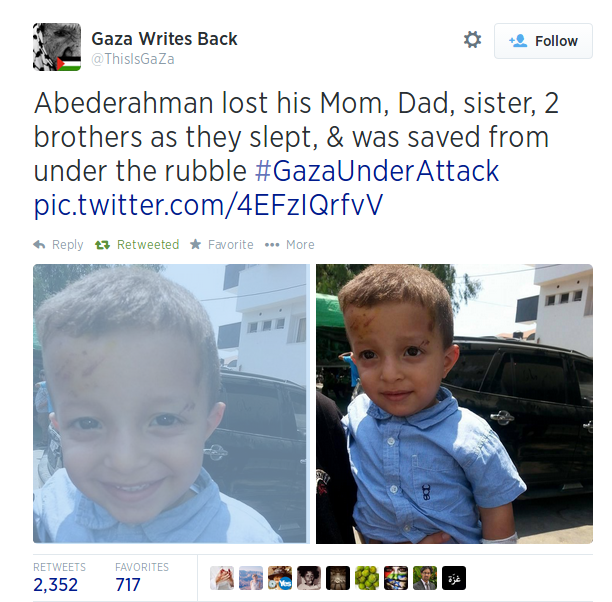
Photo: Twitter
Photo: Twitter

The Quicksand Children.

The children are unwitting quicksand. Shells and shrapnel and glass sink into them as soon as it lands. They are tender-bodied, pure-eyed, bereft and confused. Every day, we are losing more of them. I am forcing myself to look. Many are around your age, just toddlers. They are across the world. I cannot claim any particular knowledge of their countries’ histories and politics. The Israeli-Palestinian conflict is not one that a few explainers or longform essays can clear up. I read them anyway. I know wrong when I see it. While I languish in a kind of suspended ignorance, over 1,300 children lie writhing and wounded in Gazan hospitals. Over 150 are dead. I am not sure what, if anything, there is for me to do. But I will try all that I can.

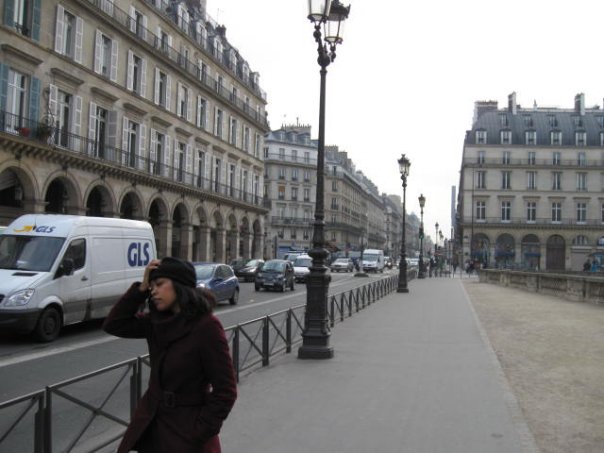
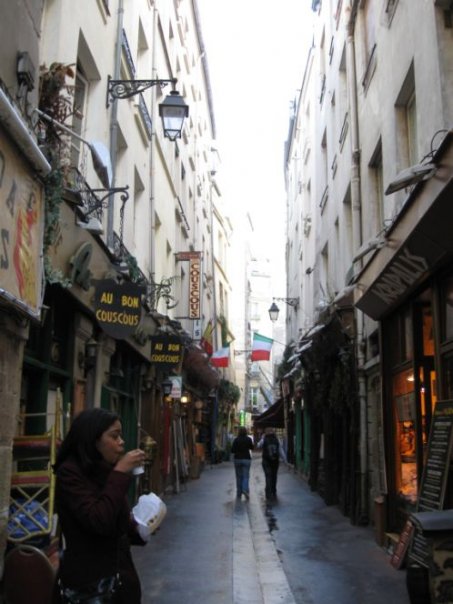
I have never been anywhere, really. A year before you were born, your father and I flew to Paris, using our tax refunds and some adjunct teaching money I should’ve been saving to move out of my relatives’ house and rent my own apartment. We could only afford a four-day stay, the first and last consisting mostly of travel. Neither of us had passports before that trip. That trip supplied what are still our only stamps.

1923170_55454428526_4736134_n
At Charles de Gaulle, we couldn’t find each other for five hours. Neither of us spoke French. Our cell phones didn’t work and I was too afraid to walk up to any of the elegant elocutionists around me and speak English.

There is something mortifying about being without adequate language in another man’s country, something venomous about refusing to tread lightly within cultures that are not your own. I didn’t want to risk either insult or injury. After asking a few desk attendants who didn’t seem able to help me, I cried for a while and sat still, waiting to be found. Thousands of bodies whooshed by me, smelling of colognes and unfamiliar countries.

Your father was in another terminal, buildings away. He was speaking loud, clear English all over the place, his six-foot-five-frame, intense eyes and polite-but-focused smile commanding attention.

In the end, it was he who found me. And here is the lesson in this for you; here is the greatest comfort you can take, as a child whose language delays make so much of your tiny life like that of a French-less foreigner in Paris: one of us will always know how to find the other. All of us will observe and question and interpret each other’s odd communiques until we feel safe enough to keep moving.

In the hours before your father and I were reunited, no one in the world knew where I was. He had flown from California to Germany to Paris and I from Michigan to Kentucky to Paris. But our respective flights weren’t up on the arrivals board. Were we even there at all?

Are any of us here? And if so, given the horrors that so often befall us, why are we so stubbornly intent on staying? All those innocent hospitalized children, fighting so valiantly for what’s left of their ravaged lives, and Israel is bombing their energy plants, burning the homes and the parents to whom they might’ve returned after discharge. Israel is striking their hospitals.

In Paris, children on the subway smiled at us when they made eye contact. It was a smile that seemed to acknowledge that we were foreign, but welcome. We had braced ourselves for rudeness, and none ever came. Very few Parisians were unkind, but the children were especially unassuming. They were as grinning and guileless as most children are, whether faced with unspeakable horror or just an unfamiliar couple on the Metro.

1923170_55443643526_7914043_n

It is best to clear your mind of expectation when you enter another country. Be awed or horrified by each place and its people on their own merits, on your experience of them. I would have you experience as many places and people as you can. Take what you know of their history with you but do not let it taint your time there. Their history is not quite your own. Go and do not allow any rhetoric, even your own country’s, to steer you away from the truth of things. Travel — more than media, more than reporting, more than the third-hand accounts of a friend — will help you know: there is no end of evil, no limit of good.

1934656_57180728526_5423553_n
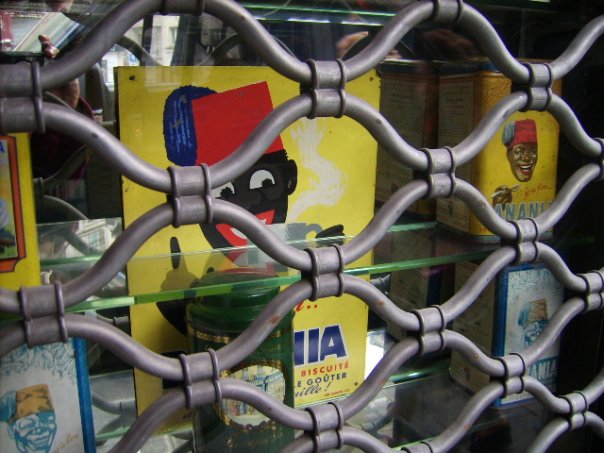
Sambos sat in Paris shop windows, subtle reminders that blackness and brownness can become an homage or affront wherever we are in the world. And there is no explaining to everyone (or anyone, really) that you do not represent what they think you do, that you do not deserve to be mocked or driven off your land or killed. There is no explaining to bullets or missiles or soldiers that your child is worthy of an undisrupted life.

Already, too many toxins are sinking into all of you.  All of you quicksand children — so impressionable, so vulnerable, so free — absorb everything. You may never now how gut-wrenching it is to realize that today, as parents, from Gaza to Sudan, Nigeria to North Carolina, we are feeling ever more powerless to stop it.

There is no corner of the world where I could run with you in my arms and, upon setting foot on its soil, sigh relief. Maybe this has never been the case. Maybe no generation has ever believed in an earthly safe haven. Perhaps this why some of us choose to believe in heaven. But I know that you are here because you’re with me. I know, because you’re here, that language and listening are the only real reasons to stay. We have to find ways to communicate to one another what weapons never will. It may be a futile fight, but it is the only one worth waging. Because you deserve what all the children of the world should have — upbringings entirely unmarred by carnage — I will stay. I will try harder to understand. For as long as I can, I will make my every word a tarp for your quicksand.