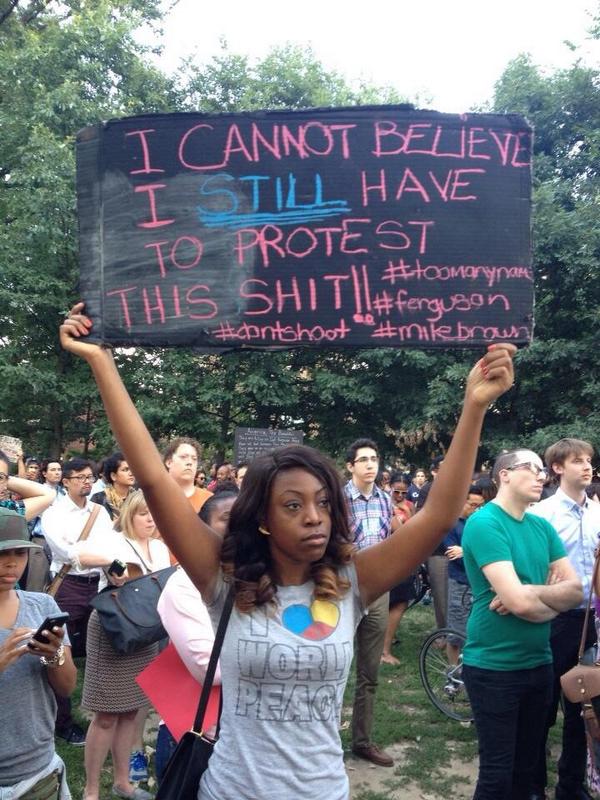
For Tamir, Who Was Stolen.

Photo: Fox8.com
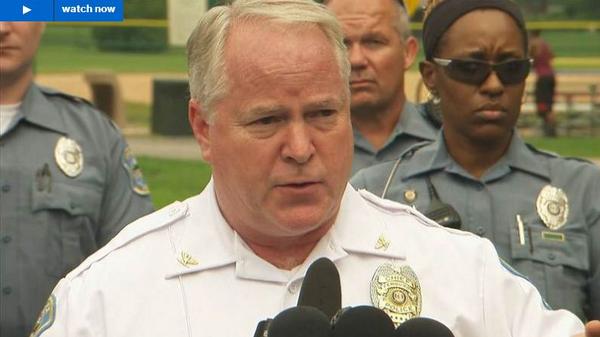
Photo: Fox8.com

The first thing I am pocketing is your name. Tamir, like something uttered in prayer. We will all be saying it so much in the days to come, it will sound like a chorus of hushes in a holy place, a sacrifice, not of praise but of sorrow. I am drawing it close to me now, listening to the sound of it on my lips first, before all our commentary turns you into a cause, foreign and distant.

I’ve become adept at this, arriving at the scene early, committing key details to memory. After I turned your name — Tamir — over on my tongue, I Googled it. It means tall or owner of dates or palm tree or wealthy. Your father says you were, in fact, tall for your age. You were, in fact, wealthy in the ways that wind up mattering: of spirit, of intellect, of creativity. Twelve and already embodying the meaning of your name.

I will need to remember this, and it won’t be hard. I am sure you had heard of the boys and the girls before you, all gone before their time. I am sure that, by twelve, you may’ve had some sense that cops are not kind to black boys who are tall for their age. In death, you have joined an innumerable host of witnesses, carrying the truth of your final moments with you into eternity, while the rest of us spend years parsing speculation.

I’ve a system for marking tragedies like yours. I have taken to following your mothers on Twitter and checking your siblings’ Instagram accounts and listening to your fathers’ interviews, all for more insight into you. And I sigh with strangers and cry with strangers and try to conjure you as someone three-dimensional, someone whose breath I can imagine feeling on the back of my neck as you let out a raucous laugh with friends, while sitting behind me on a city bus.

You need to remain real for me, Tamir, because you were real and you were twelve and you had every right to reach adulthood, tangible and talking and marveling that you made it.

We all marvel at where we wind up when we’re grown. We think: Unbeknown, I could’ve gone to the mall with the shoplifting girls or rode in the backseat of an idling car whose driver had hopped out to rob someone.

I could’ve been pulled over by a cop while on a date with a guy who keeps an illegal gun and weed in his glove compartment.

I could’ve been asleep in my living room as SWAT raided the wrong black family’s house (or the right one’s). I could’ve been whiling away an afternoon in my yard or at a playground, like you were, when cops arrived, ready to shoot.

I could’ve made too little money to live in a safe community.

I could’ve lived in the “safest” community there is and still been black and still been murdered and still been blamed.

I could’ve made bad choices or had my good ones go unrewarded.

This could’ve gone so much worse.

Then we breathe deeply and honor the moment as it is: a better outcome, a sparing, a miracle.

We remember children and women and men like you most acutely in these moments, how maybe you were just minding your business, just daydreaming or playing pretend. Or maybe you were pleading to be seen as someone real.

Maybe your eyes begged: Before you unholster your weapon, look at the nubs of my fingernails. See how I chew them down till they bleed, how the pads of my fingers puff around them so that it’s hard to pop the tab on a soda can?

Before you disengage the safety, look at my left shin and the half-foot line of brown slashed across it. That’s where I wiped out on my bike when I was seven and tried not to cry because my boys were watching.

Before you rest your finger on the trigger, look at these waves in my hair. My uncle taught me how to brush along with the grain. Before you shoot, my daddy is around.

Before you shoot, I make my mama laugh. I am real. It makes me proud to make my mama laugh. I am human. I failed science. I am real. I stole a candy bar once. I am human. I might’ve planned to shoot this BB gun at birds. Before you shot.

We will never know what you were thinking, if you had time to think. We’ll never know exactly how afraid you must’ve been. You, specifically. Tamir E. Rice, twelve-year-old boy who died the day after being shot by police at a playground in Cleveland. You, whose eyes in the first photo released to the public, are soft and kind and so age-appropriately childish, the kind of eyes that couldn’t have known what else to do with a toy gun than play with it. We will never have the privilege of knowing you as anything other than teary anecdotes, than memories offered up to the court of public opinion as closing arguments.

But God help us if we ever stop imagining you, Tamir. Have mercy on our souls if we stop trying to resurrect you with vivid, near-futile envisioning. I am touching my hand to the tenor of your name in my pocket. Tamir. I am thinking of you as taller still, as wealthy in the way that should least matter. You are rich, and you are grown and, now, your eyes are more discerning. But there is still wonder in the glint of them as you marvel over where you’ve wound up. You think: I could’ve been mistaken for menacing. I could’ve pulled my airsoft pistol in a moment of play, and police may’ve been present, poised to kill me. Wouldn’t that have been wild? Wouldn’t that have been my family’s worst horror? You think, in your house made of crystalline air, your home in the Great By and By: Thank goodness I live in a world where things like that never happen.
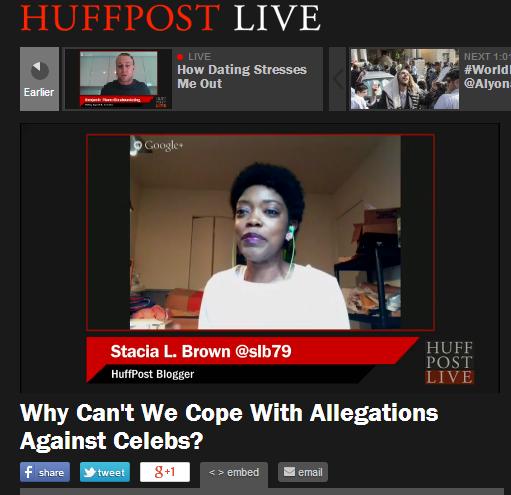
Two More Updates: HuffPost Live and Colorlines.

Untitled

Just a quick post with links to a brief appearance I made yesterday on a HuffPost Live panel discussing Bill Cosby. I was asked on because of this piece in The Guardian. (See also: this previous Bill Cosby musing over at Buzzfeed.) I don’t think I can embed the video here, watch at the HuffPost Live site.

But before you read/see any of this (if you haven’t already), read what Roxane Gay has to say about this whole Cosby thing over at her brand new site, The Butter, and I might be saving you the watching/reading time you’d be spending on my stuff. She has the definitive take on this debacle, I think.

Untitled1

I’m also super-proud of a piece that went up today at Colorlines, about unmarried single fatherhood in Baltimore CityIt’s the first time I’ve ever done reporting for them (I’ve worked as their social media engagement fellow/contractor since last summer). In fact, this might be the first semi-long reporting I’ve ever done. I usually write things that are under 1,500 words. This clocked in at over 2,500, I think. It involved two trips to the Center for Urban Families on N. Monroe Street and conversations with four single black fathers and the program manager for the Baltimore Responsible Fatherhood Project. It also involved a complete rewrite.

I have this theory that my first stab at writing for any new outlet or in any new genre will result in a complete rewrite. We’re talking maybe 10-15% of the original writing showing up in the final draft. That’s what happened here. It’s happened for a few other outlets, too, and sometimes, I tense up so much I wind up not even being able to do the revision in a way that’s both timely and satisfying. So far I’ve been blessed with patient editors (who are probably used to these kinds of freak-outs) who can retrain my focus on the bulls-eye after my draft lands pretty far away from it.

The takeaway: every publication has an internal voice and most them also want you to retain your voice and style, but it isn’t always the easiest marriage. Don’t be a runaway bride. See the rewrites through and work toward a more perfect union.

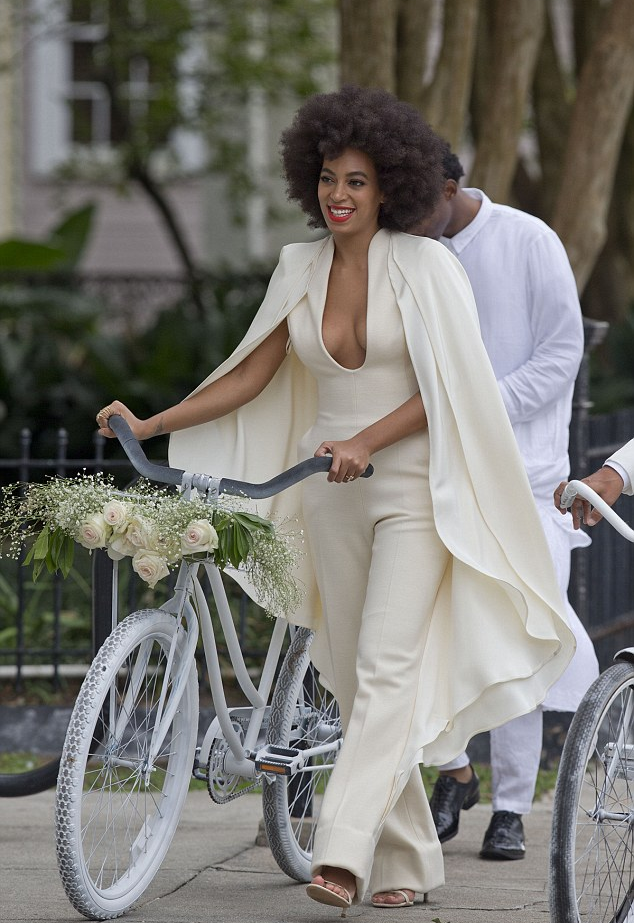
It’s been a wild month so far. Can’t wait to find out what else is in store. In the meantime, speaking of marriage, thanks to everyone for sharing my post about Solange’s wedding. I’m really happy to see so many people enjoying it.

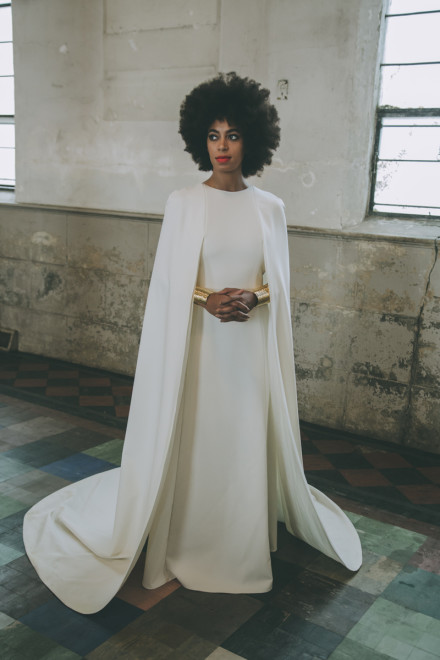
What Solange’s Remarriage Means to Never-Married Single-Mother Me.


solangebikewedding

1. “Carefree” is a crossroads, the center of four paths: parent and lover, artist and merchant. You dance in the dirt with hydrangea in your hair and you are wild when you’re expected to be tame. This is where people see you, where sun rays collect in the gold of your skin, so that even in the dark you’ll be swathed in phosphorescent spotlight. And dark it will be when you leave here and venture down each of the roads, where destinations are dim and the underbrush, unwieldy.

The road where you mother: The gravel cuts your feet as you carry your sons and your daughters.

The road you create: You dig until your fingertips bleed for art that feels rich and raw, as untapped as underground oil.

The road that may lead you to love: This is the longest most dubious walk and even when you’ll want to travel it solo, you will not often be alone. Here, you mustn’t forget that your child will become your lover’s cargo. He must carry him as carefully as you do. He must accept that when he joins you on the path where you parent, his own feet will also be cut.

You should watch what you are paving. Turn back to the clearing as soon as you can; your love and your art and your mothering find their greatest sustenance and purest ambition there.

You should marry at the crossroads, where you child and your art and your industry swirl up from the earth and make a sparkling white column of dust. Bask in how high it rises and in the way it all settles again.

2. Everything is inspiration, and when you are working toward something that inspires you, the sweat of your brow is someone’s aphrodisiac. God bless a working mother. God bless the passionate woman.

beyonceatwedding

3. And sometimes your sister’s sacrifices earn you your freedom. Her years of hiding under an industry’s expectations and artifice allow you to be your truest self out in the open. Then, you coax her authenticity out from the shadows in return. When the world demands your inferiority and calls you a mere facsimile of sun, you keep your light and refuse to be eclipsed.

4. Other lives simply aren’t enviable.

5. We unmarried mothers who have been so afraid have been told to be afraid. We were told we wouldn’t find love, or that the love we might attract would not be worth finding. We were told that missteps preclude forward motion. But there is no shame in having lived through a moment unwisely. Neither mothering after divorce nor having had no husband at all is cause for resignation or shame. The demise of our difficult relationships are no cause to deny ourselves new love.

6. No decision a black mother makes will diminish the Maatkare markers in her blood. We are queens, even us, be we ever so bowed or broken or humbled. We are regal — whether burdened with low-income or beset with incomparable wealth. We are regal when we choose to be, and the choice is all that matters.

Image by Rog Walker

7. Hair, in its natural state, is a halo. But you are well within your rights not to behave as angelically as you appear.

8. Hurt cannot be hidden. It will seep out in the notes and on the page, will be seen in the set of your jaw on the subway. So bare it bravely in the public square, where someone well-equipped to soothe you may see it.

solange-knowles-daniel-smith--large-msg-133945986002

9. When you are young and you’ve found a boy your age and whatever combusts between you feels like a kind of love, it is fine for that love not last. Even if it results in a pregnancy, even when the baby propels you both toward the altar, it is okay to flee. Marriage borne mostly of obligation flings you forward in ways that will disappoint you; the union itself is a stop so short of what you’d imagined for adult life to be that it may be best to run before it feels far too late. Keep running, with your child’s hand in yours, toward hope, toward extended family, toward your older wiser self, toward the kind of love that acts as a reincarnation.

solange-knowles-wedding-dress-ftr

10. Single mothers who wish to marry greatly benefit from seeing other single mothers marry. Wearing white and frolicking, with gold bands ‘round their wrists, reveling with the same village that’s helped to raise their children, enacting intimate, in-joking customs as nontraditional as their their premarital lives, dancing silly choreography with their children, who appear quite secure and supportive and happy. It happens, the nuptials seem to testify. It happens far more often than we’re told to believe. It can happen for you.


Writing is a Brawl: Thoughts on Another Week at WaPo.

I’m-the-man

I am not especially tough. I think most people who know me would be able to confirm this. My skin is gold-leaf thin, and this is especially true after I’ve written. You will find me at my most vulnerable on the day that something I’ve penned has been published. It doesn’t matter where; this is true whether I’m in control of the posting and it’s seen by a few hundred people, or if an editor at a national publication is involved and the post is seen by several thousands.

I am old enough to remember a time before the internet, when writing was far more romantic to me than it is now and when writers had a few insular hours or days or even months before reviews of their work began to trickle in. A letter to the editor or an op-ed or a missive to the author would travel through a postal cycle or onto the desks of various news staffers before it reached the eyes (and the ego) of the writer herself. Those were pleasant times — or they seemed to be, anyway. Some would argue that the time between publication and response, pre-internet, felt tortuously interminable. I think I would’ve appreciated the breathing room. Immediacy has obliterated the insulation of the writer’s ego, and I’m still mourning that loss. But the more frequently my work sees the light of day, the closer I get to accepting things as they are.

For the second time this year, Alyssa Rosenberg has generously shared her space at her Washington Post blog, Act Four, with me. This go-round, she did so while she traveled to Toronto for the city’s International Film Festival (TIFF). (Be sure to check out her coverage, now that she’s returned!) I wrote six posts in total: Thursday and Friday of last week, Monday through Wednesday of this one. Writing daily for a Washington Post blog was as exhilarating now as it was back in May.

But if I told you that I approached each day with confidence, if I claimed that I didn’t feel anxiety at dusk every day worrying over what to write and how to frame it and how it would be received and how frighteningly possible it was that I was on the absolute wrong side of an issue, I’d be telling you the boldest-face lie there is. I’d be talking about someone other than my quietly neurotic self.

amelie puddle

no crying

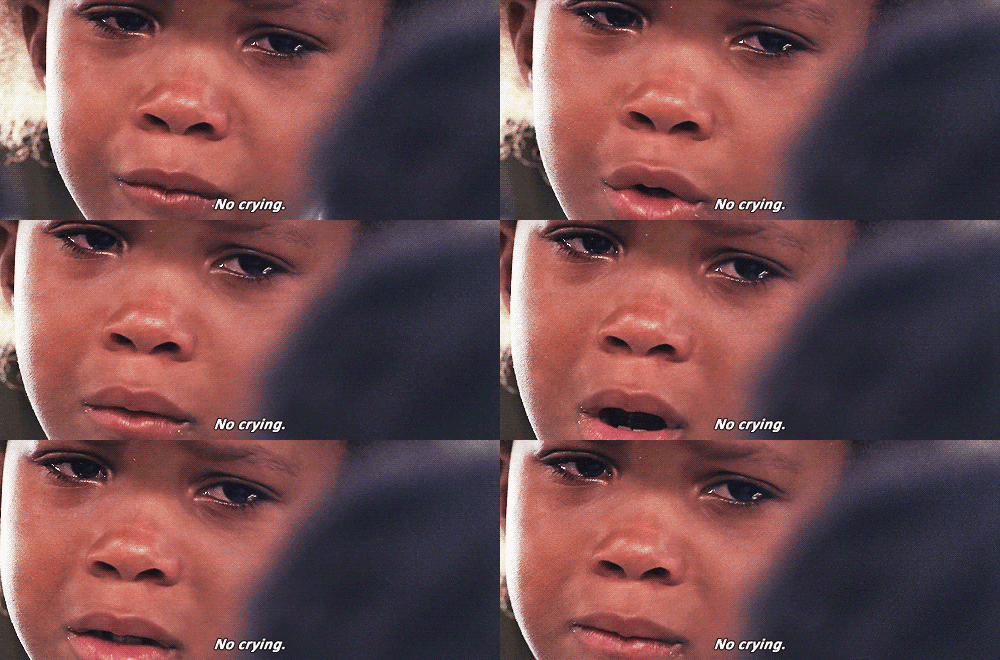
For writers like me, who struggle with the cultural disintegration of a feedback buffer, there are side effects to writing at a breakneck pace for a broad audience. The first among them is, of course, the comments section paranoia. I learned a few years ago to fastidiously avoid those unless I’m asked not to and then, only to spend as much time on them as I comfortably can without crying. The second is staggering self-doubt, which — I assure you — will annoy everyone within a mile radius when you’re on daily assignment. The third is an inability to sleep. The fourth is an uncanny aptitude for focusing on the three critical statements, rather than the 30 favorable ones. This last also manifests as talking myself out of great comments by convincing myself that 2/3 of that feedback is from people I know, people who love me, people who know just how little it takes for me to wither or chafe.

If you regularly experience any of these effects, I’ll let you in on a little life-hack. At 1 am, when you’ve reached delirium and you’re still pounding keys on what seems to be incoherent, remember: there is no time. The only minutes you have to spare are for sentences, not self-questioning. And when you wake up again at 5:30 am to re-read what you wrote at 1, you’ll realize you’ve developed an immunity to iocane powder. (Word to the Dread Pirate Westley.) Honor the absence of idle time and all that clutter casts itself aside. Head down, keep typing. That sound of your fingers flying across the keyboard amplifies, like Poe’s Tell-Tale Heart. Eventually, you surrender to it.

Is that enough? Will you be cured? Are your insecurities behind you? Man, nah. Your insecurities will always be nipping. Sometimes, they will clamp down and rip themselves a good chunk of flesh. I have yet to learn how to play off that limp, to walk a straight line when I’m wounded. This is what terrifies me: the more I’m read, the more often I’m wounded — and if I want this life, this daily-published life, I better learn quick how to self-suture.

There is nothing as exhilarating for me as writing. A close second is being widely read and well-received. I am trying to reconcile that some people will always think my purple prose sucks and that others still will almost always disagree with my central claims. Not everyone thinks that I’m good at this. I am working hard to become that most feared kind of woman: the one who does not require validation. But this, I suspect, will take as many years as I have left — and I do not know, having tasted validation, if it is a thing I could ever learn to eschew.

Here is another thing I’ve learned: publication is petrifying for the conflict-averse, but to write is to kick up dust and to beg for a brawl. To write is to wait for the big kid after school, with eggers-on encircling. You will want someone to root for you. You will want someone’s help with the wounds.

friend kind of

During this guest-blogging run, I think I gave as good as I got. I took more risks, made more leaps, tried to make interesting intellectual connections. I tried, as is the wont of Rebecca Traister, by way of Amy Poehler, not to f—ing care if you liked it. I’m enclosing all the links, in case you want to read them to see for yourself if you’d declare me this round’s winner or consider the whole thing a draw:

A Musing on Misogyny and a Guest-Blogging Stint.

Follow your own hand gestures, dude.

As promised, here’s another quick update with another writing-related announcement. Before I get to that, I wanted to point to this piece I published this morning at Medium about CeeLo Green and whatever terrible, horrible, no-good, very bad mess is going on with him right now. There are a few reasons I didn’t publish or cross-post it here, but I’d love it if you went there and read it. If you do, please feel free to leave a comment here, letting me know what you think. Here’s an excerpt:

The truth is: all the music men will disappoint us. They’ll make exceedingly wack albums or be rude and dismissive in person. They’ll abandon art for commerce or go into hiding. They’ll catch the most absurd, unsettling cases. You’ll live. Sometimes, if you’re a die-hard fan, you’ll give them the widest berth, remembering the good album, the great guest verse, all that as-yet-unrealized promise.

But a time may come, as that artist approaches midlife, when you realize he has let the ugliest parts of himself go unchecked. He has shirked rehab, reason, or the idea of reckoning. And if he’s anything like CeeLo, nothing he’s ever done will disgust you and chill you clear to the bone like knowing that despite your patience, despite his vast exposure to the extravagance and cruelty in each corner of the world, despite the eventual responsibilities to the next generation that come with advancing age, your favorite music men could hit 40 still believing and imposing as rule of law that respect, tenderness, decency and even acknowledgment of women’s humanness is some sort of meritocracy, individually earned, publicly debatable.

The other news is a little bigger. If you’ve been visiting this blog for a while, you may recall that I guest-blogged for Alyssa Rosenberg’s Washington Post page, ‘Act Four,’ for a week back in May. (It was big. I’m talking major milestone.) Well, I’m back on tomorrow for another week, as Alyssa screens films at the Toronto International Film Festival.

Since this is my personal blog, I’m going to let you all in on a not-so-secret truth: this work — this incredible, high-profile, quickly turned-around work — is no less scary for me this time than it was the first time I did it. Part of that is that Alyssa is pretty brilliant and she makes the most interesting connections between histories, events, and media — and she does it daily. I don’t want to bore or disappoint her loyal readers. Part of it is that I don’t often know what I’m going to write from day to day — and the better part of a day may go by without an idea coming to me. The third part is that my daughter’s embarking on her full days of pre-K (9-11:45am), starting tomorrow, and I’m her drop-off/pick-up person. And I also have another work-from-home job, so you know. Life’s hectic. The fourth part is just your run-of-the-mill writerly nerves and doubt.

To calm myself, I am thinking of Langston Hughes and his poem, “Theme for English B.” When I was in high school, it was one of my favorite things to revisit — and I’m coming back to it now, like a student timidly knocks on the door of her mentor, days before her thesis is due. I won’t reproduce the entire poem here, only the part that I love most (made all the more relevant by the lone comment left on Alyssa’s kind re-introduction post):

Well, I like to eat, sleep, drink, and be in love.
I like to work, read, learn, and understand life.
I like a pipe for a Christmas present,
or records—Bessie, bop, or Bach.
I guess being colored doesn’t make me not like
the same things other folks like who are other races.
So will my page be colored that I write?
Being me, it will not be white.

Word, Langston. Word.

Another Press Round-Up: PBS Redux, Slate Podcast, Colorlines.

A photo of me and my daughter, taken a day before her fourth birthday. She is the reason for almost every awesome writing thing that's happened to me since 2010.
A photo of me and my daughter, taken a day before her fourth birthday. She is the reason for almost every awesome writing thing that’s happened to me since 2010.

Sorry there’s no clever title for this blog post (and no poetry in its prose), but I just wanted to write a brief note to let readers know where else they can find me this week.

Before I get started, I’d like to welcome new subscribers. There’ve been a lot of you since the beginning of this month (and the beginning of this year, for that matter) and I appreciate you all. Thanks for your continued readership.

Because I’ve taken down the other recent post about PBS NewsHour and HuffPost (since the HuffPost appearance was canceled), here’s the link and below is the video for the brief talk I did with host Hari Sreenivasan:

A few days later, I was also a guest for PBS NewsHour’s Twitter chat on social media’s efficacy in activism. Here’s a link to those tweets.

Yesterday, I was a guest on Slate’s “Mom and Dad Are Fighting” parenting podcast. The other guest was R. Dwayne Betts, whose writing I’ve long admired. Many thanks to host Allison Benedikt for inviting me! Listen here:

On Wednesday, my day job featured the first five of my blog posts on Michael Brown and Ferguson, which was a great honor. The sixth one posted yesterday, in case you missed it and would like to read it.

And next week, I should have another announcement, God willing and the creek don’t rise. If you follow me on Twitter, you may have caught me errantly announcing it too early before a super-quick tweet-deletion. Pro-tip: don’t announce things before the person who offered you the opportunity okays it. Another pro-tip: don’t announce things until you know that you know that you know they’re a done deal. It’s a rookie-level error to jump the gun. As the old adage goes, “Don’t count your chickens before they’re hatched.” (And more pointedly don’t tell people about your chickens until you’ve got eggs to sell.)

Thanks again for rockin’ with me. It matters. A lot.

Mourning Mike-Mike Amid the Madness.

michael-brown-funeral-inside-church-ctr

… So for sixteen days we all had to bide time until the boy could be buried. It would be sixteen days before his body could, at last, be lowered into the uneasy, overturned earth, and all the while, he was taken apart and reassembled, both in organ and in character. Each day brought some new revelation about the placement of bullets, each day a new besmirching of his personality.

During those weeks’ wait,  his death spun out like shrapnel, dust, detritus, like tear gas and rivulets of milk, like whispers of revolt and like war cries. His passing meant too many things to strangers and had settled under their skin, left burns, begun to scab.

It became hard to remember Mike-Mike in the madness, hard to recall the exact name of his college or his precise height and weight. We couldn’t quite tell each other the color of his eyes. None of us knew what could invariably make him laugh. Too many images loomed larger: law enforcement  in riot gear, rifles trained on children, threats — nay, promises — of more murder and bodily harm at the hands of local police.

We were so haunted we couldn’t remember that we’d never known the actual boy at all.

When someone dies unjustly, all his journals are judged as unauthorized memoirs. Every article we pen about him is its own invasive autopsy. We learn too much, the intimate and the inconsequential: last few breakfasts, innermost fears. We read or overhear that he had been dreaming of bloodied bedsheets. In his last few fits of slumber, he could hear a bell of reckoning. He thought it tolled for friends, for relatives. He did not know it knelled for him. We learn all about the poorness of his high school, how for senior portraits, the graduating students had to circulate a single cap and gown. We learn mortifying, mystifying things. Injustices long swallowed rise up in our throats like bile till Mike Brown becomes a battle cry.

But sometimes, when all is said and done, we realize we’ve learned nothing we should’ve.

He was buried on a Monday and by the time it happened, he was cause, he was principle, a platform for voter’s registration, a morality play, an archetype, a cautionary tale. But only for the people who knew the clouds that could pass through his eyes when he worried, who remembered the day his squeaky voice dropped, whose thoughts of him toggled between more than convenience store and corpse… only they could truly mourn his simply as a boy. Their boy.

The family allowed us to mourn their boy, letting television cameras live-stream his funeral. They gave the press exclusive access to their grief. They implored us to understand the skin, the bone, and the murky, thoughtful, aspirational mind of their son. We tried. At least some of us tried. But it is hard enough to understand people we’ve met and near impossible to truly know a young man we may never have seen, had he not been riddled with bullets on a random summer afternoon. It had been difficult, then, not to co-opt him, difficult not to project onto him our own fears, our own sorrows. Because those boundaries were becoming so blurred, this final access rankled some and was welcomed by others. Some of us needed to watch his homegoing; others needed nothing so much as to look away. But in truth, from the time the boy’s body became public spectacle, lain bare for four hours on a sleepy street in Ferguson, we’d been given more access to him than he or his parents or any of us would ever have wanted.

Michael Brown Sr. (center), surrounding by family at the grave site where his son was laid to rest.

Like Mamie Till-Mobley before them, Lesley McSpadden and Michael Brown Sr. wanted the world to continuing seeing the injustice that what was done to their baby.

I have always found it discordant to attend a funeral where the songs are uptempo and the attendees are rejoicing. I do not know how to call a funeral a homegoing or death a transition, though they are, of course, all of those things. What I want most when laying someone to rest is the space to sob as I recall him, the arms to hold me as I buckle, company of a great cloud of witnesses. But everyone needs different things in times of unthinkable sorrow, laughter as much as mourning, the catching of the Holy Ghost as much as a graveside howl. All I can hope is that, by letting us in, on Monday, as they have on every day since they lost their eldest son, the family and friends of Michael Brown Jr.’s had all that they needed. I hope that in the months and years to come, the cavern of that need will never be hollowed and always be filled.

The Girl Who Pitches Hope.

tumblr_na5y7yQD7m1qb6v6ro1_400

The little girl is leek-long. Her eyes are hazel, her gaze intense — that is, till she’s off the mound. Then, her body melts upon missing a catch or swinging at air or hitting a foul. She is all early adolescent angst when she isn’t “on,” and her eyes are suddenly more like lakes than stones. I am watching her and recalling what it is to be thirteen and sure about some things. I am watching her and recognizing how much has already changed — for her and for the world she is set to inherit. I am listening to her quick pitch slice through wind and remembering how fleeting everything is.

This week, Mo’Ne Davis became the first Little League player to make the cover of Sports Illustrated. She is the 18th girl ever to play in the Little League World Series and the first to ever pitch a shut-out there. What too few reports of her prowess are mentioning is that she is also the first black girl to do any of it. That matters as much today as it did in the 1940s.

It matters because, while it is sweet that she is a role model for all little girls and an emblem for the mainstream “Throw Like a Girl” movement, she is a particular fruition for the late Toni Stone, one of the only three women allowed to play in the Negro Leagues. She is walking justice — an excelsior in motion — for Mamie (Peanut) Johnson, the only of the three who was a pitcher, the only of the three alive to witness Mo’Ne’s meteoric rise. It all matters because the girl’s infiltration of a mostly white, largely male, and predominantly middle-class space provides specific inspiration to black girls growing up in communities where this kind of diamond has never been presented as a credible aspiration.

As a black woman, this August has been one of the most wearying months of my life, and I do not believe I speak only for myself. Black women spend every day outrunning the hounds of our history,  but in this week — in these past 12 days — I’ve felt like they have caught me. I feel those hounds’ incisors at my ankles and when I open my mouth to yell, I hear the cries of four little girls in a Birmingham church. I hear a pregnant Diane Nash calling out from a prison cell. I hear Myrlie finding Medgar in the driveway.

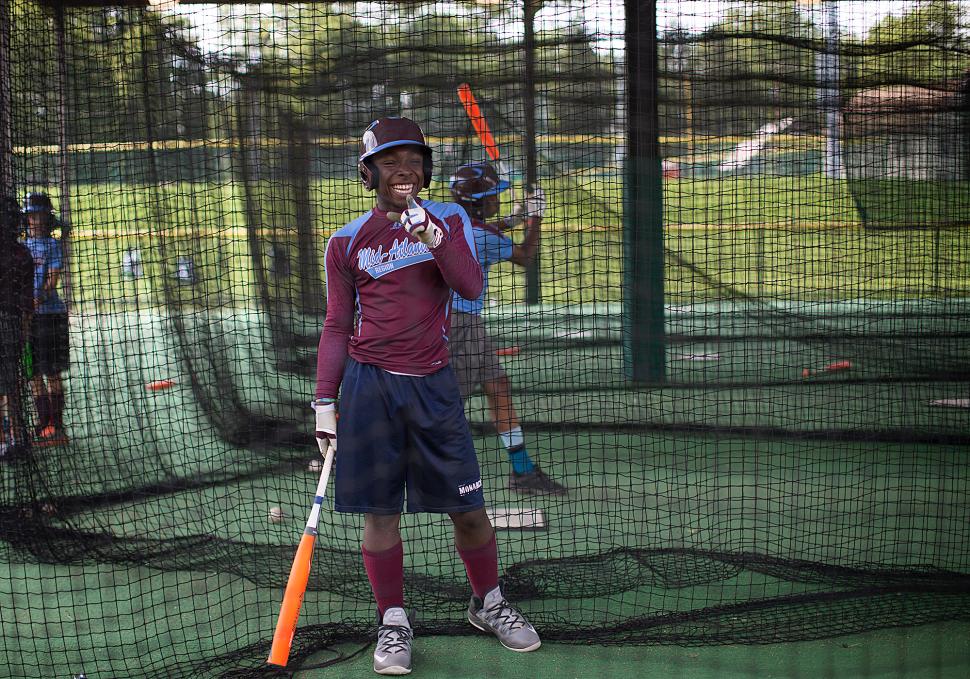
And then, from some far-off place, I also hear delight: a mother muffling the full range of her exuberance in a mostly-white crowd of 30,000. She is yelling for her child who is striking out boy after boy on a baseball field. Four. Five. Six. And this is far from the first time. She doesn’t want her daughter hurt. Or tainted or entirely transformed by her newfound notice. But she is proud — vocally proud, in a way black mothers haven’t always had the luxury to be. She is proud and she wants the ancestors to hear it. She wants the ancestors who were afraid to boast about their children, lest they be sold off or dragged away in the night, to know that, though it may seem so this month, they did not die in vain. All the children are not dying. Some are soaring. Some, like Mo’Ne’s teammate Zion Spearman, have held onto their beautiful smiles even as manhood looms large and threatens to steal the unabashed glee that Little League seems to prolong. And not so far away, there are grown black men feverishly patrolling and penning and processing evidence. Not so far away, there are grown black women returning to classrooms and opening their arms to the scarred and traumatized children. There is always something left to recover. There is always a girl or boy who comes bearing enough joy to replenish all that’s been depleted.

Zion Spearman, smiling.

Baseball isn’t even her sport. By college she wants to be a basketball player at UConn. I can already see her there, of course. She is as still long as a leek, full of stony resolve on the court and just as vulnerable on a bench as she was in a bullpen. She plays to keep ahead of her own hounds. She plays as though she’s never been a legend. And darlings, let me tell you: on some dark future days, watching her is the only thing that keeps communities going. On some dark future days, she looks like purest hope we have.

Ferguson and Patience for the Appalled.

Photo: Twitter, from a #NMOS14 protest in Washington, DC

Be patient with those of us who are appalled. We thought we had been striding toward some progress, thought our education and integrity, our intellect and analysis were meaningful. We studied history, believed we understood all the ways in which enslavement could impact advancement. We were repairing our middling credit, paying back student loans, electing more people of color into political office. And yes, black blood still flowed in the streets and yes, each week new images of bullets bloodying children and grandmothers gunned down flickered across the six o’clock news. But we had been told to hope, had been assured that it took audacity, but it could be done. Optimism could be sustained. And weren’t we seeing justice sometimes? Weren’t more black students graduating college? Weren’t more of our men hitching up their pants and wearing ties? Weren’t we finally — finally — being legislatively mandated to become our brother’s keeper?

Forgive us for retiring “We Shall Overcome” for a while. Our president was black, and his attorney general had been tasked with tending to what was left of systemic inequity.  We overcame! Or at the very least, circa 2008, we felt fairly capable of overcoming.

Yes, even when we couldn’t catch cabs. Yes, even when we were stopped and frisked. Yes, even when a black Harvard historian was accused of breaking and entering into his front door. That was resolved with a beer summit, wasn’t it? Ain’t we some overcomers?

Pardon us for reeling in the wake of this latest reminder that we are still psychically, politically, horrifically, oppressed.

We watched a child bake on the asphalt on a middle American town last weekend, while the cop who killed him fled without calling in the murder or staying on the scene. And while sitting on our seat’s edge waiting for accountability, we had to reckon with the protracted dawning that no immediate responsibility would be assigned, that none of the shooting officer’s higher-ups — from his police chief to his governor — would feel the need to reprimand or hold him wholly responsible.

And while we were still reeling, while we were yet aghast, either time stood still as Ferguson Police teleported back to 1963 or time sped forward and we were all dumped into a near-future dystopia or, likeliest still, today is no different than the day of Mike Brown’s murder. Today is moving at the same predictable clip as every day that came before it.

Maybe black progress has only existed within a political Petri dish. Maybe it was merely another of the many experiments this country has conducted on people of color. Maybe the reason it doesn’t matter than children are being scraped off the pavement like dogs and babies are being tear-gassed and the best and brightest of the black literati are begging for their lives while standing before the barrels of Ferguson Police guns is because the Petri dish was secretly shattered, the quantifiable results of black process subsequently classified.

We will never know how many years or dead bodies or exceptional achievements it takes to convince a white supremacist culture to acknowledge the other 2/5 of our humanity.

Excuse us, as this is not easy to accept. When you ask why and how we could be so surprised, we are thinking of Obama’s first inauguration. We are thinking of our parents’ mortgage payments. We are wistfully recalling the Cosbys and thinking about how Dwayne Wayne really did end up running Kenishiwa in the end. Dreams come true, dammit. We are hearing echoes of Marian Anderson and Leontyne Price. We are tasting the water from every fountain where we’ve sipped, without having to bow our heads beneath a Coloreds Only sign. We are touching the bibles handed down from our great-grandparents gnarled hands to our smooth, desk-working ones. We are reciting the promises inside them. Those who are peacemakers will plant seeds of peace and reap a harvest of righteousnessBlessed are those who mourn, for they shall be comforted. Yea, though I walk through the shadow of death, I will fear no evil, for thou art with me. Thy rod and thy staff they comfort me. 

You promised, we pray, as though we’ve been betrayed. You promised, we repeat, as though we may have been forsaken. But we’d forgotten that we are still walking and that the shadow of death may not look like a hospital bed at the end of a long, storied life, but instead like a city on lockdown, asphyxiating its citizens, imposing a curfew on all who seek justice, donning riot gear and rolling tanks simply to protect a police officer who murdered someone whose skin looked like our own.

(There is still time left, right, Lord? There’s still time, isn’t there, for You to redeem these dark times?)

Please. Please. Just be patient. We are making our way. But you must understand that it is hard, when we are cordoned on all sides by toxic clouds. Surely, you can empathize with how difficult it is to be clear-eyed while gagging on these cannisters of cover-ups.

Iceberg Boys: On Michael Brown and Other Lives Cut Short.

IMG_4796
Michael Brown (pictured right). Photo: Twitter

1.

What struck me was how old they all looked, those boys with the full-grown beards and sculpted biceps, all between 16 and 18, dawdling in front of the schoolhouse before the homeroom bell. I wouldn’t be 14 for a few months and middle school, that hotbed of hormonal awkwardness, had done nothing to prepare me for sauntering through an every-morning gauntlet of upperclassmen.

I don’t often remember high school fondly, but when I do, I recollect walking up to mine that first morning. I recall the thrill of suddenly sharing space with so many of these manchildren and the heady unexpectedness of their appearance. They were boys goofy enough to still prank and preen and bluster for young girls’ attention while toiling at manual labor jobs on weekends or closing restaurants at midnight on weekdays, before driving home in rustbucket cars they’d purchased themselves or sedans their parents were leasing. There was such a chasm, both of responsibility and experience, between those boys and me.

On that first day of high school, I fell in love at least three times before class was dismissed.

Honey, here is a thing you will need to know about young black men: they are icebergs. My lord, how often they’ve been told to shine up the peak that is exposed, how thoroughly they’ve convinced themselves that what lies beneath should stay submerged. The waters are dark and frigid, but when you love any one of those iceberg boys, you will want to plumb his depths. You will long to warm him enough to lift him, to lower the water levels, to expose the many moments that he feels the need to hide. And if you succeed, what you will surely find first is fear.

2.

The footage is grainy and so am I. Days of following this case have made me feel less like a fully composed person and more like a loose collection of snowy particles threatening to drift apart, if it weren’t for the casing of my skin.

What the footage shows is two young men in a convenience store. It shows them taking cigarillos from the store as the cashier tries futilely to stop them. The aggressor looms nearly a foot taller than the store clerk. He shoves him then doubles back and uses his size to keep the cashier cowering while he leaves.

Yesterday morning, at a press conference that promised the name of the officer who killed Michael Brown, a police chief whose job performance I’ve grown to despise over the course of this week took the podium and said, “What we’ll be releasing today are details about a ‘strong-arm robbery.'” He presented a timeline of the robbery, insisted he would not take any questions, then proceeded to turn away from the mic. Journalists and protesters erupted.


WHAT IS THE OFFICER’S NAME? they cried.

Chief Thomas Jackson. Photo: MSNBC

Ferguson Police Chief Thomas Jackson turned and stammered the shooter’s name, as though a bit taken aback that he was being asked to offer it at all. He spelled it.

D-A-R-R-E-N. W-I-L-S-O-N.

He emphasized the cop’s clean six-year record. And then he walked away.

Within seconds, screen shots of the young men in the convenience store were online. Within minutes, the full surveillance video clip was released. Within a half-hour, my social media timeline reluctantly noted the similarities between the bullying aggressor in the video and the boy whose body had lain bloody in the street for hours last Saturday.

By afternoon, Chief Jackson was back on television, admitting that the convenience store theft was not connected to Officer Wilson first stopping, then murdering, Mike Brown.

It took six days for the police to produce this footage. Six days to even mention that Brown may have been involved in a robbery. Six days of the Ferguson Police Department protecting the name of their officer, who shot Brown in a completely unrelated incident. Five days of terrorizing a largely peaceful community, of meeting their placards, convictions, open palms and protest cries with tanks and tear gas and rubber bullets and peppershots and tanks and sniper-mounted rifles and wooden baton pucks. One day of relative peace, after a governor materializes — following a half-week of silence– and appoints a changing of the law enforcement guard.

Seven days without public condolence or remorse.

3.

Ferguson protestors preventing the looting of businesses last night. Photo: Twitter/@KhaledBeydoun

You have to learn quickly how to read an iceberg boy. Intuit which scents may mean trouble (weed, liquor, and — to the extent that it can sniffed at all — the tang of coursing testosterone, commingling a surge of adrenaline). Sense which sudden movements are harmless and which may connote a palpable menace. If you are wise, you know that none of an iceberg boy’s characteristics are mutually exclusive. He can be both the college-bound teen and the thief. He can be an inductee of the National Honor Society and the type of person who watches or records an assault and helps the video go viral. He can be innocent in one context and quite guilty in the next.

Iceberg boys are not alone in that. So many of us know what it is to perform one identity for a parent and a far different one for a peer. So many of us know the shock that can come from a collision of those identities. Mike-Mike the Gentle Giant may also be Big Mike who shoves a trembling cashier and steals a box of Swisher Sweets.

Neither deserved to be executed for refusing to step onto a sidewalk. Neither deserved to be executed for stealing cigarillos.

The heartbreak here isn’t that the Mike Brown whose humanity we’ve championed in death may have been capable of intense contradiction in life. The heartbreak is that the police department responsible for his death wants to make that facet of his humanness a justification for his murder. The heartbreak is that cigarillo theft pales in comparison to the theft of any opportunity to become the man he might’ve been.

4.

The iceberg boys at my Baltimore County high school seemed desperate to represent some notorious Baltimore City set. They claimed connections to McCulloh Homes or Edmondson Village while living in quiet cul de sacs or sleepy clusters of prefab townhomes.

They would tell us: I’ll be lucky if I make it to 25, even as they filled out college applications or consulted the guidance counselor for career options.

I thought they were exaggerating. I thought they were being a bit ridiculous. I smirked and rolled my eyes. Not everyone black in ’90s Baltimore was living out his own personal Juice, Menace II Society, or Boyz in the Hood.

But iceberg boys do die in suburbs. They really could be swarmed by multiple cop cars in routine traffic stops. They actually are assaulted by officers while they are subdued, nonresistant, and unarmed. I learned — and Daughter, I am sure you will, too — that, as long as we are black, where we live will never insulate us from harm. What those iceberg boys understood even in our predominantly black and middle-class community, was that black skin is a risk, wherever you are, and that living in this skin is its own contradiction, personal behavior notwithstanding. Our skin is at once a particular point of pride and also akin to walking out our lives cloaked within what may someday be our untimely-death shroud.

A lot of the iceberg boys I knew in high school lived. The one whose backpack unleashed a contact high whenever unzipped finished grad school last year and is engaged to be married. One is in real estate. One is a minister. Another became a chef. Some are teachers. Many are fathers of college-bound daughters. Others are parenting iceberg boys of their own.

I am sure that any of them would tell you it was hard being mistaken for men when they were still reasoning like little boys. I am sure that any of them would tell you they are both glad and relieved that they’ve survived.


Editor’s Note: An earlier version of this post had the subtitle, “On Michael Brown and Other Complicated Lives Cut Short.” A reader pointed out that “complicated” drew an unfair and unnecessary connotation, as it shouldn’t matter how complicated a victim’s life is, when it’s unjustly cut short. I’ve edited the title to emphasize my agreement with that reader and to avoid further misunderstanding. – slb