My Body, Broken for You.

Note: I wrote this in December ’11 for a contest I didn’t win. It’s strange that fiction was my grad school discipline; all I’ve written since then has been creative nonfiction. I haven’t given up on fiction, but I think the work it takes to perfect it through revision is work I’m not always successful at seeing through to the end. Anyway, after a couple of rejections and no-response-to-submissions, I’ve just decided to post it here. Let me know if you think it has potential.

My Body, Broken For You

Once, just after their father left, I wished they would just slide out of me, like so many of the other eggs before them.

Perhaps that caused it.

They were fully split for a time, identical but separate, two girls already playing pranks, daring the ultrasound techs to tell them apart. One darted here then wriggled left, and the other followed so close behind we’d all have to wait a half-hour to distinguish one’s vitals from the other’s.

But three weeks after I squeezed my eyes shut and hoped to find them floating among my fifth forceful pee in an hour, they had fused, clinging to one another for the love I’d denied them, clinging so tightly they’d joined at their hips.

When they were tugged out of me one month early, I peered over the surgeon’s partition and spotted one wriggling thing, a tiny, too-wide, creature that looked for all the world like a Hindu talisman I’d passed in the window of a rug shop once. I didn’t know it then, but later, when I’d stopped fearing them, I would look up that Sanskrit idol and find that I was thinking of Kali: six-armed black goddess of change and of death.

That was my daughters.

They were covered with thin, furry pelts they would shed in the month that they would’ve been full-term. Viv didn’t cry for two full minutes. Nadia was born with a veil.

A resident gasped before he caught himself. An intern fled, retching, from the operating room. My obstetrician apologized, looking slightly green himself.

It was good that their father left me when he did. If he couldn’t bring himself to settle into co-parenting when the idea was purely conceptual and when we both thought I was carrying a single fetus we’d assumed would ripen into something more cherubic than grotesque, he did not have the constitution for this.

They were not fun, upbeat girls–and they can’t be faulted. They’d come home on more than one occasion, each year of grade school, with bloodied welts where some uglier, pretty-faced, one-headed child had stricken them with stones. Once, when they were nine, Viv veered toward a van where a man promised them fame and five hundred dollars, while Nadia, who knew better, asked him the name of his circus. Before they were seven, seven doctors begrudged them their hope for successful separation.

And they were saddled with me as their single mother.

The girls found it impossible to hold their heads high, because I couldn’t. Everyone seemed to blame me for their condition, especially them.

They wanted answers. Why had I carried them all those months, knowing the quality of life they would have? Why, when I saw Viv’s one listless eye, had I not seen fit to correct even that? Why was Nadia brilliant, when Viv could barely concentrate on a passage of literature long enough to grasp its basic meaning? Why did they feel so unworthy of more than anyone’s sidelong glance? How could they live, knowing they might spend many years, graying and shriveling with age, without ever knowing the full flush of romantic love?

There seemed no end to their injustices. And they wanted it known that they blamed me.

I could never bring myself to tell them the truth: I’d kept them because I thought they’d never be able to leave me. I’d kept them because their every infant embrace felt like a Ferris wheel and my heart missed the joy of a carnival.

It was their father who found them the doctor, long after they’d stopped hugging me, long after they’d vowed to move someplace remote and live like queens in a village who’d believe them to be deities.

I would not have given my consent to the surgery, had I not believed they’d kill me in my sleep if I didn’t.

Here in the waiting room, I have been sitting across from their father and his new West Indian wife. She is speaking patois to her own teenage daughter, who glances at me before sucking her teeth and snickering.

We have been here for twelve hours, pining for news of a successfully reconstructed pancreas, of the lengthening and shortening of intestines, of two fully functional diaphragms.

I try not to stare too long at the girls’ stepsister, as I imagine them strutting on either side of her through a mall. I force a smile at the pep in their gait, their chins buoyed by the confidence that no one there knows what they were. Their sister is, for once, at ease being seen with them.

They would’ve been seventeen soon, but often, I imagine them at forty, sharing a chair, still conjoined, ’round a campfire.

They have husbands and undamaged children.

They are telling ghost stories and their laughter swirls with the embers.

How Angry Single Black Mothers With Little Hope of Marrying–Ever!–Spend Valentine’s Day.

We spend it loving, spend it splaying schoolhouse Valentines into arcs on the carpet, prancing around them in circles wearing wings.

We spend it grinning, giggling, pressing our foreheads to our children’s, conspiratorially. No one else knows, we whisper, how rich we really are.

We spend it working, for work is love made utilitarian. There is no more steadfast expression of care than rising with the dawn and pressing into day to serve and to earn for ourselves and our babies.

We spend it placing phone calls, hearing voices. Some will remain in an echoing past, never to receive the intimate attention we once bestowed with relish. Others may prove part of a hopeful future, their laughter a boon we’ve earned with our wit and our charm.

We reach for our grandmothers, aunts, sisters, mothers, thank them for teaching us how inconsequential opinions should be–even theirs, in many cases, and how there is as much dignity in being alone as there is joy in being healthy and coupled.

We hold our men–our sons, their fathers, our own–and make clear to them just how profoundly they are loved. We teach them, either through doting or measured distance, the many ways to be caring, invested, supportive.

We treat ourselves and others: soak in candlelit tubs filled with salts and rose water, take copies of Essence and Ebony’s black love issues to girlfriends, buy our own confections, compliment the ladies at the office who’ve had gifts delivered, buy a new book, watch our favorite shows, and love and love and love.

We spend it knowing. There is nothing pitiable about self-preservation. We do what we can to withstand intense scrutiny and treat ourselves with the understanding and care often denied us. We do not require society’s affirmation. We are lovable just as we are.

The Soul Wrestles Free.

1963-2012

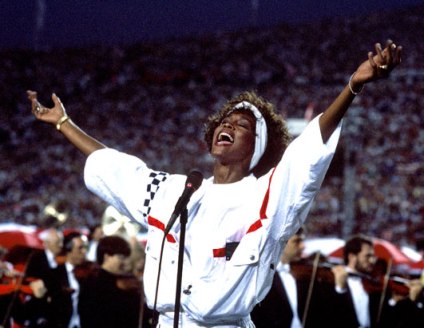
The body houses all. Its organs are not capable to dividing the precious and vile. The skin cannot filter out flaws, cannot leave behind what is crystalline and expel what is already breaking. This flesh, this blood, these limbs, each space is stretched taut with the gore and the glory of our souls.

It betrays us, the body, with its strange aptitude for seeming unsullied, during the long years it often takes for signs of our ailing to reach its surface. And when the body is lithe and graceful, adorned in glittering raiment, smooth-skinned and diamond-eyed, capable of pushing otherworldly song through the chords in its throat, and constantly erupting with laughter, it is downright deceptive. It is a projector, casting aspersions on our concerns and flickering out a performance that fools us all. I am fine, it says. I have overcome all that’s ugly inside me. I am exactly what you hope that I’ll be.

The body is wrong. But we who do not live within it can’t accept that. Even when it turns on the soul, so damaged and tortured inside it, we say: I still see the woman of old. All she needs is a touch of rest, a heart-healthy diet, a better life partner. All she needs is the right producer, the right vocal coach, a 12-step refresher course. This delusion is easy, when the body is as beautiful and the voice as iconic as hers. There is a long way to wither, to fall.

The body works feverishly to convince itself–and by extension, us–that it will have as many chances as it needs to regenerate all that erodes.

It does not respect mortality like the soul does. It does not resign itself, first to the necessity of help, nor to the futility of seeking help simply because it’s expected. All the body wants is to go back, to be regarded as the gorgeous prewar house it was before the wreckage. It gathers what’s left of the gild on its throat, its slip of burnished skin (now so translucent, we cannot deny the damage below it), its unerring, courageous smile, and it prostrates itself before parties and makes valiant attempts to steal our breath with a note.

What it does not know is that the soul is bearing down and bringing her dignity out of her, pulling her love and her legacy, her impossible pain and fragility, and her marvelous, bottomless grace apart from this earthen casing that could scarcely ever contain it.

The soul has little need to hide what ails it and comprehends that when the body falls away, most of who she is will be in open view. It shies neither from adulation or assessment, unfurls itself for scrutiny, shifts its hips and shimmies, saying, Honey, if ever there were a case of the good overshadowing bad, it’s mine.

And she sails off like comet, shedding debris in all of her glory.

As Always, In Parting, RILPS, Don Cornelius.

It is entirely possible that you did not know. Conjurers are rarely still aware of the ripples their handiwork incites, years after they uncork the lightning in their bottles. The world looks different now, like a dystopia that displaces its elders, like a nether region that edges brothers like you right on out of the game.

Your mansion, cold and underinhabited, may’ve felt like an ice floe.

We will never know.

But we are sure that it would’ve taken more than reassurance of your relevance to keep you here. If all you had needed were confirmations of your impact, you could’ve slipped into the back of any black wedding reception or family reunion, could’ve glanced in the general direction of a public school dance troupe, could’ve listened to the hooks in any number of hip-hop songs, keened your ear to the affected baritone of brothers who’d give anything to sound as effortlessly smooth as you. You needn’t have even left your home; there is Centric. There are the chanteuses and crooners who are your contemporaries, still rockin’ steady, still beautifully wooing, still owing you a world they would never have known if you hadn’t created it. There are Crooklyn‘s closing credits. There is the devastated, ever-lovingly devoted ?uestlove.

There are the voices of our parents whenever they talk about how “baaaad” the Soul Train dancers were, their tones still crackling with energy of yore, as they add, “I coulda been one of them, man,” or “I thought I was one.”

You see? It didn’t end with them. What you built was no sprint; this is a relay. Our parents bore your baton. And though your passing may cause the slightest quaver,  the most momentary stumble, we hold it now.

We know the dissonance between the generations. We know your era questions whether ours knows the true meaning of “good music,” or worse, whether we are capable of creating it at all.

You needn’t worry. We understand your labor. We know it has given us opportunities we’ve both cherished and squandered. We realize we would never have had the artistic community, the mainstream exposure, and the simple, undiluted fun we now freely enjoy in musical performance and appreciation were it not for you.

Soul Train was a space for us to shuffle off the coil of code-switching. There, our legends didn’t have to perform for audiences who regarded them as little more than organ-grinders. And our young men had a space where dancing could be un-self-conscious, could have grace and power and coolness and aggression, could escape the stigma of effeminacy. Our young ladies could explore their fashion sense, draping themselves in hood couture, half-shirts and high-waisted pants and maxidresses, while angling their arms, legs, hips and torsos in ways reminiscent of Ernie Barnes’ art.

We understood you, Mr. Cornelius, with few exceptions—until now. As a culture, we still struggle to reconcile suicide. It distances us in ways other deaths tend not to, and when the act is committed by a recluse like yourself, it’s even more bewildering.

But we can love without fully understanding. And we can mourn all that we’ve lost in you, apart from longing to know the mysteries that led you to leave us.

As always, in parting, we wish you love, peace, and soul.

Submission–

is Pandora’s box, is a false bottom, is essential. Is an open palm–even if pried, finger by finger–and an open mind–even at the risk of losing it altogether. Is to relinquish what you were certain was all yours: free will; personal space; emotional independence; your art. Is an uncomfortable exposure, a public nakedness, an objectification.

Submission is the virgin’s dive into the volcano.

*     *     *

Over months, perhaps even years, the pen has courted the page. One gave, one accepted. They were gracious; they were at odds. They were unabashed, then apologetic. They created a life, then left me with it. They’ve moved on to other mating rituals, other memories; the pen and the page are migrants, gypsies, pilgrims.

But the life they’ve left behind is my responsibility, and I have been dutiful, keeping my promises, even after I had grown too attached to simply let go when the time came, as I told them I would.

It was whole, fully formed, complete—or complete enough to survive without my constant tending. Its paragraphs no longer needed pruning. Its sentences could manage their own cowlicks. Its chapters crossed their legs and sat properly. It behaved, but also knew when to rebel.

I re-read it once, this living thing, this manuscript, this daughter. Just once, for errors, for reasons to hold it back. But at all turns it held up, held its own, and I knew it was time to submit.

I gave it, like Hannah gave Samuel: freely but with great trepidation.

*    *    *

There is something sacral in the ending. You reach it and do not know how it arrived. Now here you are, with something arduous and wonderful behind you, and some great and glowing mystery ahead. The prospects, both for what you have just accomplished and for what you are about to undertake, are exceedingly vast.

And becomes clear: whether you are ready or not, someone will publish you. Someone will read and represent you. Someone will advocate for the proliferation of your work—even if that someone must be you.

This is only the case because you have been brave. This is only the case because you have submitted.

*    *    *

There are people to thank. We achieve nothing alone–and gratitude should not be reserved only for the inner flaps of published books. It should begin at the inception of a battle, not held until after a victory. It should begin long before the page reserved for acknowledgments. It should be ongoing.

Thank you to each reader. Thank you to those who have commented. Thanks to the people who’ve alerted someone to this blog’s existence. Thank you to PostBourgie and  HuffPo and Clutch and the other publications who’ve provided me with a platform, however temporary, or who have allowed me to feel what it’s like to be monetarily compensated for my creative writing (which is, really, all I’ve ever wanted in my professional life). Thank you to the woman I’ve never met who heeded her dream and the voice that told her the dream was about me; thank you for sending the gift. Thanks to my daughter for being a wellspring and an education, to my mother for helping me raise her, to her father for being gracious about my need to tell our story; to my nana for being a stalwart; to all of my family for their continued investments, both financial and emotional. I can be difficult, and you are all lovely enough to overlook it.

I am thanking you now, because thanks is owed you. I would have submitted nothing–not time, not vulnerability, not perseverance–were it not for you. I would have succumbed to everything–to fear, to shame, to self-doubt, to second-guessing–were it not for you.

When the manuscript I’ve finally finished writing is picked up—and because many of you have told me it will be, I am choosing to be courageous enough to believe you—just know that it absolutely would not have been (because I would’ve been too terrified to submit it to anyone at all), without the encouragement and engagement of every one of you.

Gradient Grace.

The gift is stunning, arrayed in scarlet satin, adorned in gilded bows. Here, says the giver, presenting it with relish. I have chosen this especially for you. I am giving it according to your need. There is no other occasion, no other motive.

You believe him; your need hastens that decision—for as you open the decadent package, you see it is a platter piled with money. There is no promissory; this is not a loan.

You fall at the giver’s feet. I am overcome. You kiss his ring, tell him he is a pillar, a paragon. I do not know what I would do without kinsmen like you.

But it is only this last part that perks the ear of the giver. There are others? I am not your only source? I am not your sole rescuer, your singular kinsman, your only salvation?

You are not my salvation at all, is what you think, but before you utter words, you rise and stand at full height. No. Of course you are not, you state with certainty, for the people who love and care for you cannot be numbered, even if they do not have the means to help you stave off your personal hellhounds.

The giver is deeply displeased. He reaches into his satchel and brings out a cluster of cords. Here are my strings; they are many. Accept them along with the gift or you will depart with nothing.

You remember your pining for more than the crusts of bread, for a well-soled shoe, for the luxuries of a parlor’s grooming. You wince at the echoes of creditors, cringe at the memory of the computerized self-checkout voice barking a grocery total that staggers you. You calculate the balance of days that your daughter will spend wearing diapers.

I will fasten myself to your strings, but only for a time.

The giver grins. Then this is to be an indentured servitude. I will alert you when the racks of my conditions have been cleared.

Years later, you still rub your wrists. You are better off; no one is after you. You can walk with your head held aloft, owing nothing. For all intents, for every purpose, you are free; you’ve the papers to prove it. But the cosmic damage has been done.

Now, when anyone offers to help you, you are wary. You recoil from beautiful packages; you tremble at the hand that proffers an unearned check.

Every generous gesture is greeted with a bemused half-smile and a polite, but resolved, “No thank you.”

It is better to give than to receive. It is easier, too.

They mistake it for pride, the new givers. Just learn to take a compliment, a gift. No reciprocity is expected, they insist, their patience wearing thin.

But they do not know the grace it requires to accept without distrust. They do not know how desperately you have to parse your gratitude. It must be pulled from the uncompromised parts of yourself; you must find it in the unbroken places, where the last giver could never seem to shatter you by calling you a “user” or an “ingrate.”

It amazes you that you are even still capable of such grace, and anyone who knew the serfdom you’d escaped would grant you the gradation you will need to achieve it. You will learn to open your hand, without expecting the sting of a lash. You will recall the small flourish of curtsies. But you will not apologize for the years it may take to do so. And you will never again be so clouded by need that you will extend your gratitude and graces to wolfish givers.

Counterfeit Forgiveness.

Beloved, you will find that in this life, you will often be called upon to provide others with absolution. They will come to you, either truly contrite or else out of obligation or duress. They will either offer a specific apology, quite clearly aware of the hurt or the slight they’ve inflicted, or else they will say they are sorry you misunderstood their intent, implying they do not intend to assume responsibility for whatever they did that upset you. This latter is called non-apology, and non-apology is a semantic labyrinth; if you are not careful, you will find yourself at a loss as to who should be doing the absolving.

This will only exacerbate the offense.

The act of pardoning should always give you pause. To exempt someone from the fallout of their actions is a weighty, unwieldy thing. It can be like offering to clean up after the volcano whose lava has obliterated the homes of your family. It can be like deciding to keep as a pet the pit bull that bit your baby. Neither the volcano nor the dog knows the destruction it has left in its wake. Neither the volcano nor the dog can comprehend the acts of apology or absolution. To forgive, then, means nothing to the offender.

This does not mean forgiveness will always be difficult. After all, the person in a position to forgive holds the cards, holds the keys, holds the power. She has everything to gain and nothing to lose. And so, initially, you will feel quite like a royal raising her scepter: All is forgiven; your debt has been cleared. Go forth and offend no more! And you will feel quite emptied and cleansed by the act of it.

See, it is rarely that first offense that is challenging to forgive. It is rarely the second that singes us when memory reignites it. It’s that seventh insult; that fifteenth incident of neglect; the third lie or the ninth or the twenty-seventh. It is the arrogance that allows your offender to believe himself exempt from apology. Or the strangely righteous indignation that seeks to insist that you are, in fact, the offender and any anger you feel is your fault.

These are the conditions under which bitterness best takes root. These are the conditions under which forgiveness seems nearly impossible to impart.

At this point, you are likely wondering why anyone would continue to offer her company to the type of person who would offend her thirteen or thirty times. She wouldn’t, unless her ties to him were essential. She wouldn’t unless, for every offense she could number, there were five rescues, three gifts, ten acts of love.

In my life, this has been the case, exclusively, with family. Their slights hurt more than anyone else’s, their investment in and hope for my success far greater than anyone else’s. They can give so generously with one hand and then take so cavalierly with the other.

The past year, in particular, held more than its share of offense. And I have struggled more than usual to excuse it. To ensure that this new year holds none of the hurts of the last, I have been reading about forgiveness—or more specifically about counterfeit forgiveness. Apparently, counterfeit forgiveness is defined by five distinct characteristics: stoic numbness; minimization; psychoanalyzing the offender; holding one’s breath emotionally; or being an overachiever.

I am guilty of four of these things.

I spent much of your first year, either numb, minimizing, excusing someone’s psychological damage, or sucking up all that I should’ve been letting out. I said I was okay when I wasn’t. I said things were no big deal, when they meant everything. I complied with my offenders’ need to “just drop it and move on.”

Your second year has already been different. I have learned to lay the axe at the root of offense. I have stated, in no uncertain terms, that I am displeased. I have refused to be baited into unnecessary conflict.

One can never truly argue who argues alone. Daughter, we have so much ground to gain and to recover. I have no energy to expend on assuaging the bruised egos of others. I cannot afford to entertain every hurled accusation, every thinly veiled aggression, every insidious rumor. If I did, I would become like a cursed fig tree, small and shriveled, unable to grow.

These declarative statements have been a step, but they are not yet true forgiveness. That will take a bit longer this time. But I will acknowledge the lava, will hold its magma ‘twixt my fingers. I will cry out to God and ask why. I will cry out again when I have allowed myself the time to grieve, accept, and understand.

Rejoice, Rejoice, Rejoice.

Christmas hasn’t been a favorite holiday of mine since I was a child. It feels claustrophobic and excessive and so, so impossibly gaudy and red. But the pocket of time between 25th to the 1st has always been hallowed for me. I treat it with seriousness and give myself wholly to reflection: on the Nativity; on the subsequent Massacre of the Innocents; on those who go hungry; on the children who have to square their shoulders, lift their chins, puff their chests, and let their eyes become stones, when they awake on Christmas morn to the same bleak cots in a shelter, to the same loss or absence that claimed a parent near some Christmas past; to the same dearth of gifts or of cheer.

Joy does not always come easily to the world these days. And despite our best efforts to tinsel over everything that ails us and others, there are many who cannot forget their struggles through caroling or office holiday parties or heavily spiked punch and nog.

What is so heartening is how vigorously we try. Every year, we volunteer; purchase that extra unwrapped toy to take to the nearest giveaway station; write checks for international causes; give bonuses to civil servants; reconcile with estranged loved ones; make peace with our long-feuding neighbors; light candles and place them in our windows, as if to alert to all who pass by: Cheer is welcome here. Hope is present here.

If you read this blog often, you know well that I am big proponent of hope. And the last week of a year seems to be when mankind is most open to it. We have suspended our cynicism, in preparation for the swell of possibility every countdown to a new year provides. And suddenly, the world’s ills seem solvable. Galvanization seems sustainable. True love seems well within our grasp. And every dream in default is made current.

The New Year is the Great Equalizer. Even for those for whom the holidays feel unbearable, there is a great sense of relief at their coming and going. It means that there is something we can definitively put behind us. It means there is a mystery. For all we know, this is year we will finally feel at home; we will sail the seas; we will find a job; we will beat a repossession, a foreclosure, an eviction; we will graduate; we will marry.

This is the year that will satisfy some large and persistent longing.

For me, the end of the year is about eradicating regret. It’s about our realization and, perhaps, our relief that we come here, to this earth, in part, to falter. It is the only thing that earns us empathy and humbleness. Whatever the next annum will bring, it will certainly include our mistakes. Often, the mistakes–more than any of the things we get right–are what carry us to the next year’s shore, altered, enlightened, matured.

And that, more than lit trees, wrapped gifts, and a cheery array of confections, is worthy of the effort it may take to rejoice.

A Blues for Emanyea.

Let me paint you two portraits.

The first involves a twenty-year-old, walking down an unfamiliar DC street at dusk. She’s on her way to a concert at a church and fears she may’ve hopped off the Metro at the wrong stop. The street is deserted for about a block, and the young woman feels increasingly vulnerable. Then, about 100 feet ahead, an old man materializes. She’s relieved, hoping to ask him for directions. But as she parts her lips to speak, he cuts in–making lewd references to her mouth and his genitalia, his eyes hungrily sweeping up and down her body. The whole exchange lasts 15 seconds, and years later, she will not remember his exact words, but she will never forget the eerie, demeaning humiliation of being propositioned on a city street.

This is sexual harassment.

Here is the other image: a nine-year-old boy shows up to his fourth-grade classroom and finds a substitute teacher standing at the front of it. His eyes dance with that childhood light our culture seems so intent on prematurely extinguishing, and he feels something small but powerful unfurl inside him. It is the green, translucent sprout of a crush. When he’s older, he will know plenty of phrases that can describe this sensation. Some will be poignant and flowery, others lewd and blue. But at nine, he knows only one word that captures his feeling about this impermanent, pretty presence standing behind his teacher’s desk. He leans over and whispers the word to a friend. The word is “cute.”

The twenty year old in our first portrait is now the 32-year-old author of this article. She has heard many words used to describe herself and the women she knows that were designed to harass and hypersexualize. Those words have been demeaning, pejorative, and explicit. They are familiar to far more women, young and old, than they should be.

“Cute” is not one of them.

In the context of elementary school, cute is often considered the highest compliment a child can give or receive–and in that pre-pubescent environment, it is the also most innocent, the most benign.

This is what made the suspension of Emanyea Lockett, the boy in our second portrait, so deeply disheartening. Brookside Elementary School in Gastonia, NC barred him from attendance for two days, on the grounds of sexual harassment. In a local news video, Emanyea confessed that he had no idea what sexual harassment meant—nor should he, at nine years old, unless he’s inadvertently committing it.

If his own account of this event is to be believed, he most certainly wasn’t. He wasn’t even skirting an inappropriate line. Sexual harassment involves intimidation, coercion, and unwelcome advances of a sexual or solicitous nature. It can be subtle. It can be unintentional. It can result in misunderstanding. But under no circumstances is the one-time description of a teacher as “cute”—or even as “fine,” as the school’s official letter claims—an example of it.

Now that Emanyea has been told that it is, now that he has been formally accused (and convicted, by way of suspension) of sexual harassment, his elementary school is forcing him to confront language, definitions, and situations from which all nine-year-olds should be insulated. They’ve labeled him a delinquent. And perhaps worst of all, they’ve criminalized that most universal of childhood experiences: a crush.

Post-millennial black boys are having a hard enough time developing healthy and untainted attitudes about love, relationships, and sex. In fact, if the ubiquitous studies and statistics on these matters have any validity, we all are. In an age when, by most accounts, academics, news anchors, and psychologists are routinely stacking the odds against him reaching adulthood with his optimism intact, the last thing Emanyea Lockett needs is his elementary school telling him that it’s dangerous to call someone cute.

The Thin Line Between Wise and Foolish Virgins.

Daughter, we are not endangered, but by all accounts, we should be. It is true that there is something hardy coded into us: a kind of eye that can observe the grotesquery of a husband’s flogging without scaling over, without growing dim; a kind of breast that will still produce milk for a mistress’s infant, after it has been forbidden to nurse its own; the kind of womb that manages not to expel a child even as it churns and bumps and wrenches its way through the Middle Passage. But we are not invincible. We are still disproportionately susceptible to ailments that weakenmaim, and kill. Even those of us who live to a ripe old age find themselves accosted, if not by physical ravages, then by bureaucratic ones.

It is no small feat, surviving black womanhood in this country.

But you are not without your powers–and the powers you possess are substantial. This is particularly true, when it comes to HIV/AIDS. Because African American women account for thirty percent of all new cases of HIV/AIDS in this country, and because 85 percent of those cases are the result of heterosexual sex, we can be assured that though few assaults on our bodies are as deadly as this one, there are even fewer that are this preventable.

Today, you are sixteen months old. If all is ideal, the decision to have sex will be entirely yours to make (many, many, many years from now). It will not be thrust upon you by predators. It will not be as the result of a callous boyfriend’s months-long erosion of your self-esteem. And most mercifully of all, it will not be stolen, as it is for so many girls of color abroad, by a man who believes that sex with a virgin will reverse the effects of his own virus.

If all is ideal, you will always retain your autonomy. As your mother, I would be remiss if I did not do everything within my power to ensure this. And so this is what I can tell you about sex: it mystifies. It inspires a wide range of philosophies. It has been known to factor into the collapse of empires. It can create human life; it created you. It is an exchange of bodily fluids, through which a great many infections can be carried. And occasionally, it results in the contraction of HIV which, coupled with other opportunistic infections, has caused the untimely loss of some of the most promising minds this world has ever known.

It is quite likely that you will not remember all of this, under the prom night stars. It may not spring to mind when you have surrendered yourself to a potential lover’s sturdy embrace. You will not recall it as you kiss him, won’t necessarily think of it when you invite him up for coffee. And should you decide to abstain until marriage, your honeymoon suite will not ring with the echoes of my admonitions about AIDS and other infections.

So it is imperative that you do not wait until these moments to broach the subject. And it is equally important that you do not wait for him to. Your health is not his responsibility. Procuring condoms should never cause you shame, nor should vigilance about protecting yourself suggest promiscuity. Any man believes you should be embarrassed about openly discussing any aspect of who you are is not the man that I wish for you, is not the man you should accept for yourself.

It is the rare HIV-positive man who knowingly or spitefully exposes the virus to his partners. What is more common is that he does not know he has it. What is more common is that he is afraid to find out. But it is not your responsibility to allay his fears; his ambivalence about his own health should not become your albatross. What is absolutely imperative is that you can confirm that you will not be exposed to a life-threatening illness, should you decide to sleep with him. Occasionally, your insistence on this evidence will result in a relationship-ending row.

This will be for the best–and if I succeed in adequately preparing you for womanhood, you will know this, even as you watch him leave.

Above all, dear heart, in matters of health, be proactive, be preventive, be aggressive, if need be. Remember the parable of the virgins. Five were wise, and five were foolish. The line between them was thin. The line between them was preparation.